
ತಿಂಗಳ ಕೊನೆಯಲ್ಲಿ ಕೈ ಬರಿದಾದಾಗ ಕೆಲವರು ಹೇಳುತ್ತಾರೆ, ಇರುವುದು ಒಂದೇ ಬದುಕು, ಅನುಭವಿಸಿಬಿಡೋಣ ಎಂದು.
ಅನುಷ್ಟುಪ್ ಛಂದಸ್ಸಿನ ಈ ಶ್ಲೋಕದಲ್ಲಿ ಆ ಮಾತೇ ಇದೆ. ಇದು ಚಾರ್ವಾಕ ಎಂಬ ಭೌತವಾದಿ ಚಿಂತನೆಯ ಮಾತು ಎಂದು ಪ್ರಸಿದ್ಧವಾಗಿದೆ.
ಸುಭಾಷಿತ (ಕನ್ನಡ)
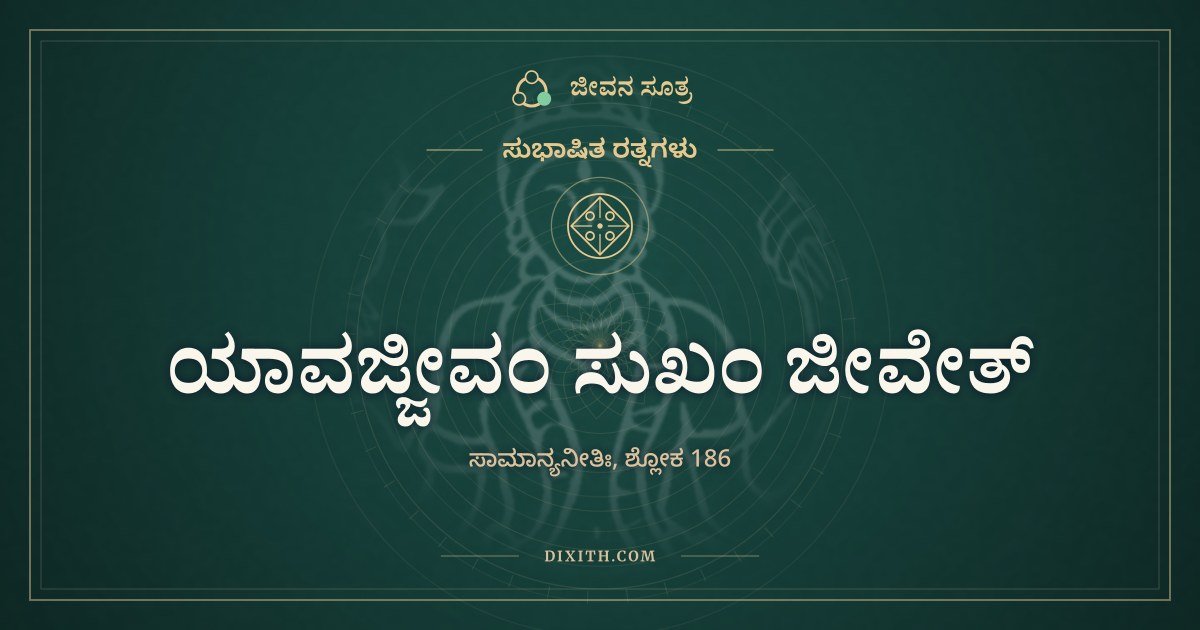
ಯಾವಜ್ಜೀವಂ ಸುಖಂ ಜೀವೇದೃಣಂ ಕೃತ್ವಾ ಘೃತಂ ಪಿಬೇತ್
ಭಸ್ಮೀಭೂತಸ್ಯ ಜೀವಸ್ಯ ಪುನರಾಗಮನಂ ಕುತಃ
ಸುಭಾಷಿತ (ದೇವನಾಗರಿ)
यावज्जीवं सुखं जीवेदृणं कृत्वा घृतं पिबेत्
भस्मीभूतस्य जीवस्य पुनरागमनं कुतः
ಸುಭಾಷಿತ (IAST)
yāvajjīvaṃ sukhaṃ jīvedṛṇaṃ kṛtvā ghṛtaṃ pibet
bhasmībhūtasya jīvasya punarāgamanaṃ kutaḥ
ಪದಶಃ ಅರ್ಥ
- ಯಾವಜ್ಜೀವಂ (यावज्जीवं, yāvajjīvaṃ) = ಬದುಕಿರುವವರೆಗೆ (ಯಾವತ್ + ಜೀವಂ) (as long as one lives)
- ಸುಖಂ (सुखं, sukhaṃ) = ಸುಖವಾಗಿ (happily)
- ಜೀವೇದೃಣಂ (जीवेदृणं, jīvedṛṇaṃ) = ಬದುಕಬೇಕು, ಸಾಲವನ್ನು (ಜೀವೇತ್ + ಋಣಂ) (one should live, a debt (jivet + rinam))
- ಕೃತ್ವಾ (कृत्वा, kṛtvā) = ಮಾಡಿ (having made)
- ಘೃತಂ (घृतं, ghṛtaṃ) = ತುಪ್ಪವನ್ನು (ghee)
- ಪಿಬೇತ್ (पिबेत्, pibet) = ಕುಡಿಯಬೇಕು (one should drink)
- ಭಸ್ಮೀಭೂತಸ್ಯ (भस्मीभूतस्य, bhasmībhūtasya) = ಬೂದಿಯಾದ (of one turned to ash)
- ಜೀವಸ್ಯ (जीवस्य, jīvasya) = ಜೀವದ (of the living being)
- ಪುನರಾಗಮನಂ (पुनरागमनं, punarāgamanaṃ) = ಮತ್ತೆ ಬರುವುದು (coming back again)
- ಕುತಃ (कुतः, kutaḥ) = ಎಲ್ಲಿಂದ (from where)
ಸಂಪೂರ್ಣ ಅರ್ಥ (ಕನ್ನಡ)
ಬದುಕಿರುವವರೆಗೆ ಸುಖವಾಗಿ ಬದುಕಬೇಕು. ಸಾಲ ಮಾಡಿಯಾದರೂ ತುಪ್ಪ ಕುಡಿಯಬೇಕು. ಒಮ್ಮೆ ಬೂದಿಯಾದ ಜೀವ ಮತ್ತೆ ಹೇಗೆ ಬರುತ್ತದೆ?
ಸಂಪೂರ್ಣ ಅರ್ಥ (ಇಂಗ್ಲಿಷ್)
As long as one lives, one should live happily. One should drink ghee even by running up a debt. Once a life has turned to ash, how could it ever return?
ಈ ಸುಭಾಷಿತದ ಬಗ್ಗೆAbout this subhashita
ಇಲ್ಲಿನ ಚುರುಕು ಕೊನೆಯ ಪ್ರಶ್ನೆಯಲ್ಲಿದೆ. ಒಮ್ಮೆ ಸುಟ್ಟು ಬೂದಿಯಾದ ಮೇಲೆ ಮರುಜನ್ಮ ಇಲ್ಲ ಎಂಬ ನಂಬಿಕೆಯಿಂದ ಈ ಮಾತು ಹುಟ್ಟಿದೆ. ಮರುಜನ್ಮ ಒಪ್ಪುವ ಇತರ ಚಿಂತನೆಗಳಿಗೆ ಇದು ವಿರುದ್ಧವಾದ ನೋಟ.
The sting lies in the last question. The saying rests on the belief that there is no rebirth once the body is ash. It is the opposite of those schools of thought that accept rebirth.
ಮುದ್ರಿತ ಪುಸ್ತಕದಲ್ಲಿ ಎರಡನೇ ಸಾಲಿನ ಎರಡನೇ ಪದ ಜೀವಸ್ಯ ಎಂದಿದೆ. ನಮಗೆ ಸಿಕ್ಕ ಡಿಜಿಟಲ್ ಪ್ರತಿಯಲ್ಲಿ ಅಲ್ಲಿ ದೇಹಸ್ಯ ಎಂದಿತ್ತು. ನಾವು ಮುದ್ರಣದ ಪಾಠವನ್ನೇ ಅನುಸರಿಸಿದ್ದೇವೆ.
In the printed book the second word of the second line is jivasya. The digital copy we were given had dehasya there. We have followed the printed reading.
ಆಧಾರ: ಸುಭಾಷಿತರತ್ನಭಾಂಡಾಗಾರ, ರಾಜ ಪ್ರಕರಣ (ನಿರ್ಣಯಸಾಗರ ಮುದ್ರಣಾಲಯ, ಮುಂಬಯಿ), ಪುಟ 157. ಶ್ಲೋಕದ ಪಾಠವನ್ನು ಮುದ್ರಿತ ಪ್ರತಿಯ ಸ್ಕ್ಯಾನ್ನೊಂದಿಗೆ ಅಕ್ಷರಶಃ ಹೋಲಿಸಿದ್ದೇವೆ. ಅರ್ಥ ಮತ್ತು ವಿವರಣೆ ನಮ್ಮದು.
Source: Subhashitaratnabhandagara, Raja Prakarana (Nirnaya Sagar Press, Bombay), page 157. The text of the verse was checked letter by letter against a scan of the printed book. The meaning and notes are ours.
ಇಂದಿನ ಬದುಕಿಗೆFor life today
ಇಂದಿನ ಸುಖಕ್ಕಾಗಿ ನಾಳೆಯ ಹೊರೆಯನ್ನು ಹೆಚ್ಚಿಸಿಕೊಳ್ಳುವವರನ್ನು ನಾವೆಲ್ಲರೂ ಕಂಡಿದ್ದೇವೆ. ಈ ಶ್ಲೋಕ ಆ ಚಿಂತನೆಯನ್ನು ಅದರ ಅತಿರೇಕದಲ್ಲಿ ತೋರಿಸುತ್ತದೆ. ಅದನ್ನು ಅನುಸರಿಸಬೇಕು ಎಂದು ನಾವು ಹೇಳುತ್ತಿಲ್ಲ.
All of us have seen people add to tomorrow’s burden for the sake of today’s pleasure. The verse shows that thinking at its extreme. We are not saying it should be followed.
ಬದುಕು ಒಂದೇ ಎನ್ನುವುದು ಸುಖದ ಹಿಂದೆ ಓಡಲು ಕಾರಣವೂ ಆಗಬಹುದು, ಇರುವುದನ್ನು ಜಾಗರೂಕತೆಯಿಂದ ಬಳಸಲು ಕಾರಣವೂ ಆಗಬಹುದು. ಯಾವುದನ್ನು ಆರಿಸಬೇಕು ಎಂಬುದು ಓದುಗನದೇ ನಿರ್ಧಾರ.
That there is only one life can be a reason to run after pleasure, or a reason to use carefully what one has. Which to choose is the reader’s own decision.
ಪಾಠದಲ್ಲಿ ತಪ್ಪೋ ಬೇರೆ ಪಾಠಾಂತರವೋ ಕಂಡಿತೇ? ನಮಗೆ ತಿಳಿಸಿ.
Noticed a mistake or a different reading? Tell us.


ಪ್ರತಿಕ್ರಿಯೆ ಬರೆಯಿರಿ