
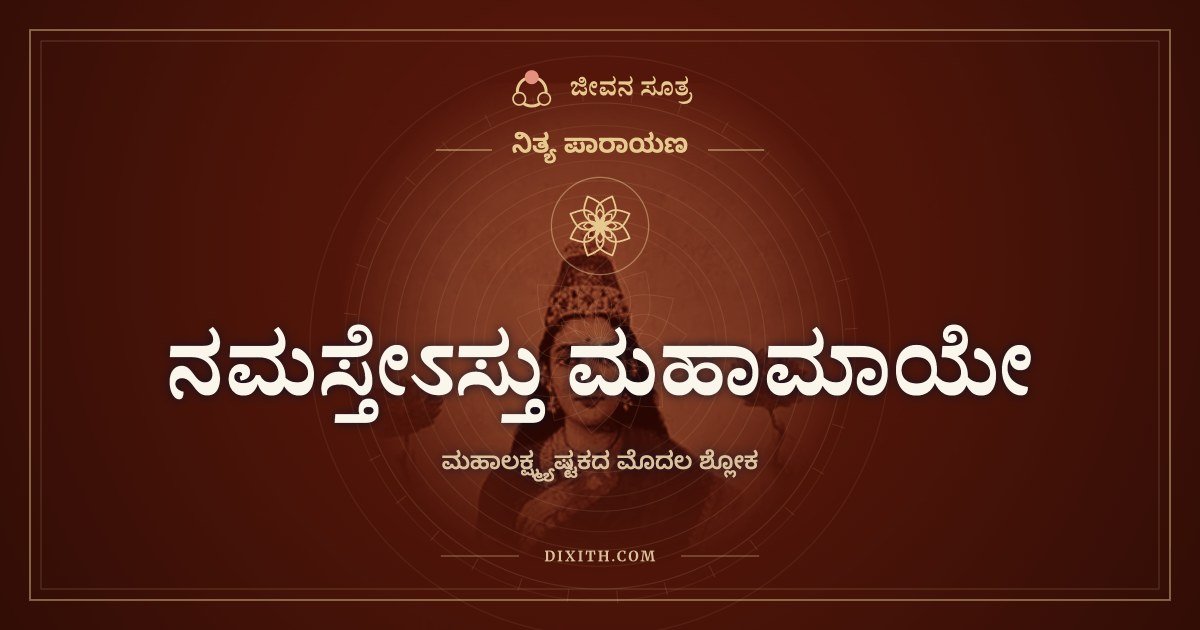
ಶುಕ್ರವಾರದ ಸಂಜೆ, ದೀಪಾವಳಿಯ ಲಕ್ಷ್ಮೀಪೂಜೆ, ವರಮಹಾಲಕ್ಷ್ಮೀ ವ್ರತ. ಈ ಹೊತ್ತುಗಳಲ್ಲಿ ಹೆಚ್ಚಾಗಿ ಕೇಳುವ ಸ್ತೋತ್ರ ಮಹಾಲಕ್ಷ್ಮ್ಯಷ್ಟಕ, ಮತ್ತು ಅದರ ಮೊದಲ ಸಾಲು ಇದು.
ಈ ಲಕ್ಷ್ಮಿ ಕೇವಲ ಹಣದ ದೇವತೆಯಲ್ಲ. ಶಂಖ, ಚಕ್ರ, ಗದೆ ಹಿಡಿದವಳು, ಮಹಾಮಾಯೆ, ದೇವತೆಗಳಿಂದ ಪೂಜಿತಳಾದವಳು. ಸ್ತೋತ್ರವನ್ನು ಇಂದ್ರನ ಬಾಯಲ್ಲಿ ಇಡಲಾಗಿದೆ.
ಶ್ಲೋಕ (ಕನ್ನಡ)
ನಮಸ್ತೇಽಸ್ತು ಮಹಾಮಾಯೇ ಶ್ರೀಪೀಠೇ ಸುರಪೂಜಿತೇ ।
ಶಂಖಚಕ್ರಗದಾಹಸ್ತೇ ಮಹಾಲಕ್ಷ್ಮಿ ನಮೋಽಸ್ತು ತೇ ॥
ಶ್ಲೋಕ (ದೇವನಾಗರಿ)
नमस्तेऽस्तु महामाये श्रीपीठे सुरपूजिते ।
शङ्खचक्रगदाहस्ते महालक्ष्मि नमोऽस्तु ते ॥
ಶ್ಲೋಕ (IAST)
namaste’stu mahāmāye śrīpīṭhe surapūjite |
śaṅkhacakragadāhaste mahālakṣmi namo’stu te ||
ಪದಶಃ ಅರ್ಥ
- ನಮಸ್ತೇಽಸ್ತು (नमस्तेऽस्तु, namaste’stu) = ನಿನಗೆ ನಮಸ್ಕಾರವಿರಲಿ (salutations be to you)
- ಮಹಾಮಾಯೇ (महामाये, mahāmāye) = ಓ ಮಹಾಮಾಯೆಯೇ (O great maya, great power of illusion)
- ಶ್ರೀಪೀಠೇ (श्रीपीठे, śrīpīṭhe) = ಶ್ರೀಪೀಠದಲ್ಲಿ ನೆಲೆಸಿರುವವಳೇ (O you seated on the throne of Shri)
- ಸುರಪೂಜಿತೇ (सुरपूजिते, surapūjite) = ದೇವತೆಗಳಿಂದ ಪೂಜಿತಳೇ (worshipped by the gods)
- ಶಂಖಚಕ್ರಗದಾಹಸ್ತೇ (शङ्खचक्रगदाहस्ते, śaṅkhacakragadāhaste) = ಶಂಖ, ಚಕ್ರ, ಗದೆಗಳನ್ನು ಕೈಯಲ್ಲಿ ಹಿಡಿದವಳೇ (holding conch, discus and mace)
- ಮಹಾಲಕ್ಷ್ಮಿ (महालक्ष्मि, mahālakṣmi) = ಓ ಮಹಾಲಕ್ಷ್ಮಿಯೇ (O Mahalakshmi)
- ನಮೋಽಸ್ತು ತೇ (नमोऽस्तु ते, namo’stu te) = ನಿನಗೆ ನಮಸ್ಕಾರ (salutations to you)
ಸಂಪೂರ್ಣ ಅರ್ಥ (ಕನ್ನಡ)
ಓ ಮಹಾಮಾಯೆ, ಶ್ರೀಪೀಠದಲ್ಲಿ ನೆಲೆಸಿರುವವಳೇ, ದೇವತೆಗಳಿಂದ ಪೂಜಿತಳೇ, ನಿನಗೆ ನಮಸ್ಕಾರ. ಶಂಖ, ಚಕ್ರ, ಗದೆಗಳನ್ನು ಕೈಯಲ್ಲಿ ಹಿಡಿದಿರುವ ಓ ಮಹಾಲಕ್ಷ್ಮಿ, ನಿನಗೆ ನಮಸ್ಕಾರ.
ಸಂಪೂರ್ಣ ಅರ್ಥ (ಇಂಗ್ಲಿಷ್)
Salutations to you, O Mahamaya, seated on the throne of Shri, worshipped by the gods. O Mahalakshmi, holding conch, discus and mace, salutations to you.
ಈ ಶ್ಲೋಕದ ಬಗ್ಗೆAbout this verse
ಮಹಾಲಕ್ಷ್ಮ್ಯಷ್ಟಕದ ಎಂಟು ಶ್ಲೋಕಗಳೂ ಮಹಾಲಕ್ಷ್ಮಿ ನಮೋಽಸ್ತು ತೇ ಎಂಬ ಪಾದದಿಂದ ಮುಗಿಯುತ್ತವೆ. ನಂತರದ ಫಲಶ್ರುತಿ ದಿನಕ್ಕೆ ಒಮ್ಮೆ, ಎರಡು ಬಾರಿ, ಮೂರು ಬಾರಿ ಪಠಿಸುವುದರ ಫಲವನ್ನು ಹೇಳುತ್ತದೆ.
All eight verses of the Mahalakshmyashtakam end with mahalakshmi namo stu te. The closing verses of merit then describe the fruit of reciting it once, twice or three times a day.
ಶ್ರೀಪೀಠ ಎಂಬ ಪದವನ್ನು ಕೊಲ್ಹಾಪುರದ ಮಹಾಲಕ್ಷ್ಮೀ ಕ್ಷೇತ್ರಕ್ಕೆ ಹಲವರು ಜೋಡಿಸುತ್ತಾರೆ. ಅಷ್ಟಕದ ಎರಡನೆಯ ಶ್ಲೋಕದ ಕೋಲಾಸುರ ಭಯಂಕರಿ ಎಂಬ ಪದವೂ ಕೊಲ್ಹಾಪುರದ ಕಥೆಗೆ ಸಂಬಂಧಿಸಿದ್ದು.
Many link the word shripitha to the Mahalakshmi shrine at Kolhapur. The phrase kolasura bhayankari in the second verse of the hymn also belongs to the Kolhapur story.
ಲಕ್ಷ್ಮಿಯ ಕೈಯಲ್ಲಿ ಸಾಮಾನ್ಯವಾಗಿ ಕಮಲವನ್ನು ಚಿತ್ರಿಸುತ್ತಾರೆ. ಇಲ್ಲಿ ವಿಷ್ಣುವಿನ ಆಯುಧಗಳಾದ ಶಂಖ, ಚಕ್ರ, ಗದೆ ಅವಳ ಕೈಯಲ್ಲಿವೆ; ಅವಳು ಕೇವಲ ಸಂಪತ್ತಿನ ದೇವತೆಯಲ್ಲ, ರಕ್ಷಕಿಯೂ ಹೌದು.
Lakshmi is usually shown holding lotuses. Here she holds Vishnu’s conch, discus and mace; she is not only the goddess of wealth but a protector as well.
ಆಧಾರ: ಹಲವು ಮೂಲಗಳು. ಆವೃತ್ತಿಗಳು ಭಿನ್ನವಾಗಿರುವಲ್ಲಿ ಅದನ್ನು ಇಲ್ಲಿ ಸೂಚಿಸಿದ್ದೇವೆ.
Sources: several. Where versions differ, we have noted it here.
ಇಂದಿನ ಬದುಕಿಗೆFor life today
ಲಕ್ಷ್ಮಿಯನ್ನು ಮಹಾಮಾಯೆ ಎಂದು ಕರೆಯುವುದರಲ್ಲಿ ಒಂದು ಎಚ್ಚರಿಕೆಯೂ ಇದೆ: ಸಂಪತ್ತು ಮನಸ್ಸನ್ನು ಮರುಳು ಮಾಡಬಲ್ಲದು. ಅದನ್ನು ಗೌರವದಿಂದ ಬರಮಾಡಿಕೊಳ್ಳಬೇಕು, ಅದಕ್ಕೆ ದಾಸರಾಗಬಾರದು.
Calling Lakshmi Mahamaya carries a caution too: wealth can bewitch the mind. It should be welcomed with respect, not served as a master.
ಹಣದ ಆರೋಗ್ಯವೂ ಆರೋಗ್ಯದ ಭಾಗ. ಚಿಕಿತ್ಸೆಯ ವೆಚ್ಚ ಕುಟುಂಬಗಳನ್ನು ಸಾಲಕ್ಕೆ ತಳ್ಳುವುದನ್ನು ನಾವು ಆಸ್ಪತ್ರೆಗಳಲ್ಲಿ ನೋಡುತ್ತೇವೆ. ಆರೋಗ್ಯ ವಿಮೆ, ಉಳಿತಾಯ, ಸಣ್ಣ ಶಿಸ್ತುಗಳು ಲಕ್ಷ್ಮಿಯನ್ನು ಮನೆಯಲ್ಲಿ ಉಳಿಸುವ ದಾರಿಗಳು.
Financial health is part of health. In hospitals we see the cost of treatment push families into debt. Health insurance, savings and small disciplines are ways of keeping Lakshmi at home.
ಪ್ರತಿಕ್ರಿಯೆ ಬರೆಯಿರಿ