
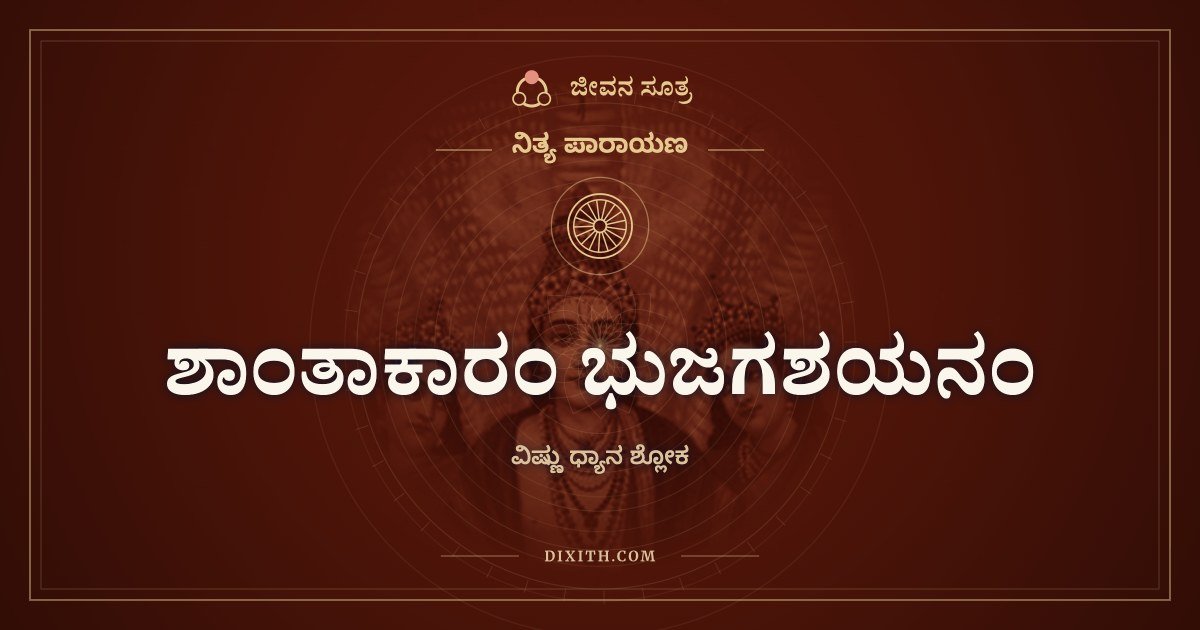
ವಿಷದ ಹಾವಿನ ಮೇಲೆ ಮಲಗಿ ಶಾಂತವಾಗಿರುವುದು ಹೇಗೆ? ಈ ಶ್ಲೋಕದ ಮೊದಲ ಎರಡು ಪದಗಳೇ ಆ ವಿರೋಧವನ್ನು ಅಕ್ಕಪಕ್ಕ ಇಡುತ್ತವೆ: ಶಾಂತಾಕಾರಂ, ಭುಜಗಶಯನಂ.
ನಂತರ ವಿಷ್ಣುವಿನ ರೂಪವನ್ನು ಒಂದೊಂದಾಗಿ ಕಟ್ಟಿಕೊಡುತ್ತದೆ: ನಾಭಿಯಲ್ಲಿ ಕಮಲ, ಆಕಾಶದಂತಹ ವ್ಯಾಪ್ತಿ, ಮೋಡದ ಬಣ್ಣ, ಲಕ್ಷ್ಮಿಯ ಪತಿ, ಯೋಗಿಗಳ ಹೃದಯದಲ್ಲಿ ಕಾಣುವವನು, ಭವಭಯವನ್ನು ಹೋಗಲಾಡಿಸುವವನು.
ಶ್ಲೋಕ (ಕನ್ನಡ)
ಶಾಂತಾಕಾರಂ ಭುಜಗಶಯನಂ ಪದ್ಮನಾಭಂ ಸುರೇಶಂ
ವಿಶ್ವಾಧಾರಂ ಗಗನಸದೃಶಂ ಮೇಘವರ್ಣಂ ಶುಭಾಂಗಮ್ ।
ಲಕ್ಷ್ಮೀಕಾಂತಂ ಕಮಲನಯನಂ ಯೋಗಿಭಿರ್ಧ್ಯಾನಗಮ್ಯಂ
ವಂದೇ ವಿಷ್ಣುಂ ಭವಭಯಹರಂ ಸರ್ವಲೋಕೈಕನಾಥಮ್ ॥
ಶ್ಲೋಕ (ದೇವನಾಗರಿ)
शान्ताकारं भुजगशयनं पद्मनाभं सुरेशं
विश्वाधारं गगनसदृशं मेघवर्णं शुभाङ्गम् ।
लक्ष्मीकान्तं कमलनयनं योगिभिर्ध्यानगम्यं
वन्दे विष्णुं भवभयहरं सर्वलोकैकनाथम् ॥
ಶ್ಲೋಕ (IAST)
śāntākāraṃ bhujagaśayanaṃ padmanābhaṃ sureśaṃ
viśvādhāraṃ gaganasadṛśaṃ meghavarṇaṃ śubhāṅgam |
lakṣmīkāntaṃ kamalanayanaṃ yogibhirdhyānagamyaṃ
vande viṣṇuṃ bhavabhayaharaṃ sarvalokaikanātham ||
ಪದಶಃ ಅರ್ಥ
- ಶಾಂತಾಕಾರಮ್ (शान्ताकारम्, śāntākāram) = ಶಾಂತ ರೂಪದವನನ್ನು (of peaceful form)
- ಭುಜಗಶಯನಮ್ (भुजगशयनम्, bhujagaśayanam) = ಸರ್ಪದ ಮೇಲೆ ಮಲಗಿರುವವನನ್ನು (reclining on the serpent)
- ಪದ್ಮನಾಭಮ್ (पद्मनाभम्, padmanābham) = ನಾಭಿಯಲ್ಲಿ ಕಮಲವುಳ್ಳವನನ್ನು (with a lotus at his navel)
- ಸುರೇಶಮ್ (सुरेशम्, sureśam) = ದೇವತೆಗಳ ಒಡೆಯನನ್ನು (lord of the gods)
- ವಿಶ್ವಾಧಾರಮ್ (विश्वाधारम्, viśvādhāram) = ವಿಶ್ವಕ್ಕೆ ಆಧಾರನಾದವನನ್ನು (support of the universe)
- ಗಗನಸದೃಶಮ್ (गगनसदृशम्, gaganasadṛśam) = ಆಕಾಶದಂತೆ ಇರುವವನನ್ನು (like the sky)
- ಮೇಘವರ್ಣಮ್ (मेघवर्णम्, meghavarṇam) = ಮೋಡದ ಬಣ್ಣದವನನ್ನು (the colour of rain clouds)
- ಶುಭಾಂಗಮ್ (शुभाङ्गम्, śubhāṅgam) = ಮಂಗಳಕರ ದೇಹದವನನ್ನು (of auspicious body)
- ಲಕ್ಷ್ಮೀಕಾಂತಮ್ (लक्ष्मीकान्तम्, lakṣmīkāntam) = ಲಕ್ಷ್ಮಿಯ ಪ್ರಿಯನನ್ನು (beloved of Lakshmi)
- ಕಮಲನಯನಮ್ (कमलनयनम्, kamalanayanam) = ಕಮಲದಂತಹ ಕಣ್ಣುಗಳವನನ್ನು (lotus-eyed)
- ಯೋಗಿಭಿರ್ಧ್ಯಾನಗಮ್ಯಮ್ (योगिभिर्ध्यानगम्यम्, yogibhirdhyānagamyam) = ಯೋಗಿಗಳಿಗೆ ಧ್ಯಾನದಿಂದ ತಲುಪಲು ಸಾಧ್ಯನಾದವನನ್ನು (reached by yogis through meditation)
- ವಂದೇ (वन्दे, vande) = ವಂದಿಸುತ್ತೇನೆ (I salute)
- ಭವಭಯಹರಮ್ (भवभयहरम्, bhavabhayaharam) = ಸಂಸಾರದ ಭಯವನ್ನು ಹೋಗಲಾಡಿಸುವವನನ್ನು (remover of the fear of worldly existence)
- ಸರ್ವಲೋಕೈಕನಾಥಮ್ (सर्वलोकैकनाथम्, sarvalokaikanātham) = ಎಲ್ಲ ಲೋಕಗಳ ಏಕೈಕ ಒಡೆಯನನ್ನು (the one lord of all the worlds)
ಸಂಪೂರ್ಣ ಅರ್ಥ (ಕನ್ನಡ)
ಶಾಂತ ರೂಪದ, ಸರ್ಪದ ಮೇಲೆ ಮಲಗಿರುವ, ನಾಭಿಯಲ್ಲಿ ಕಮಲವುಳ್ಳ, ದೇವತೆಗಳ ಒಡೆಯನಾದ, ವಿಶ್ವಕ್ಕೆ ಆಧಾರನಾದ, ಆಕಾಶದಂತೆ ಎಲ್ಲೆಡೆ ಇರುವ, ಮೋಡದ ಬಣ್ಣದ, ಮಂಗಳ ದೇಹದ, ಲಕ್ಷ್ಮಿಯ ಪ್ರಿಯನಾದ, ಕಮಲನಯನನಾದ, ಯೋಗಿಗಳಿಗೆ ಧ್ಯಾನದಲ್ಲಿ ದೊರಕುವ, ಸಂಸಾರದ ಭಯವನ್ನು ಹೋಗಲಾಡಿಸುವ, ಎಲ್ಲ ಲೋಕಗಳ ಏಕೈಕ ಒಡೆಯನಾದ ವಿಷ್ಣುವನ್ನು ವಂದಿಸುತ್ತೇನೆ.
ಸಂಪೂರ್ಣ ಅರ್ಥ (ಇಂಗ್ಲಿಷ್)
I salute Vishnu, of peaceful form, reclining on the serpent, with a lotus at his navel, lord of the gods, support of the universe, vast as the sky, the colour of rain clouds, of auspicious body, beloved of Lakshmi, lotus-eyed, reached by yogis in meditation, remover of the fear of worldly existence, the one lord of all the worlds.
ಈ ಶ್ಲೋಕದ ಬಗ್ಗೆAbout this verse
ವಿಷ್ಣು ಸಹಸ್ರನಾಮದ ಪೂರ್ವಭಾಗದ ಧ್ಯಾನ ಶ್ಲೋಕಗಳಲ್ಲಿ ಇದು ಬರುತ್ತದೆ. ಅದಕ್ಕೂ ಹೆಚ್ಚಾಗಿ ಇದು ಒಂಟಿಯಾಗಿ ಹಾಡುವ ಶ್ಲೋಕವಾಗಿ ಜನಪ್ರಿಯ.
It appears among the meditation verses that precede the Vishnu Sahasranama, but it is even better known sung on its own.
ಮೂರನೆಯ ಸಾಲನ್ನು ಯೋಗಿಹೃದ್ಧ್ಯಾನಗಮ್ಯಂ, ಅಂದರೆ ಯೋಗಿಗಳ ಹೃದಯದ ಧ್ಯಾನಕ್ಕೆ ಗೋಚರನಾದವನು, ಎಂದೂ ಹೇಳುತ್ತಾರೆ. ಎರಡೂ ಓದುಗಳು ಛಂದಸ್ಸಿಗೆ ಹೊಂದುತ್ತವೆ.
The third line is also said as yogihriddhyanagamyam, reached in the meditation of the yogi’s heart. Both readings fit the metre.
ಆದಿಶೇಷನ ಹೆಡೆಗಳು ಕಾಲದ ಸಂಕೇತ ಎಂದು ಹಲವರು ವಿವರಿಸುತ್ತಾರೆ. ಕಾಲದ ಮೇಲೇ ಮಲಗಿ ಶಾಂತನಾಗಿರುವವನು ಭವಭಯವನ್ನು ಹೋಗಲಾಡಿಸಬಲ್ಲ ಎಂಬುದು ಆ ಓದು.
Many explain Adishesha’s hoods as a symbol of time. One who rests at peace upon time itself can remove the fear of worldly existence; that is the reading.
ಆಧಾರ: ಹಲವು ಮೂಲಗಳು. ಆವೃತ್ತಿಗಳು ಭಿನ್ನವಾಗಿರುವಲ್ಲಿ ಅದನ್ನು ಇಲ್ಲಿ ಸೂಚಿಸಿದ್ದೇವೆ.
Sources: several. Where versions differ, we have noted it here.
ಇಂದಿನ ಬದುಕಿಗೆFor life today
ಆಸ್ಪತ್ರೆಯ ತುರ್ತು ವಿಭಾಗದಲ್ಲಿ ಅತ್ಯುತ್ತಮ ವೈದ್ಯರು ಗದ್ದಲದ ನಡುವೆಯೂ ಶಾಂತವಾಗಿರುತ್ತಾರೆ. ಹಾವಿನ ಮೇಲೆ ಮಲಗಿದ ವಿಷ್ಣುವಿನ ಚಿತ್ರ ಆ ಗುಣದ ಆದರ್ಶ.
In a hospital emergency room the best doctors stay calm in the middle of the chaos. The picture of Vishnu resting on the serpent is the ideal of that quality.
ಶಾಂತತೆ ಎಂದರೆ ಸಮಸ್ಯೆ ಇಲ್ಲದಿರುವುದಲ್ಲ; ಸಮಸ್ಯೆಯ ಮೇಲೆ ಮಲಗಿಯೂ ಕಣ್ಣು ತೆರೆದಿರುವುದು.
Calm is not the absence of trouble; it is resting on the trouble with eyes still open.
ಪ್ರತಿಕ್ರಿಯೆ ಬರೆಯಿರಿ