



ಅಮ್ಮ, ಅಪ್ಪ, ನೆಂಟ, ಗೆಳೆಯ, ಓದು, ಹಣ. ಒಬ್ಬ ಮನುಷ್ಯ ಬದುಕಿನಲ್ಲಿ ಆಧಾರವೆಂದು ಹಿಡಿದುಕೊಳ್ಳುವ ಎಲ್ಲವೂ ಈ ಒಂದೇ ಶ್ಲೋಕದ ಪಟ್ಟಿಯಲ್ಲಿವೆ.
ಪಟ್ಟಿಯ ಕೊನೆಯಲ್ಲಿ ಇವೆಲ್ಲವೂ ನೀನೇ ಎಂದು ದೇವರ ಕಡೆ ತಿರುಗುತ್ತದೆ. ಶಾಲೆಗಳ ಪ್ರಾರ್ಥನೆಯಲ್ಲಿ, ಭಜನೆಯ ಕೊನೆಯಲ್ಲಿ, ಪೂಜೆಯ ಮಂಗಳದಲ್ಲಿ ಇದು ಕೇಳಿಬರುತ್ತದೆ.
ಶ್ಲೋಕ (ಕನ್ನಡ)
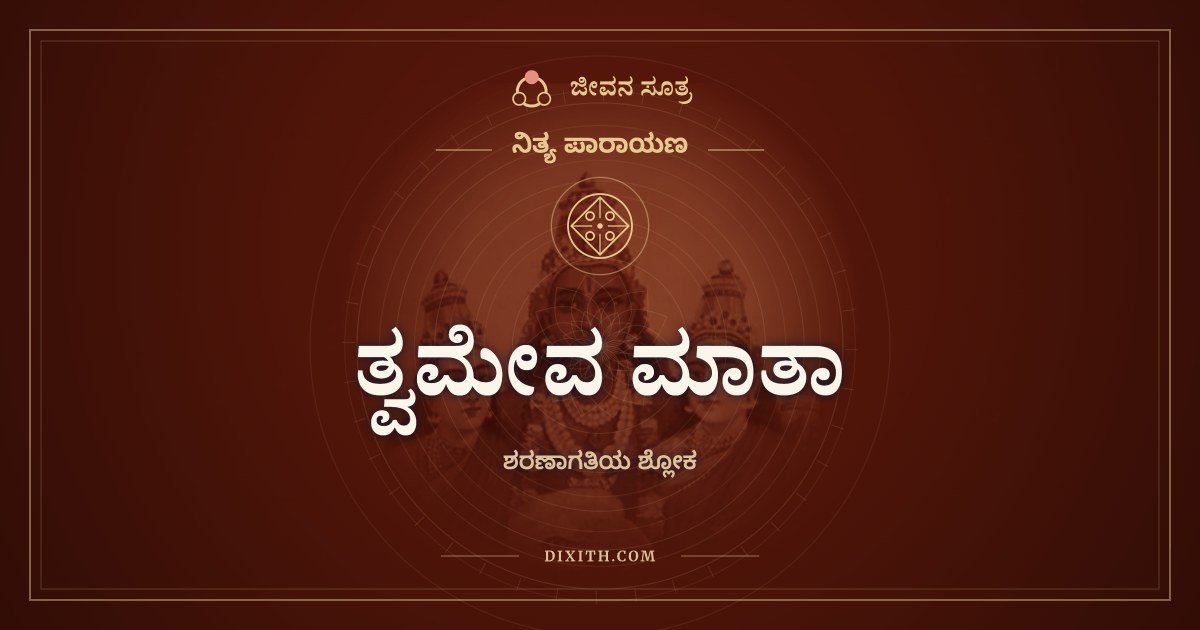
ತ್ವಮೇವ ಮಾತಾ ಚ ಪಿತಾ ತ್ವಮೇವ ತ್ವಮೇವ ಬಂಧುಶ್ಚ ಸಖಾ ತ್ವಮೇವ ।
ತ್ವಮೇವ ವಿದ್ಯಾ ದ್ರವಿಣಂ ತ್ವಮೇವ ತ್ವಮೇವ ಸರ್ವಂ ಮಮ ದೇವದೇವ ॥
ಶ್ಲೋಕ (ದೇವನಾಗರಿ)
त्वमेव माता च पिता त्वमेव त्वमेव बन्धुश्च सखा त्वमेव ।
त्वमेव विद्या द्रविणं त्वमेव त्वमेव सर्वं मम देवदेव ॥
ಶ್ಲೋಕ (IAST)
tvameva mātā ca pitā tvameva tvameva bandhuśca sakhā tvameva |
tvameva vidyā draviṇaṃ tvameva tvameva sarvaṃ mama devadeva ||
ಪದಶಃ ಅರ್ಥ
- ತ್ವಮ್ ಏವ (त्वम् एव, tvam eva) = ನೀನೇ (you alone)
- ಮಾತಾ (माता, mātā) = ತಾಯಿ (mother)
- ಚ (च, ca) = ಮತ್ತು (and)
- ಪಿತಾ (पिता, pitā) = ತಂದೆ (father)
- ಬಂಧುಃ (बन्धुः, bandhuḥ) = ನೆಂಟ, ಬಂಧು (kinsman)
- ಸಖಾ (सखा, sakhā) = ಗೆಳೆಯ (friend)
- ವಿದ್ಯಾ (विद्या, vidyā) = ವಿದ್ಯೆ, ತಿಳಿವಳಿಕೆ (learning)
- ದ್ರವಿಣಂ (द्रविणं, draviṇaṃ) = ಸಂಪತ್ತು (wealth)
- ಸರ್ವಂ (सर्वं, sarvaṃ) = ಎಲ್ಲವೂ (everything)
- ಮಮ (मम, mama) = ನನ್ನ (my)
- ದೇವದೇವ (देवदेव, devadeva) = ದೇವತೆಗಳ ದೇವನೇ (O God of gods)
ಸಂಪೂರ್ಣ ಅರ್ಥ (ಕನ್ನಡ)
ದೇವತೆಗಳ ದೇವನೇ, ನೀನೇ ನನ್ನ ತಾಯಿ, ನೀನೇ ತಂದೆ. ನೀನೇ ಬಂಧು, ನೀನೇ ಗೆಳೆಯ. ನೀನೇ ವಿದ್ಯೆ, ನೀನೇ ಸಂಪತ್ತು. ನನಗೆ ಎಲ್ಲವೂ ನೀನೇ.
ಸಂಪೂರ್ಣ ಅರ್ಥ (ಇಂಗ್ಲಿಷ್)
O God of gods, you alone are my mother and you are my father. You are my kinsman and my friend. You are my learning and my wealth. You alone are everything to me.
ಈ ಶ್ಲೋಕದ ಬಗ್ಗೆAbout this verse
ಈ ಶ್ಲೋಕ ಪಾಂಡವಗೀತೆ ಅಥವಾ ಪ್ರಪನ್ನಗೀತೆ ಎಂಬ ಸಂಗ್ರಹದಲ್ಲಿ ಬರುತ್ತದೆ ಎಂದು ಹೇಳುತ್ತಾರೆ. ಆ ಸಂಗ್ರಹದಲ್ಲಿ ಮಹಾಭಾರತದ ಪಾತ್ರಗಳ ಬಾಯಲ್ಲಿ ಶರಣಾಗತಿಯ ಶ್ಲೋಕಗಳಿವೆ. ಇದನ್ನು ಯಾರು ಹೇಳಿದರು ಎನ್ನುವುದರ ಬಗ್ಗೆ ಆವೃತ್ತಿಗಳು ಒಂದೇ ಮಾತು ಹೇಳುವುದಿಲ್ಲ.
The verse is said to belong to a collection called the Pandava Gita or Prapanna Gita, which gathers verses of surrender spoken by figures of the Mahabharata. Versions do not agree on who speaks this one.
ಸಂಬಂಧಗಳ ಪಟ್ಟಿ ಹತ್ತಿರದಿಂದ ದೂರಕ್ಕೆ ಹೋಗುತ್ತದೆ. ಹುಟ್ಟಿನ ಸಂಬಂಧ, ರಕ್ತದ ಸಂಬಂಧ, ಆಯ್ಕೆಯ ಸಂಬಂಧ, ನಂತರ ಗಳಿಸಿದ ವಿದ್ಯೆ ಮತ್ತು ಹಣ. ಕೊನೆಯ ಸಾಲು ಅವೆಲ್ಲವನ್ನೂ ಒಂದೇ ಕಡೆ ಒಪ್ಪಿಸುತ್ತದೆ.
The list moves from near to far: the bond of birth, the bond of blood, the bond of choice, and then what is earned, learning and wealth. The last line hands all of them over in one place.
ದೇವದೇವ ಎಂಬ ಸಂಬೋಧನೆ ಯಾವ ದೇವರನ್ನೂ ಹೆಸರಿಸುವುದಿಲ್ಲ. ಹಾಗಾಗಿ ವೈಷ್ಣವ, ಶೈವ, ಶಾಕ್ತ ಎಲ್ಲ ಪರಂಪರೆಗಳಲ್ಲೂ ಇದು ಬಳಕೆಯಲ್ಲಿದೆ. ಗುರುವಂದನೆಯ ಕೊನೆಯಲ್ಲೂ ಇದನ್ನು ಹೇಳುವುದುಂಟು.
The address devadeva names no particular deity, so the verse is used across Vaishnava, Shaiva and Shakta traditions. It is also said at the end of salutations to the guru.
ಆಧಾರ: ಹಲವು ಮೂಲಗಳು. ಆವೃತ್ತಿಗಳು ಭಿನ್ನವಾಗಿರುವಲ್ಲಿ ಅದನ್ನು ಇಲ್ಲಿ ಸೂಚಿಸಿದ್ದೇವೆ.
Sources: several. Where versions differ, we have noted it here.
ಇಂದಿನ ಬದುಕಿಗೆFor life today
ಈ ಶ್ಲೋಕ ಸಂಬಂಧಗಳನ್ನು ನಿರಾಕರಿಸುವುದಿಲ್ಲ. ತಾಯಿ ತಂದೆ ಗೆಳೆಯರು ಬೇಡ ಎನ್ನುವುದಿಲ್ಲ. ಅವರೆಲ್ಲರಲ್ಲೂ ಇರುವ ಆಧಾರದ ಗುಣ ಒಂದೇ ಮೂಲದಿಂದ ಬಂದದ್ದು ಎಂದು ನೆನಪಿಸುತ್ತದೆ.
The verse does not reject relationships. It does not say we need no mother, father or friends. It reminds us that the support we find in all of them comes from one source.
ಆಸ್ಪತ್ರೆಯ ಕಾರಿಡಾರುಗಳಲ್ಲಿ ಇದನ್ನು ನಾವು ಬೇರೆ ರೀತಿಯಲ್ಲಿ ಕಾಣುತ್ತೇವೆ. ಮನೆಯವರು ದೂರವಿದ್ದಾಗ ಪಕ್ಕದ ಹಾಸಿಗೆಯವರೇ ಬಂಧುಗಳಾಗುತ್ತಾರೆ. ಆಧಾರ ಯಾವ ರೂಪದಲ್ಲಿ ಬರುತ್ತದೆ ಎಂದು ಮೊದಲೇ ಹೇಳಲಾಗದು.
In hospital corridors we see this in another way. When family is far away, the people at the next bed become kin. We cannot say in advance in what form support will arrive.



ಪ್ರತಿಕ್ರಿಯೆ ಬರೆಯಿರಿ