
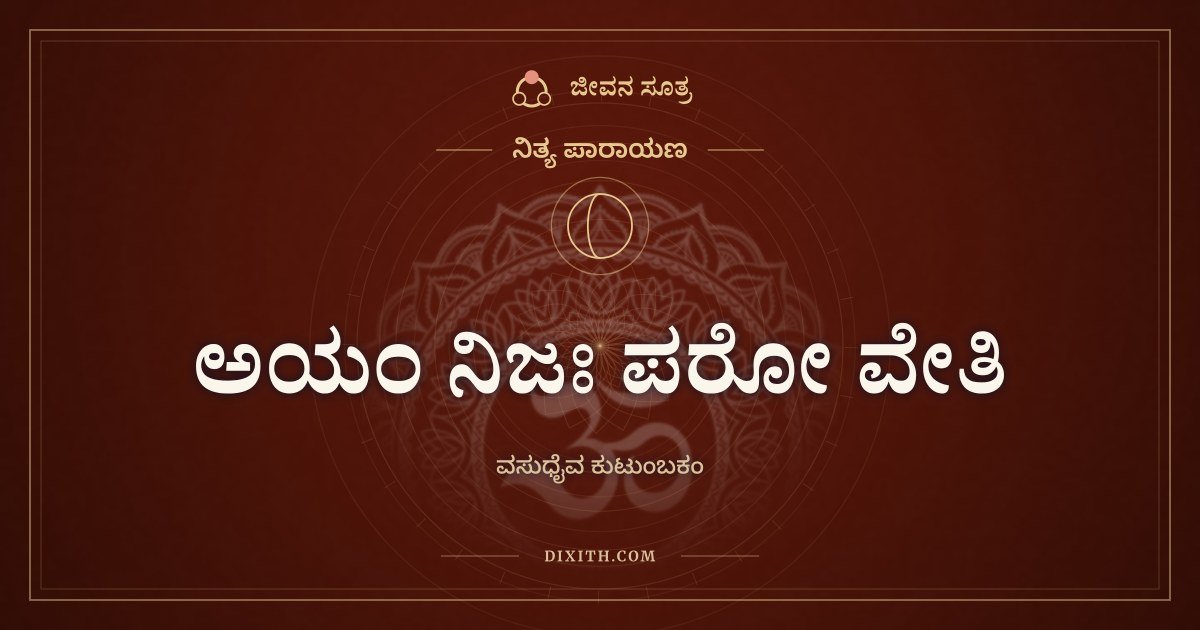
ಇದೊಂದು ಎರಡು ಸಾಲಿನ ಸಂಸ್ಕೃತ ಸುಭಾಷಿತ. ಇದರ ಕೊನೆಯ ಪದಗಳಾದ ವಸುಧೈವ ಕುಟುಂಬಕಂ ಎಂಬುದು ಬಹುಜನರಿಗೆ ಪರಿಚಿತ.
ಇವನು ನಮ್ಮವನು, ಅವನು ಬೇರೆಯವನು ಎಂದು ಲೆಕ್ಕ ಹಾಕುವುದು ಸಣ್ಣ ಮನಸ್ಸಿನವರ ರೀತಿ. ಉದಾರ ನಡತೆಯವರಿಗೆ ಇಡೀ ಭೂಮಿಯೇ ಒಂದು ಕುಟುಂಬ ಎಂದು ಈ ಶ್ಲೋಕ ಹೇಳುತ್ತದೆ.
ಶ್ಲೋಕ (ಕನ್ನಡ)
ಅಯಂ ನಿಜಃ ಪರೋ ವೇತಿ ಗಣನಾ ಲಘುಚೇತಸಾಮ್ ।
ಉದಾರಚರಿತಾನಾಂ ತು ವಸುಧೈವ ಕುಟುಂಬಕಮ್ ॥
ಶ್ಲೋಕ (ದೇವನಾಗರಿ)
अयं निजः परो वेति गणना लघुचेतसाम् ।
उदारचरितानां तु वसुधैव कुटुंबकम् ॥
ಶ್ಲೋಕ (IAST)
ayaṃ nijaḥ paro veti gaṇanā laghucetasām |
udāracaritānāṃ tu vasudhaiva kuṭuṃbakam ||
ಪದಶಃ ಅರ್ಥ
- ಅಯಂ (अयं, ayaṃ) = ಇವನು (this one)
- ನಿಜಃ (निजः, nijaḥ) = ನಮ್ಮವನು, ಸ್ವಂತದವನು (one of our own)
- ಪರೋ (परो, paro) = ಬೇರೆಯವನು, ಅನ್ಯನು (ಪರಃ + ವಾ ಎಂಬುದರ ಸಂಧಿರೂಪ) (another, a stranger (joined form of paraḥ and vā))
- ವೇತಿ (वेति, veti) = ಅಥವಾ ಎಂದು (ವಾ + ಇತಿ) (or, thus (vā + iti))
- ಗಣನಾ (गणना, gaṇanā) = ಲೆಕ್ಕ ಹಾಕುವುದು, ಭೇದ ಮಾಡುವ ಎಣಿಕೆ (the counting, the reckoning)
- ಲಘುಚೇತಸಾಂ (लघुचेतसां, laghucetasāṃ) = ಹಗುರ ಮನಸ್ಸಿನವರ, ಸಣ್ಣ ಮನಸ್ಸಿನವರ (of the small-minded, of those of narrow mind)
- ಉದಾರಚರಿತಾನಾಂ (उदारचरितानां, udāracaritānāṃ) = ಉದಾರ ನಡತೆಯುಳ್ಳವರಿಗೆ (for those of noble conduct)
- ತು (तु, tu) = ಆದರೆ (but)
- ವಸುಧೈವ (वसुधैव, vasudhaiva) = ಭೂಮಿಯೇ (ವಸುಧಾ + ಏವ) (the earth itself (vasudhā + eva))
- ಕುಟುಂಬಕಂ (कुटुंबकं, kuṭuṃbakaṃ) = ಕುಟುಂಬ (a family)
ಸಂಪೂರ್ಣ ಅರ್ಥ (ಕನ್ನಡ)
ಇವನು ನಮ್ಮವನು, ಅವನು ಬೇರೆಯವನು ಎಂದು ಲೆಕ್ಕ ಹಾಕುವುದು ಸಣ್ಣ ಮನಸ್ಸಿನವರ ರೀತಿ. ಆದರೆ ಉದಾರ ನಡತೆಯವರಿಗೆ ಇಡೀ ಭೂಮಿಯೇ ಒಂದು ಕುಟುಂಬ.
ಸಂಪೂರ್ಣ ಅರ್ಥ (ಇಂಗ್ಲಿಷ್)
Counting “this one is ours, that one is a stranger” is the way of small minds. For those of noble conduct, the whole earth is one family.
ಈ ಶ್ಲೋಕದ ಬಗ್ಗೆAbout this verse
ಇದು ಮಹೋಪನಿಷತ್ತಿನ ಆರನೇ ಅಧ್ಯಾಯದಲ್ಲಿ ಬರುವ ಶ್ಲೋಕ ಎಂದು ಸಾಮಾನ್ಯವಾಗಿ ಉಲ್ಲೇಖಿಸುತ್ತಾರೆ. ಹಿತೋಪದೇಶದಲ್ಲಿಯೂ ಇದು 71ನೇ ಶ್ಲೋಕವಾಗಿ ಮುದ್ರಿತವಾಗಿದೆ. ಹಿತೋಪದೇಶದ ಕೆಲವು ಆವೃತ್ತಿಗಳಲ್ಲಿ ಶ್ಲೋಕ ಸಂಖ್ಯೆ ಬೇರೆಯಾಗಿರಬಹುದು. ಮಹೋಪನಿಷತ್ತಿನ ಶ್ಲೋಕ ಸಂಖ್ಯೆಯೂ ಆವೃತ್ತಿಯಿಂದ ಆವೃತ್ತಿಗೆ ಬದಲಾಗಿರುತ್ತದೆ.
This verse is usually cited from chapter 6 of the Maha Upanishad. It is also printed as verse 71 of the Hitopadesha. The verse number can differ between editions of either text.
ಲಘುಚೇತಸ್ ಎಂದರೆ ಹಗುರ ಮನಸ್ಸಿನವನು. ಇಲ್ಲಿ ಅದು ಸಂಕುಚಿತ ದೃಷ್ಟಿಯವನು ಎಂಬ ಅರ್ಥ ಕೊಡುತ್ತದೆ. ಉದಾರಚರಿತ ಎಂದರೆ ಉದಾರವಾದ ನಡತೆಯುಳ್ಳವನು. ಅಂದರೆ ಕೇವಲ ಮಾತಿನ ಉದಾರತೆ ಅಲ್ಲ. ನಡೆಯಲ್ಲಿ ಕಾಣುವ ಉದಾರತೆ.
Laghuchetas means light of mind, and here it means narrow of outlook. Udaracharita means of generous conduct, which is generosity shown in action and not only in words.
ಮೊದಲ ಸಾಲಿನ ಬೇರೆ ಆವೃತ್ತಿಯೂ ಇದೆ: ಅಯಂ ಬಂಧುರಯಂ ನೇತಿ ಗಣನಾ ಲಘುಚೇತಸಾಮ್. ಅರ್ಥ ಹೆಚ್ಚು ಬದಲಾಗುವುದಿಲ್ಲ. ಇಲ್ಲಿ ಹೆಚ್ಚು ಮುದ್ರಿತವಾದ ಪಾಠವನ್ನು ಕೊಟ್ಟಿದ್ದೇವೆ. ಕುಟುಂಬಕಂ ಎಂಬ ಪದದ ಅರ್ಥ ಒಂದೇ ಕುಟುಂಬ ಎಂದು.
There is also another reading of the first line: ayam bandhur ayam neti gananā laghucetasām. The sense hardly changes. We give the more widely printed reading. Kutumbakam here means a single family.
ಆಧಾರ: ಹಲವು ಮೂಲಗಳು. ಆವೃತ್ತಿಗಳು ಭಿನ್ನವಾಗಿರುವಲ್ಲಿ ಅದನ್ನು ಇಲ್ಲಿ ಸೂಚಿಸಿದ್ದೇವೆ.
Sources: several. Where versions differ, we have noted it here.
ಇಂದಿನ ಬದುಕಿಗೆFor life today
ನಮ್ಮವರು ಮತ್ತು ಬೇರೆಯವರು ಎಂಬ ಗೆರೆಯನ್ನು ನಾವು ಅರಿವಿಲ್ಲದೆ ಎಳೆಯುತ್ತೇವೆ. ಯಾರಿಗಾದರೂ ಸಹಾಯ ಮಾಡುವ ಮುನ್ನ ಅವರು ನಮ್ಮವರೇ ಎಂದು ಕೇಳಿಕೊಳ್ಳುವ ಅಭ್ಯಾಸವನ್ನು ಒಮ್ಮೆ ಗಮನಿಸಬಹುದು.
We draw the line between our own and others without noticing. We might observe how often we ask whether someone is one of ours before we help them.
ಇಡೀ ಜಗತ್ತನ್ನು ಒಂದೇ ದಿನದಲ್ಲಿ ಕುಟುಂಬ ಮಾಡಿಕೊಳ್ಳಲು ಆಗುವುದಿಲ್ಲ. ಮನೆಯ ಹೊರಗಿನ ಒಬ್ಬರೊಡನೆ ಇಂದು ಸ್ವಲ್ಪ ಹೆಚ್ಚು ಸೌಜನ್ಯದಿಂದ ನಡೆದುಕೊಳ್ಳುವುದು ಒಳ್ಳೆಯ ಆರಂಭ.
We cannot make the whole world a family in a day. Treating one person outside our home with a little more courtesy today is a good beginning.
ಪಾಠದಲ್ಲಿ ತಪ್ಪೋ ಬೇರೆ ಪಾಠಾಂತರವೋ ಕಂಡಿತೇ? ನಮಗೆ ತಿಳಿಸಿ.
Noticed a mistake or a different reading? Tell us.
ಪ್ರತಿಕ್ರಿಯೆ ಬರೆಯಿರಿ