
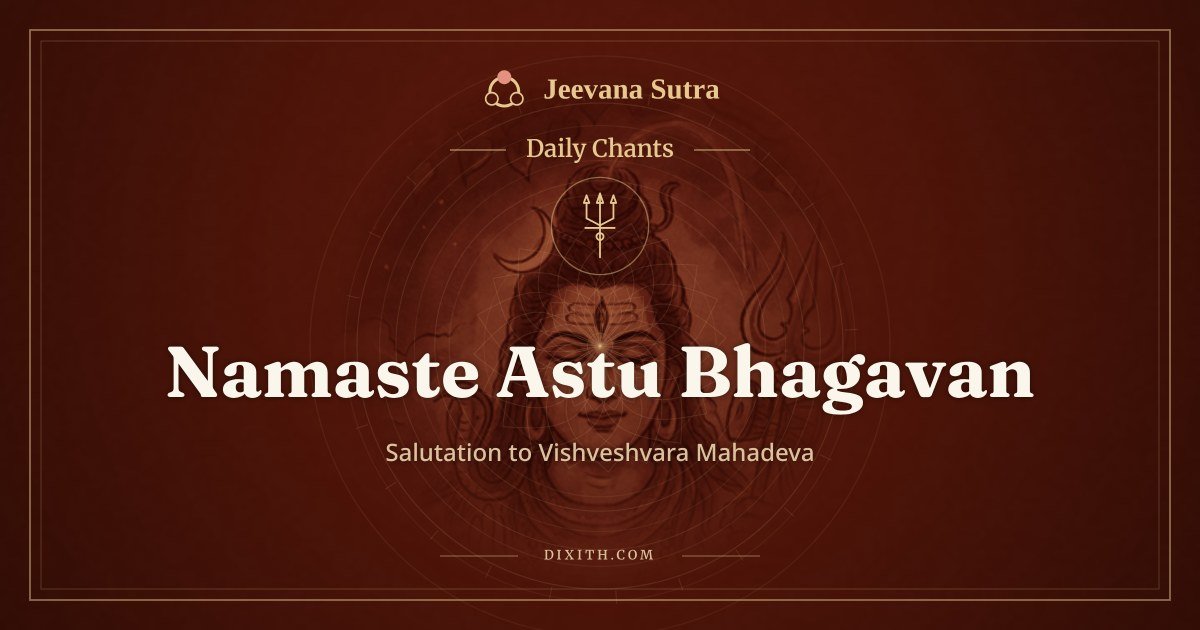
This is a mantra of a single sentence. In it we greet Shiva by naming eleven of his names.
It is the custom to recite this prayer along with the Rudra recitation. We remember his glory as lord of the universe, destroyer of the three cities, holder of the poison in his throat and conqueror of death.
Verse (Devanagari)
नमस्ते अस्तु भगवन् विश्वेश्वराय महादेवाय त्र्यंबकाय त्रिपुरांतकाय
त्रिकाग्निकालाय कालाग्निरुद्राय नीलकंठाय मृत्युंजयाय सर्वेश्वराय
सदाशिवाय श्रीमन्महादेवाय नमः ॥
Verse (IAST)
namaste astu bhagavan viśveśvarāya mahādevāya tryaṃbakāya tripurāṃtakāya
trikāgnikālāya kālāgnirudrāya nīlakaṃṭhāya mṛtyuṃjayāya sarveśvarāya
sadāśivāya śrīmanmahādevāya namaḥ ||
Word by word
- नमस्ते (namaste) = salutation to you
- अस्तु (astu) = let there be
- भगवन् (bhagavan) = O revered Lord
- विश्वेश्वराय (viśveśvarāya) = to the lord of the universe
- महादेवाय (mahādevāya) = to Mahadeva, the great god
- त्र्यंबकाय (tryaṃbakāya) = to the three-eyed one
- त्रिपुरांतकाय (tripurāṃtakāya) = to the ender of the three cities
- त्रिकाग्निकालाय (trikāgnikālāya) = to the one who is time and fire (the split of the compound is uncertain)
- कालाग्निरुद्राय (kālāgnirudrāya) = to Kalagni Rudra, Rudra who is the fire of time
- नीलकंठाय (nīlakaṃṭhāya) = to the blue-throated one
- मृत्युंजयाय (mṛtyuṃjayāya) = to the conqueror of death
- सर्वेश्वराय (sarveśvarāya) = to the lord of all
- सदाशिवाय (sadāśivāya) = to Sadashiva, the ever auspicious
- श्रीमन्महादेवाय (śrīmanmahādevāya) = to the glorious Mahadeva
- नमः (namaḥ) = salutation
Full meaning
O revered Lord, salutation to you. Salutation to the lord of the universe, to Mahadeva, to the three-eyed one, to the ender of the three cities. Salutation to the one who is time and fire, to Kalagni Rudra, to the blue-throated one. Salutation to the conqueror of death, to the lord of all, to Sadashiva and to the glorious Mahadeva.
About this mantra
This is one sentence of eleven names. Each name points to a deed or form of Shiva. Tripurantaka is the one who destroyed the three cities. Nilakantha is the one who held the poison in his throat.
This mantra is printed along with the Rudram text. The sources we checked do not say which anuvaka it belongs to, so we give no number.
The first word of the second line reads trikagnikalaya in both sources. Other versions may say it differently. We keep the reading found in both. We are not sure how the compound splits.
Sources: several. Where versions differ, we have noted it here.
For life today
Saying eleven names one after another gives a single breath-like rhythm. It is a good pattern for closing a long recitation calmly.
The name Mrityunjaya points to the one who conquered death. That is a belief of the tradition. Prayer does not replace medical treatment. Let us seek a doctor’s advice when health is a concern.
Noticed a mistake or a different reading? Tell us.
Leave a comment