ಏಳೂ ಚಕ್ರಗಳು · ಹಿಂದಿನದು: ವಿಶುದ್ಧಿ · ಮುಂದಿನದು: ಸಹಸ್ರಾರ
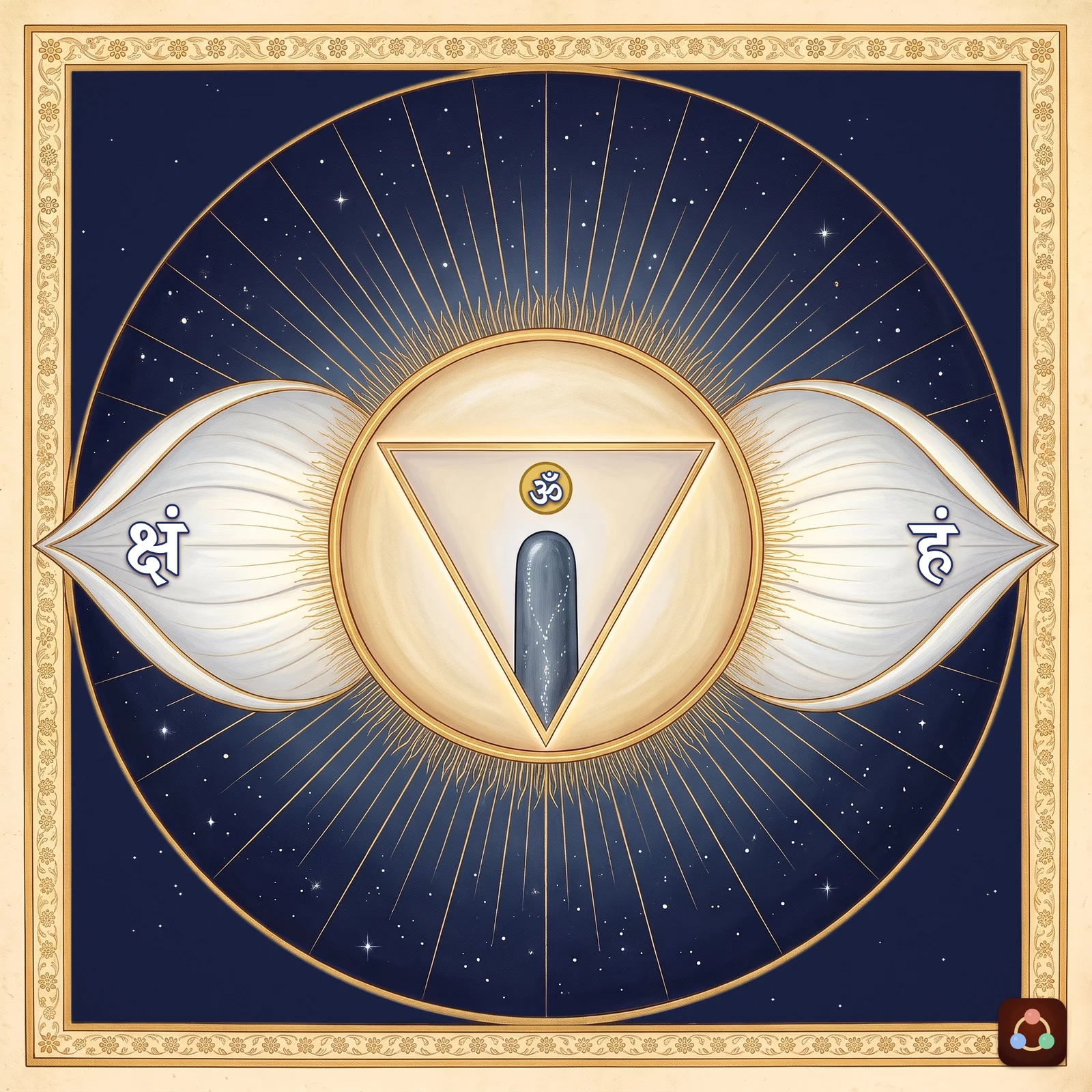
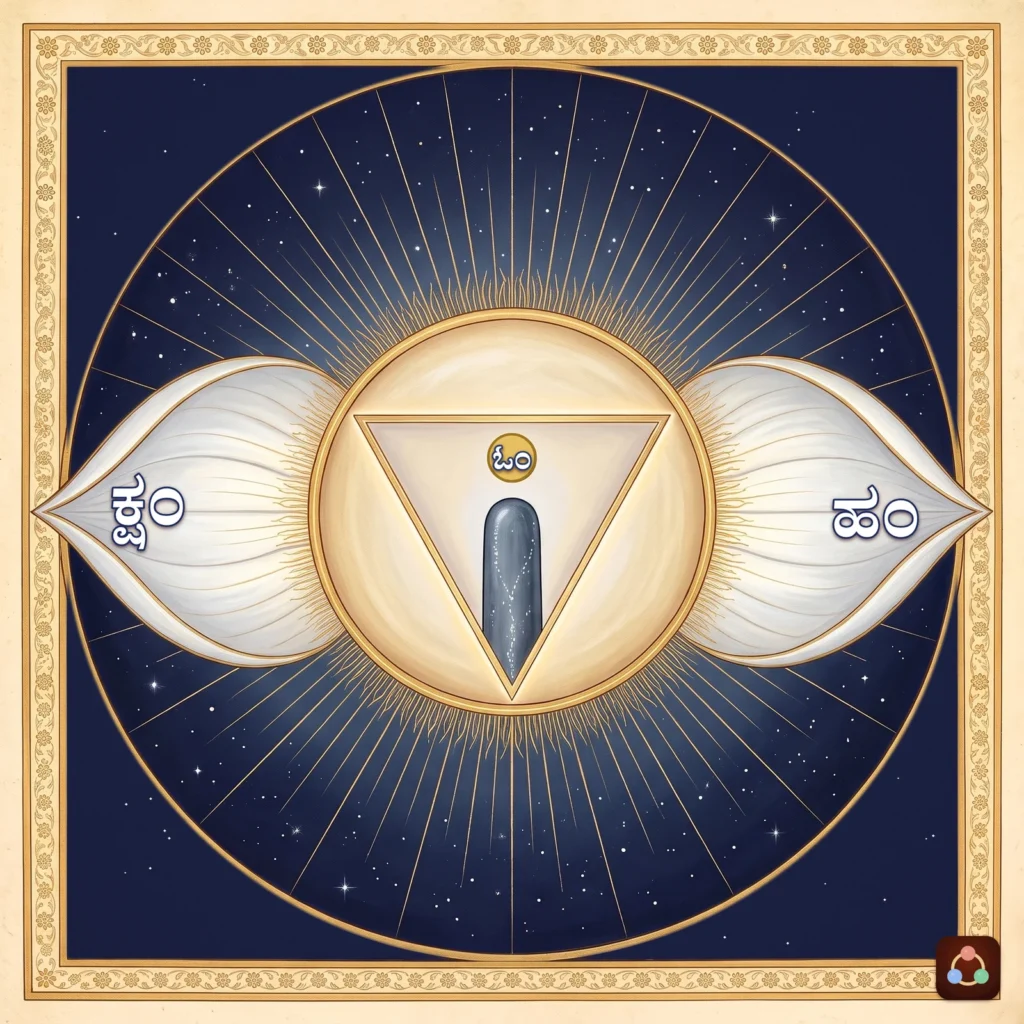
ಎರಡು ಬಿಳಿಯ ದಳಗಳು, ರೆಕ್ಕೆಗಳ ಜೋಡಿಯಂತೆ ಎಡಬಲಕ್ಕೆ ಅರಳಿವೆ.
ಅವುಗಳ ನಡುವೆ ತಿಳಿ ಚಿನ್ನದ ಬಣ್ಣದ ದುಂಡನೆಯ ಮಂಡಲವಿದೆ; ಅದರೊಳಗೆ ಕೆಳಮುಖವಾಗಿರುವ ಒಂದು ತ್ರಿಕೋನ. ತ್ರಿಕೋನದ ನಡುವೆ, ಒಳಗೆ ಮಸುಕಾದ ಬೆಳಕಿನ ಸಾಲುಗಳನ್ನು ಹೊತ್ತ ಕಪ್ಪು ಕಂಬವೊಂದು ನಿಂತಿದೆ; ಆ ಕಂಬದ ಮೇಲೆ, ಚಿನ್ನದ ಪುಟ್ಟ ಮಂಡಲದ ಮೇಲೆ, ‘ಓಂ’ ಎಂಬ ಪ್ರಣವಾಕ್ಷರವಿದೆ.
ಇದುವೇ ಹುಬ್ಬುಗಳ ನಡುವೆ ಇರುವ ಆರನೆಯ ಕಮಲ, ಆಜ್ಞಾ ಚಕ್ರ. ಷಟ್ಚಕ್ರ ನಿರೂಪಣ ಇದಕ್ಕೆ ಏಳು ಶ್ಲೋಕಗಳನ್ನು ಕೊಟ್ಟಿದೆ. ಸೌಂದರ್ಯ ಲಹರಿ ಇದಕ್ಕೆ 36ನೆಯ ಶ್ಲೋಕವನ್ನು ಕೊಟ್ಟಿದೆ; ಮನಸ್ಸಿನಿಂದ ಹಿಡಿದು ಪೃಥ್ವಿಯವರೆಗೆ ಚಕ್ರಗಳನ್ನು ಇಳಿಯುತ್ತಾ ಸಾಗುವ ಆರು ಶ್ಲೋಕಗಳಲ್ಲಿ ಇದು ಮೊದಲನೆಯದು.
ಈ ಪುಟದಲ್ಲಿಹೆಸರು · ಇದು ಎಲ್ಲಿದೆ? · ಗ್ರಂಥಗಳು ವರ್ಣಿಸುವ ಕಮಲ · ಷಟ್ಚಕ್ರ ನಿರೂಪಣ ಏನು ಹೇಳುತ್ತದೆ? · ಸೌಂದರ್ಯ ಲಹರೀ ಏನು ಹೇಳುತ್ತದೆ? · ಲಲಿತಾ ಸಹಸ್ರನಾಮ ಏನು ಹೇಳುತ್ತದೆ? · ಮೂರು ಗ್ರಂಥಗಳು, ಒಂದೇ ಕಮಲ · ಅಂತರಂಗದ ಬದುಕಿಗೆ ಇದರ ಅರ್ಥವೇನು? · ದೇಹದ ಈ ಜಾಗದಲ್ಲಿ ಏನಿದೆ? · ಆಕರಗಳು
ಹೆಸರು
ಆಜ್ಞಾ ಎಂದರೆ ‘ಆದೇಶ’. ಷಟ್ಚಕ್ರ ನಿರೂಪಣದ ವ್ಯಾಖ್ಯಾನವು ಇದಕ್ಕೆ ಕಾರಣವನ್ನು ನೀಡುತ್ತದೆ: ಗುರುವಿನ ಆಜ್ಞೆಯು ಇಲ್ಲಿ ದೊರೆಯುತ್ತದೆ, ಹಾಗಾಗಿ ಈ ಕಮಲಕ್ಕೆ ಆಜ್ಞಾ ಎಂದು ಹೆಸರು. ಸರ್ ಜಾನ್ ವುಡ್ರಫ್ ಚಕ್ರಗಳ ಕುರಿತ ತಮ್ಮ ವಿವರಣೆಯಲ್ಲಿ ಇದನ್ನೇ ಹೇಳುತ್ತಾರೆ: ಗುರುವಿನ ಆದೇಶವು ಮೇಲಿನಿಂದ ಇಲ್ಲಿಯೇ ತಲುಪುವುದು. ತಂತ್ರಾಂತರ ತಂತ್ರ ಎಂಬ ಇನ್ನೊಂದು ಗ್ರಂಥವು ಈ ಚಕ್ರವನ್ನು ‘ಶಿವಗೇಹ’ (ಶಿವನ ಮನೆ) ಎಂದು ಕರೆಯುತ್ತದೆ ಎಂಬುದನ್ನು ಒಂದು ಟಿಪ್ಪಣಿ ಸೇರಿಸುತ್ತದೆ.
ಸೌಂದರ್ಯ ಲಹರಿಯ 1937ರ ವ್ಯಾಖ್ಯಾನವು ಇನ್ನೊಂದು ಕಾರಣವನ್ನು ನೀಡುತ್ತದೆ. 9ನೆಯ ಶ್ಲೋಕದ ಟಿಪ್ಪಣಿಯಲ್ಲಿ, ದೇವಿಯ ಬಗೆಗಿನ ಜ್ಞಾನದ ಒಂದು ಕಿಡಿ ಈ ಹಂತದಲ್ಲಿ ಹೊಳೆಯುವುದರಿಂದ ಈ ಕೇಂದ್ರಕ್ಕೆ ಆಜ್ಞಾ ಎಂದು ಹೆಸರು ಎನ್ನುತ್ತದೆ. 36ನೆಯ ಶ್ಲೋಕದ ಟಿಪ್ಪಣಿಯು ‘ನಿನ್ನ ಆಜ್ಞಾ ಚಕ್ರ’ ಎಂಬುದನ್ನು ಮೂರು ರೀತಿಗಳಲ್ಲಿ ನೋಡುತ್ತದೆ: ನಿನ್ನ ಆದೇಶದ ವ್ಯಾಪ್ತಿಯಲ್ಲಿ, ನಿನ್ನ ಹುಬ್ಬುಗಳ ನಡುವಿನ ಎರಡು ದಳಗಳ ಕಮಲದಲ್ಲಿ, ಅಥವಾ ನಿನ್ನ ರೂಪದ ಮನಸ್ಸಿನಲ್ಲಿ.
ಇದು ಎಲ್ಲಿದೆ?
ಷಟ್ಚಕ್ರ ನಿರೂಪಣದ ವ್ಯಾಖ್ಯಾನವು ಇದನ್ನು ‘ಹುಬ್ಬುಗಳ ನಡುವೆ’ ಇರಿಸುತ್ತದೆ, ಮತ್ತು ಹೆಸರು ಹೇಳದ ಒಂದು ಗ್ರಂಥದ ಮಾತನ್ನೂ ಎತ್ತಿ ಹೇಳುತ್ತದೆ; ಅದೂ ಇದನ್ನೇ ಹೇಳುತ್ತದೆ: ಗಂಟಲು ಮತ್ತು ಅಂಗುಳಿನ ಮೂಲಕ ಮೇಲೇರುತ್ತಾ, ಕುಂಡಲಿನಿಯು ಹುಬ್ಬುಗಳ ನಡುವೆ ಇರುವ ಶುಭ್ರ ಬಿಳಿಯ ಕಮಲವನ್ನು ತಲುಪುತ್ತದೆ; ಇದು ಮನಸ್ಸಿನ ಸ್ಥಾನ. 36ನೆಯ ಶ್ಲೋಕದ ಟಿಪ್ಪಣಿಯಲ್ಲಿ, ವುಡ್ರಫ್ ‘ಖ’ ಎಂಬ ಪದಕ್ಕೆ ಮೂರು ಅರ್ಥಗಳನ್ನು ಪಟ್ಟಿ ಮಾಡುತ್ತಾರೆ: ಆಕಾಶ, ಬ್ರಹ್ಮ, ಮತ್ತು ಹುಬ್ಬುಗಳ ನಡುವಿನ ಜಾಗ, ಅಂದರೆ ಆಜ್ಞಾ.
ಈ ಗ್ರಂಥಗಳಲ್ಲಿ ಬರುವ ಪ್ರತಿಯೊಂದು ಕಮಲದಂತೆಯೇ, ಇದು ಕೂಡ ಬೆನ್ನುಮೂಳೆಯ ಕಾಲುವೆಯ ಒಳಗಿರುವ, ಈ ಮಟ್ಟದ ಒಂದು ಶಕ್ತಿ ಕೇಂದ್ರವೇ ಹೊರತು, ಚರ್ಮದ ಮೇಲಿನ ಬಿಂದುವಲ್ಲ.
ಗ್ರಂಥಗಳು ವರ್ಣಿಸುವ ಕಮಲ
| ದಳಗಳು | ಎರಡು, ಬಿಳಿ ಬಣ್ಣ |
| ದಳಗಳ ಮೇಲಿನ ಅಕ್ಷರಗಳು | ಹಂ ಕ್ಷಂ, ಪ್ರತಿಯೊಂದರ ಮೇಲೆ ಬಿಂದು, ಬಿಳಿ ಬಣ್ಣ |
| ಇಲ್ಲಿ ಇರುವುದು | ಸೂಕ್ಷ್ಮವಾದ ಮನಸ್ಸು (ಮನಸ್), ಷಟ್ಚಕ್ರ ನಿರೂಪಣದ 33ನೆಯ ಶ್ಲೋಕದಲ್ಲಿ; ವುಡ್ರಫ್ ಅವರ ಸ್ವಂತ ವಿವರಣೆಯಲ್ಲಿ ಮಹತ್ ಮತ್ತು ಪ್ರಕೃತಿಯೂ ಇಲ್ಲಿವೆ. ಸ್ಥೂಲ ತತ್ತ್ವ ಇಲ್ಲ |
| ಆಕಾರ | ಕರ್ಣಿಕೆಯಲ್ಲಿ ಯೋನಿ ಎಂಬ ತ್ರಿಕೋನ; ವುಡ್ರಫ್ ಅವರ ವಿವರಣೆಯಲ್ಲಿ ಕೆಳಮುಖ ತ್ರಿಕೋನ |
| ಬೀಜ | ಓಂ, ಪ್ರಣವ, ಕರ್ಣಿಕೆಯಲ್ಲಿ, ಲಿಂಗದ ಮೇಲೆ |
| ಲಿಂಗ | ಇತರ, ತ್ರಿಕೋನದಲ್ಲಿ, “ಮಿಂಚುಗಳ ಸರದಂತೆ” ಹೊಳೆಯುತ್ತದೆ (ಶ್ಲೋಕ 33) |
| ದೇವತೆ | ಇತರ ಶಿವ, ಲಿಂಗ ರೂಪದಲ್ಲಿ (ಶ್ಲೋಕ 33); ಅದರ ಮೇಲೆ ಬಿಂದುವಿನಲ್ಲಿ ಪರಮಶಿವ (ಶ್ಲೋಕ 37, 38 ಮತ್ತು ಸಾರಾಂಶ). ಸೌಂದರ್ಯ ಲಹರಿಯಲ್ಲಿ ಪರಶಂಭುನಾಥ ಮತ್ತು ಪರಮ ಪ್ರಜ್ಞೆಯಾದ ಚಿತ್ಪರಾಂಬಾ (ಶ್ಲೋಕ 36); 35ನೆಯ ಶ್ಲೋಕದ 1937ರ ವ್ಯಾಖ್ಯಾನದ ಪಟ್ಟಿಯಲ್ಲಿ ಶಿವ |
| ಅಧಿದೇವತೆ | ಷಟ್ಚಕ್ರ ನಿರೂಪಣದಲ್ಲೂ ಲಲಿತಾ ಸಹಸ್ರನಾಮದಲ್ಲೂ ಹಾಕಿನೀ |
| ದೇಹದ ಧಾತು | ಮಜ್ಜೆ |
| ಗ್ರಂಥಿ | ರುದ್ರನದು, ಕುಂಡಲಿನಿಯ ಏರುವಿಕೆಯ ವುಡ್ರಫ್ ಅವರ ವಿವರಣೆಯಲ್ಲಿ; ಬ್ರಹ್ಮನದು, ಆಜ್ಞಾ ಚಕ್ರದ ಕೊನೆಯಲ್ಲಿ, 1937ರ ವ್ಯಾಖ್ಯಾನದಲ್ಲಿ |
| ಕಿರಣಗಳು | ಅರವತ್ತನಾಲ್ಕು (ಸೌಂದರ್ಯ ಲಹರೀ 14) |
| ಸೌಂದರ್ಯ ಲಹರೀ | ಶ್ಲೋಕ 9, 14, 32, 35, 36, 41 ಮತ್ತು 99 (1937ರ ಪುಸ್ತಕದಲ್ಲಿ 101) |
ಷಟ್ಚಕ್ರ ನಿರೂಪಣ ಏನು ಹೇಳುತ್ತದೆ?
ಷಟ್ಚಕ್ರ ನಿರೂಪಣವು ಆಜ್ಞಾ ಚಕ್ರಕ್ಕೆ 32 ರಿಂದ 38 ರವರೆಗೆ ಏಳು ಶ್ಲೋಕಗಳನ್ನು ನೀಡಿದೆ. ಹೊರಗಿನಿಂದ ಒಳಮುಖವಾಗಿ ಅವು ತೋರಿಸುವುದು ಮತ್ತು ಸಾಧಕನಿಗೆ ಕಾಣಿಸುತ್ತದೆ ಎನ್ನುವುದು ಇಲ್ಲಿದೆ.
ದಳಗಳು. ಈ ಕಮಲವು ‘ಚಂದ್ರನಂತೆ (ಮನೋಹರವಾದ ಬಿಳಿ ಬಣ್ಣದಲ್ಲಿದೆ)’. ಇದರ ಎರಡು ದಳಗಳ ಮೇಲೆ ‘ಹ’ ಮತ್ತು ‘ಕ್ಷ’ ಎಂಬ ಅಕ್ಷರಗಳಿವೆ; ‘ಅವು ಕೂಡ ಬಿಳಿಯಾಗಿದ್ದು, ಕಮಲದ ಸೌಂದರ್ಯವನ್ನು ಹೆಚ್ಚಿಸುತ್ತವೆ’ (ಶ್ಲೋಕ 32). ವ್ಯಾಖ್ಯಾನವು ಹೇಳುವಂತೆ ಈ ಎರಡು ಅಕ್ಷರಗಳು ಸ್ವಭಾವತಃ ಬಿಳಿಯಾಗಿದ್ದು, ಬಿಳಿಯ ದಳಗಳ ಮೇಲೆ ಅವುಗಳ ಬಿಳುಪು ಇನ್ನಷ್ಟು ಕಂಗೊಳಿಸುತ್ತದೆ. ವ್ಯಾಖ್ಯಾನವು ಅಕ್ಷರಗಳನ್ನು ಕಲೆಗಳು ಎನ್ನುತ್ತದೆ, ಏಕೆಂದರೆ ಅವು ಕಲೆಗಳ ಬೀಜಗಳು. ವ್ಯಾಖ್ಯಾನಕಾರರು ಎತ್ತಿ ಹೇಳುವ ಇನ್ನೊಂದು ಗ್ರಂಥವು ಅಕ್ಷರಗಳನ್ನು ‘ಚಿತ್ರವರ್ಣದ್ದು’ ಎನ್ನುತ್ತದೆ; ಸಾರಾಂಶದ ಒಂದು ಟಿಪ್ಪಣಿ ‘ಕರ್ಬುರ’ ಪದಕ್ಕೆ ಬಿಳಿ ಎಂದೂ ನಾನಾ ಬಣ್ಣದ್ದು ಎಂದೂ ಅರ್ಥ ಎಂದು ಹೇಳುತ್ತದೆ. ಈ ಕಮಲವು ‘ಧ್ಯಾನದ ತೇಜಸ್ಸಿನಿಂದ ಬೆಳಗುತ್ತದೆ’; ಇದರ ಶರೀರವು ಧ್ಯಾನ ಶಕ್ತಿಯ ತೇಜಸ್ಸಿನಂತೆ ಹೊಳೆಯುತ್ತದೆ ಎಂದು ವ್ಯಾಖ್ಯಾನವು ಇದಕ್ಕೆ ಅರ್ಥ ನೀಡುತ್ತದೆ. ವುಡ್ರಫ್ ಅವರ ಸ್ವಂತ ವಿವರಣೆಯ ಪ್ರಕಾರ, ಒಟ್ಟು ಐವತ್ತು ದಳಗಳನ್ನು ಹೊಂದಿರುವ ಆರು ಚಕ್ರಗಳ ಐವತ್ತು ಅಕ್ಷರಗಳು ಈ ಎರಡು ಅಕ್ಷರಗಳಿಂದ ಮುಕ್ತಾಯವಾಗುತ್ತವೆ, ಮತ್ತು ಈ ಎರಡು ದಳಗಳು ಬಿಳಿಯಾಗಿರುತ್ತವೆ.
ಹಾಕಿನೀ. ‘ಇದರೊಳಗೆ ಹಾಕಿನೀ ಎಂಬ ಶಕ್ತಿಯಿದ್ದಾಳೆ; ಅವಳ ಆರು ಮುಖಗಳು ಚಂದ್ರನಂತೆ ಬೆಳಗುತ್ತಿವೆ. ಅವಳಿಗೆ ಆರು ಕೈಗಳಿವೆ; ಒಂದರಲ್ಲಿ ಪುಸ್ತಕವಿದೆ, ಇನ್ನೆರಡು ಕೈಗಳು ಅಭಯ ಮತ್ತು ವರದ ಮುದ್ರೆಗಳಲ್ಲಿ ಮೇಲೆದ್ದಿವೆ; ಉಳಿದ ಕೈಗಳಲ್ಲಿ ಕಪಾಲ, ಡಮರು ಮತ್ತು ಜಪಮಾಲೆಯನ್ನು ಹಿಡಿದಿದ್ದಾಳೆ. ಅವಳ ಮನಸ್ಸು ಶುದ್ಧವಾದುದು’ (ಶ್ಲೋಕ 32). ವುಡ್ರಫ್ ಅವರ ಟಿಪ್ಪಣಿಯು ಆಕೆ ಪುಸ್ತಕ ಹಿಡಿದಿಲ್ಲ, ಆಕೆಯ ಕೈ ಜ್ಞಾನಮುದ್ರೆಯಲ್ಲಿದೆ ಎನ್ನುತ್ತದೆ. ಆರು ಕೈಗಳಿದ್ದರೆ ಆರು ವಸ್ತುಗಳಿರಬೇಕು, ಆದರೆ ಕೆಲವರು ಈ ಪದವನ್ನು ಒಂದೇ ಎಂದು ಓದಿ, ವಿದ್ಯೆಯನ್ನು ಸೂಚಿಸುವ ಮುದ್ರೆ ಎಂದು ಗ್ರಹಿಸುತ್ತಾರೆ; ಆಗ ಆಕೆಗೆ ನಾಲ್ಕು ಕೈಗಳಾಗುತ್ತವೆ, ಮತ್ತು ‘ಬೇರೆ ಬೇರೆ ಹಸ್ತಪ್ರತಿಗಳಲ್ಲಿ ಬೇರೆ ಬೇರೆ ಪಾಠಗಳಿವೆ’ ಎಂದು ವ್ಯಾಖ್ಯಾನ ಹೇಳುತ್ತದೆ. ವ್ಯಾಖ್ಯಾನಕಾರರು ಎತ್ತಿ ಹೇಳುವ ಧ್ಯಾನಶ್ಲೋಕವು ಅವಳ ಬಗ್ಗೆ ಇನ್ನಷ್ಟು ವಿವರ ನೀಡುತ್ತದೆ: ಆಕೆ ಬಿಳಿಯ ಬಣ್ಣದವಳು, ಮಜ್ಜೆಯಲ್ಲಿ ನೆಲೆಸಿದವಳು, ಡಮರು, ರುದ್ರಾಕ್ಷಿ ಮಾಲೆ, ಕಪಾಲ, ಪುಸ್ತಕದ ಗುರುತು ಮತ್ತು ಮುದ್ರೆಯನ್ನು ಧರಿಸಿದವಳು, ಅರಸಿನದಿಂದ ಮಾಡಿದ ಅನ್ನವನ್ನು ಇಷ್ಟಪಡುವವಳು (ಅನುವಾದವು ಇದನ್ನು ‘ಟರ್ಮಿನೀ’ ಎನ್ನುತ್ತದೆ), ಮತ್ತು ಅಮೃತಪಾನದಿಂದ ಹರ್ಷಗೊಂಡಿರುವವಳು. (‘ಮಜ್ಜೆಯಲ್ಲಿ ನೆಲೆಸಿದವಳು’ ಎಂಬ ಪದವನ್ನು ‘ಚಕ್ರದಲ್ಲಿ ನೆಲೆಸಿದವಳು’ ಎಂದೂ ಓದುವವರಿದ್ದಾರೆ.) ಆಕೆ ಬಿಳಿಯ ಕಮಲದ ಮೇಲೆ ಕುಳಿತಿದ್ದಾಳೆ. ಶ್ಲೋಕಗಳ ಸಾರಾಂಶವು ಅವಳ ಆರೂ ಮುಖಗಳಲ್ಲಿ ತಲಾ ಮೂರು ಕಣ್ಣುಗಳನ್ನು ಸೇರಿಸುತ್ತದೆ, ಮತ್ತು ಅವಳ ಕೈಗಳಲ್ಲಿರುವ ವಸ್ತುಗಳ ಪಟ್ಟಿಯಲ್ಲಿ ಒಂದು ಪುಸ್ತಕವನ್ನೂ ಹೇಳುತ್ತದೆ; ಅದು ಶ್ಲೋಕವನ್ನು ಓದುವ ಇನ್ನೊಂದು ರೀತಿ. ನಮ್ಮ ಚಿತ್ರದಲ್ಲಿ ಅವಳನ್ನು ತೋರಿಸಿಲ್ಲ.
ಮನಸ್ಸು. ‘ಈ ಕಮಲದೊಳಗೆ ಸೂಕ್ಷ್ಮವಾದ ಮನಸ್ಸು (ಮನಸ್) ನೆಲೆಸಿದೆ. ಇದು ಎಲ್ಲರಿಗೂ ತಿಳಿದ ವಿಷಯ’ (ಶ್ಲೋಕ 33). ವ್ಯಾಖ್ಯಾನವು ಒಂದು ಸಹಜ ಪ್ರಶ್ನೆಯನ್ನು ಕೇಳುತ್ತದೆ: ಮನಸ್ಸು ಇಂದ್ರಿಯಗಳಿಗೆ ಮೀರಿದ್ದು, ಹಾಗಾದರೆ ಅದು ಇಲ್ಲಿದೆ ಎನ್ನಲು ಪುರಾವೆ ಏನು? ಇದಕ್ಕೆ ಅದರ ಉತ್ತರ: ಇದು ಎಲ್ಲರಿಗೂ ತಿಳಿದಿರುವಂಥದ್ದು, ಅನುಭವವೇದ್ಯವಾಗಿ ತಲೆಮಾರಿನಿಂದ ತಲೆಮಾರಿಗೆ ಬಂದಿರುವುದು, ಮತ್ತು ಮನಸ್ಸು ಸಂಕಲ್ಪ-ವಿಕಲ್ಪಗಳನ್ನು ಮಾಡುತ್ತದೆ ಎಂದು ಶಾಸ್ತ್ರಗಳು ಹೇಳುತ್ತವೆ. ವುಡ್ರಫ್ ಅವರ ಸ್ವಂತ ವಿವರಣೆಯಲ್ಲಿ, ಆಜ್ಞಾ ಚಕ್ರವು ಮಹತ್ ಮತ್ತು ಪ್ರಕೃತಿ ಎಂಬ ಸೂಕ್ಷ್ಮ ತತ್ತ್ವಗಳ ಸ್ಥಾನವಾಗಿದೆ; ‘ಸಾಮಾನ್ಯವಾಗಿ ಮತ್ತು ಸಂಕ್ಷಿಪ್ತವಾಗಿ ಮನಸ್ಸೇ ಆಜ್ಞಾ ಚಕ್ರದ ತತ್ತ್ವ ಎಂದು ಹೇಳಲಾಗುತ್ತದೆ’ ಎನ್ನುತ್ತಾರೆ ಅವರು. ಮಾನಸಿಕ ಕೇಂದ್ರವಾಗಿರುವ ಇದು, ಮನಸ್ಸಿನ ಇತರ ಆಯಾಮಗಳನ್ನು ಮತ್ತು ಓಂಕಾರ ರೂಪದ ಆತ್ಮವನ್ನೂ ಒಳಗೊಂಡಿದೆ ಎಂದು ಅವರು ಸೇರಿಸುತ್ತಾರೆ.
ತ್ರಿಕೋನ ಮತ್ತು ಲಿಂಗ. ‘ಕರ್ಣಿಕೆಯೊಳಗಿನ ಯೋನಿಯ ಮಧ್ಯದಲ್ಲಿ, ಇತರ ಎಂಬ ಹೆಸರಿನ ಶಿವನು ಲಿಂಗರೂಪದಲ್ಲಿದ್ದಾನೆ. ಆತ ಇಲ್ಲಿ ಮಿಂಚಿನ ಸಾಲಿನಂತೆ ಬೆಳಗುತ್ತಾನೆ’ (ಶ್ಲೋಕ 33). ಯೋನಿ ಎಂದರೆ ತ್ರಿಕೋನ. ಶ್ಲೋಕಗಳ ಸಾರಾಂಶವು ಇದನ್ನು ತ್ರಿಕೋನ ಎಂದು ಕರೆಯುತ್ತದೆ, ಮತ್ತು ವುಡ್ರಫ್ ಅವರ ವಿವರಣೆಯು ಇದನ್ನು ತಲೆಕೆಳಗಾದ ತ್ರಿಕೋನ ಎನ್ನುತ್ತದೆ; ಆದ್ದರಿಂದ ನಮ್ಮ ಚಿತ್ರದಲ್ಲಿ ಅದನ್ನು ಕೆಳಮುಖವಾಗಿ ಬರೆದಿದೆ. ‘ಇತರ’ ಎಂಬುದಕ್ಕೆ ವಿಶ್ವನಾಥರು ‘ಕಾಲವನ್ನು ದಾಟಿಸುವಂಥದ್ದು’ ಎಂದು ಅರ್ಥೈಸುತ್ತಾರೆ. ಲಿಂಗವು ಬಿಳಿಯಾಗಿದ್ದು, ನಿರಂತರವಾಗಿ ಹೊಳೆಯುವ ಮಿಂಚಿನ ಗೆರೆಗಳನ್ನು ಹೋಲುತ್ತದೆ ಎಂದು ವ್ಯಾಖ್ಯಾನ ಹೇಳುತ್ತದೆ; ಅದು ಎತ್ತಿ ಹೇಳುವ ಭೂತಶುದ್ಧಿ ತಂತ್ರವು ಇದನ್ನು ‘ಸ್ಫಟಿಕದಂತೆ ಶುಭ್ರವಾಗಿದ್ದು, ಮೂರು ಕಣ್ಣುಗಳುಳ್ಳದ್ದು’ ಎಂದು ವರ್ಣಿಸುತ್ತದೆ. ವುಡ್ರಫ್ ಇದನ್ನು ಮೂರು ಲಿಂಗಗಳಲ್ಲಿ ಮೂರನೆಯದು ಎಂದು ಪಟ್ಟಿ ಮಾಡುತ್ತಾರೆ: ಮೂಲಾಧಾರದಲ್ಲಿ ಸ್ವಯಂಭೂ, ಹೃದಯದಲ್ಲಿ ಬಾಣ, ಆಜ್ಞಾದಲ್ಲಿ ಇತರ. ನಮ್ಮ ಚಿತ್ರವು ಮಸುಕಾದ ಬೆಳಕಿನ ಸಾಲನ್ನು ಒಳಗೊಂಡ ಕಪ್ಪು ಕಂಬವನ್ನು ತೋರಿಸುತ್ತದೆ.
ಓಂ. ಶ್ಲೋಕವು ಹೀಗೆ ಮುಂದುವರಿಯುತ್ತದೆ: ‘ವೇದಗಳ ಮೊದಲ ಬೀಜವೂ ಅಲ್ಲಿದೆ; ಅದು ಅತ್ಯುನ್ನತ ಶಕ್ತಿಯ ಆವಾಸಸ್ಥಾನವಾಗಿದ್ದು, ತನ್ನ ಪ್ರಭೆಯಿಂದ ಬ್ರಹ್ಮಸೂತ್ರವನ್ನು ಕಣ್ಣಿಗೆ ಕಾಣುವಂತೆ ಮಾಡುತ್ತದೆ’ (ಶ್ಲೋಕ 33). ಮೊದಲ ಬೀಜವೆಂದರೆ ಓಂ, ಮತ್ತು ಬ್ರಹ್ಮಸೂತ್ರವೆಂದರೆ ಚಿತ್ರಿಣೀ ಎಂಬ ನಾಡಿ ಎಂದು ವುಡ್ರಫ್ ಗುರುತಿಸುತ್ತಾರೆ. 35ನೆಯ ಶ್ಲೋಕ ಪ್ರಣವವನ್ನು ಇನ್ನಷ್ಟು ಹತ್ತಿರದಿಂದ ವರ್ಣಿಸುತ್ತದೆ: ತ್ರಿಕೋನದೊಳಗೆ ಅದನ್ನು ರೂಪಿಸುವ ಅಕ್ಷರಗಳ ಸಂಯೋಜನೆಯಿದೆ, ‘ಶುದ್ಧ ಮನಸ್ಸಿನ (ಬುದ್ಧಿ) ರೂಪದ ಅಂತರಾತ್ಮ’ ಜ್ವಾಲೆಯ ತೇಜಸ್ಸಿನಂತೆ ಅಲ್ಲಿದೆ; ಅದರ ಮೇಲೆ ಅರ್ಧಚಂದ್ರ; ಅದರ ಮೇಲೆ ಬಿಂದುವಾಗಿ ಹೊಳೆಯುವ ‘ಮ’ಕಾರ; ಅದರ ಮೇಲೆ ಬಲರಾಮನಂತೆ ಬಿಳಿಯಾದ, ಚಂದ್ರನ ಕಿರಣಗಳನ್ನು ಚೆಲ್ಲುವ ನಾದವಿದೆ. ‘ಅ’ ಮತ್ತು ‘ಉ’ ಸೇರಿ ‘ಓ’ ಆಗುತ್ತದೆ, ಅರ್ಧಚಂದ್ರ ಮತ್ತು ಬಿಂದು ಸೇರಿ ಓಂಕಾರ ಪೂರ್ಣಗೊಳ್ಳುತ್ತದೆ ಎಂದು ವ್ಯಾಖ್ಯಾನವು ಸೇರಿಸುತ್ತದೆ.
ಧ್ಯಾನದ ಕ್ರಮ. ಶ್ಲೋಕದಲ್ಲಿ ಇವುಗಳನ್ನು ಹೆಸರಿಸಿರುವ ಕ್ರಮವೇ ಧ್ಯಾನ ಮಾಡುವ ಕ್ರಮವಲ್ಲ ಎಂದು ವ್ಯಾಖ್ಯಾನವು ಗಮನಿಸುತ್ತದೆ. ಅವುಗಳ ಅರ್ಥದ ಪ್ರಕಾರ ಕ್ರಮ ಹೀಗಿದೆ: ಮೊದಲು ಕರ್ಣಿಕೆಯಲ್ಲಿ ಹಾಕಿನೀ; ಅವಳ ಮೇಲಿನ ತ್ರಿಕೋನದಲ್ಲಿ ಇತರ ಲಿಂಗ; ಅವನ ಮೇಲಿನ ತ್ರಿಕೋನದಲ್ಲಿ ಪ್ರಣವ; ಮತ್ತು ಪ್ರಣವದ ಮೇಲೆಯೇ ಮನಸ್ಸು. ನಮ್ಮ ಚಿತ್ರವು ತ್ರಿಕೋನದಲ್ಲಿ ಲಿಂಗವನ್ನೂ, ಅದರ ಮೇಲಿನ ಚಿನ್ನದ ಪುಟ್ಟ ಮಂಡಲದ ಮೇಲೆ ಪ್ರಣವವನ್ನೂ ತೋರಿಸುತ್ತದೆ.
ಫಲ. ಈ ಕಮಲವನ್ನು ಧ್ಯಾನಿಸುವ ಸಾಧಕನಿಗೆ 34ನೆಯ ಶ್ಲೋಕವು ಹಲವು ಫಲಗಳನ್ನು ನೀಡುತ್ತದೆ: ಆತ ಇಷ್ಟ ಬಂದಾಗ ಇನ್ನೊಬ್ಬರ ಶರೀರವನ್ನು ಶೀಘ್ರವಾಗಿ ಪ್ರವೇಶಿಸಬಲ್ಲ, ಶ್ರೇಷ್ಠ ಮುನಿಯಾಗುತ್ತಾನೆ, ಸರ್ವಜ್ಞನೂ ಸರ್ವದರ್ಶಿಯೂ ಆಗುತ್ತಾನೆ, ಎಲ್ಲರಿಗೂ ಹಿತವನ್ನು ಬಯಸುವವನಾಗುತ್ತಾನೆ, ಸಕಲ ಶಾಸ್ತ್ರಗಳನ್ನು ಬಲ್ಲವನಾಗುತ್ತಾನೆ; ತಾನು ಬ್ರಹ್ಮನೊಂದಿಗೆ ಒಂದಾಗಿದ್ದೇನೆ ಎಂದು ಅರಿಯುತ್ತಾನೆ ಮತ್ತು ಶ್ರೇಷ್ಠ ಸಿದ್ಧಿಗಳನ್ನು ಪಡೆಯುತ್ತಾನೆ, ಕೀರ್ತಿವಂತನೂ ದೀರ್ಘಾಯುಷಿಯೂ ಆಗುತ್ತಾನೆ, ಹಾಗೂ ಮೂರು ಲೋಕಗಳ ಸೃಷ್ಟಿ, ಸ್ಥಿತಿ, ಲಯಕಾರಕನಾಗುತ್ತಾನೆ. ಕೊನೆಯ ಸಾಲು ಕೇವಲ ಪ್ರಶಂಸಾವಾದ, ಅಥವಾ ದೇಹವು ನಶಿಸಿದಾಗ ಆತ ಪರಮಾತ್ಮನಲ್ಲಿ ಲೀನವಾಗುತ್ತಾನೆ ಎಂಬುದು ಇದರ ಅರ್ಥ ಎಂದು ವ್ಯಾಖ್ಯಾನವು ಹೇಳುತ್ತದೆ. ಇವು ಧ್ಯಾನದ ಕುರಿತು ಪರಂಪರೆ ನೀಡಿರುವ ಭರವಸೆಗಳು. ಇವು ವೈದ್ಯಕೀಯ ಮಾತುಗಳಲ್ಲ.
ಯೋಗಿಗೆ ಏನು ಕಾಣಿಸುತ್ತದೆ? 36ನೆಯ ಶ್ಲೋಕ ಒಂದು ಅಭ್ಯಾಸದ ಬಗ್ಗೆ ಹೇಳುತ್ತದೆ. ಯೋಗಿಯು ‘ಯಾವುದೇ ಆಧಾರವಿಲ್ಲದೆ ತೂಗಾಡುವ ಮನೆಯನ್ನು ಮುಚ್ಚಿದಾಗ’, ಮತ್ತು ನಿರಂತರ ಅಭ್ಯಾಸದಿಂದ ಅವನ ಮನಸ್ಸು ‘ಅಖಂಡ ಆನಂದದ ನೆಲೆ’ಯಾದ ಈ ಜಾಗದಲ್ಲಿ ಲಯವಾದಾಗ, ತ್ರಿಕೋನದ ಮೇಲೆ ಬೆಂಕಿಯ ಕಿಡಿಗಳು ಹೊಳೆಯುವುದನ್ನು ಆತ ಕಾಣುತ್ತಾನೆ. ಮನೆಯನ್ನು ಮುಚ್ಚುವುದು ಎಂದರೆ ಯೋನಿಮುದ್ರೆ, ಅಥವಾ ಖೇಚರೀ ಮುದ್ರೆ ಎಂದು ವ್ಯಾಖ್ಯಾನ ಹೇಳುತ್ತದೆ. ಮೊದಲನೆಯದಕ್ಕೆ ವುಡ್ರಫ್ ಅವರ ಟಿಪ್ಪಣಿ ಶಾರದಾ ತಿಲಕ ಎಂದು ಹೆಸರಿಸುವ ಒಂದು ಭಾಗವನ್ನು ಅದು ಎತ್ತಿ ಹೇಳುತ್ತದೆ: ಹೆಬ್ಬೆರಳುಗಳಿಂದ ಕಿವಿಗಳನ್ನು, ತೋರುಬೆರಳುಗಳಿಂದ ಕಣ್ಣುಗಳನ್ನು, ಮಧ್ಯದ ಬೆರಳುಗಳಿಂದ ಮೂಗಿನ ಹೊಳ್ಳೆಗಳನ್ನು ಮತ್ತು ಉಳಿದ ಬೆರಳುಗಳಿಂದ ಬಾಯಿಯನ್ನು ಮುಚ್ಚಿ, ಉಸಿರನ್ನು ಹಿಡಿದಿಟ್ಟುಕೊಳ್ಳಬೇಕು. ಪರಂಪರೆಯ ದಾಖಲೆಯಾಗಿ ನಾನಿದನ್ನು ನೀಡುತ್ತಿದ್ದೇನೆ ಅಷ್ಟೇ. ಇದೊಂದು ಸಲಹೆಯಲ್ಲ; ಹೀಗೆ ಉಸಿರು ಕಟ್ಟುವುದು ಕಲಿಯಬೇಕಾದ ವಿಷಯವೇ ಆಗಿದ್ದರೆ, ಅದನ್ನು ಗುರುವಿನಿಂದಲೇ ಕಲಿಯಬೇಕು. ‘ಕೋಟಿ ಶಾಸ್ತ್ರಗಳಿಂದಲ್ಲ’, ಗುರುವಿನ ಸೇವೆಯಿಂದಲೇ ಈ ಜ್ಞಾನ ದೊರೆಯುತ್ತದೆ ಎಂದೂ ವ್ಯಾಖ್ಯಾನ ಹೇಳುತ್ತದೆ. ಕಿಡಿಗಳ ನಂತರ, ಯೋಗಿಗೆ ಆಕಾಶ ಮತ್ತು ಭೂಮಿಯ ನಡುವೆ ಬೆಳಗುವ ಮುಂಜಾನೆಯ ಸೂರ್ಯನಂತೆ ಪ್ರಕಾಶಮಾನವಾದ, ಉರಿಯುವ ದೀಪದಂತಹ ಬೆಳಕು ಕಾಣಿಸುತ್ತದೆ (ಶ್ಲೋಕ 37). ಈ ಬೆಳಕು ಮೂಲಾಧಾರದಿಂದ ಸಹಸ್ರಾರದವರೆಗೆ ಹಬ್ಬಿರುತ್ತದೆ ಮತ್ತು ಸಹಸ್ರಾರದಲ್ಲಿರುವಂತೆಯೇ ಪರಮಶಿವನು ಇಲ್ಲಿಯೂ ನೆಲೆಸಿದ್ದಾನೆ ಎಂದು ವ್ಯಾಖ್ಯಾನ ಹೇಳುತ್ತದೆ. ಈ ಸ್ಥಾನದ ಬಗ್ಗೆ 38ನೆಯ ಶ್ಲೋಕ ಹೀಗೆ ಹೇಳುತ್ತದೆ: ಯೋಗಿಯು ಮರಣ ಸಮಯದಲ್ಲಿ ತನ್ನ ಪ್ರಾಣವನ್ನು ಇಲ್ಲಿ ಇರಿಸಿ, ಪರಮ ಪುರುಷನನ್ನು ಪ್ರವೇಶಿಸುತ್ತಾನೆ. ವ್ಯಾಖ್ಯಾನವು ಇದನ್ನು ವಿಷ್ಣುವಿನ ನೆಲೆ ಎಂದು ಕರೆಯುವ ‘ಬಿಂದು’ ಎಂದು ಗ್ರಹಿಸುತ್ತದೆ, ಮತ್ತು ಸಾವನ್ನು ಸಮೀಪಿಸಿದಾಗ ಅನುಭವಿ ಯೋಗಿಯು ಪ್ರಾಣವನ್ನು ಚಕ್ರಗಳ ಮೂಲಕ ಹೇಗೆ ಮೇಲಕ್ಕೆ ಕೊಂಡೊಯ್ಯುತ್ತಾನೆ ಎಂಬುದನ್ನು ವರ್ಣಿಸುತ್ತದೆ. ಮರಣದ ಬಗ್ಗೆ ಪರಂಪರೆ ಏನು ಹೇಳುತ್ತದೆ ಎಂದು ನಾನಿದನ್ನು ಹೇಳುತ್ತಿದ್ದೇನೆ ಅಷ್ಟೇ ಹೊರತು, ಯಾರಿಗೂ ಮಾರ್ಗದರ್ಶನವಾಗಿ ಅಲ್ಲ.
ಸಾರಾಂಶ. 38ನೆಯ ಶ್ಲೋಕದ ನಂತರ, ಶ್ಲೋಕಗಳ ಸಾರಾಂಶವು ಇದನ್ನು ಒಂದೇ ಚಿತ್ರದಲ್ಲಿ ಹಿಡಿದಿಡುತ್ತದೆ. ಕರ್ಣಿಕೆಯಲ್ಲಿ ಹಾಕಿನೀ ಇದ್ದಾಳೆ. ಅವಳ ಮೇಲೆ, ತ್ರಿಕೋನದಲ್ಲಿ ‘ಮಿಂಚಿನಂತಿರುವ’ ಇತರ ಲಿಂಗವಿದೆ. ಅದರ ಮೇಲೆ, ಇನ್ನೊಂದು ತ್ರಿಕೋನದಲ್ಲಿ ಜ್ವಾಲೆಯಂತೆ ಬೆಳಗುವ ಅಂತರಾತ್ಮನಿದ್ದಾನೆ; ಮೂಲಾಧಾರ ಮತ್ತು ಬ್ರಹ್ಮರಂಧ್ರಗಳ ನಡುವಿನ ಎಲ್ಲವನ್ನೂ ಕಾಣಿಸುವ ಬೆಳಕಿನ ಸುತ್ತಲೂ, ನಾಲ್ಕೂ ಬದಿಗಳಲ್ಲಿ ಕಿಡಿಗಳು ತೇಲುತ್ತಿವೆ. ಅದರ ಮೇಲೆ ಮನಸ್ಸಿದೆ, ಮತ್ತು ಮನಸ್ಸಿನ ಮೇಲೆ, ಚಂದ್ರ ಮಂಡಲದಲ್ಲಿ ಹಂಸವಿದೆ; ಆ ಹಂಸದಲ್ಲಿ ಪರಮಶಿವನು ತನ್ನ ಶಕ್ತಿಯೊಂದಿಗೆ ನೆಲೆಸಿದ್ದಾನೆ.
ಗ್ರಂಥಿ. ವುಡ್ರಫ್ ಅವರ ಪುಟಗಳು ಇಲ್ಲಿ ಒಂದು ಗ್ರಂಥಿಯನ್ನು ಇರಿಸುತ್ತವೆ. ಕುಂಡಲಿನಿಯ ಆರೋಹಣದ ವಿವರಣೆಯಲ್ಲಿ, ದೇವಿಯು ‘ರುದ್ರಗ್ರಂಥಿ’ಯಾದ ಆಜ್ಞಾ ಚಕ್ರವನ್ನು ತಲುಪುತ್ತಾಳೆ; ಅಲ್ಲಿ ಪರಮಶಿವ, ಸಿದ್ಧಕಾಳೀ ಮತ್ತು ಅಲ್ಲಿದ್ದ ಉಳಿದೆಲ್ಲವೂ ಅವಳಲ್ಲಿ ಲಯವಾಗುತ್ತವೆ, ಮತ್ತು ಅದನ್ನು ದಾಟಿದ ನಂತರ ಆಕೆ ಪರಮಶಿವನೊಂದಿಗೆ ಒಂದಾಗುತ್ತಾಳೆ. ಇನ್ನೊಂದು ಕಡೆ ಅವರು, ಪ್ರಾಣವು ಆಜ್ಞಾದಲ್ಲಿರುವ ರುದ್ರಗ್ರಂಥಿಯನ್ನು ಭೇದಿಸಿ, ಈಶ್ವರನ ಆವಾಸಸ್ಥಾನಕ್ಕೆ ಹೋಗುತ್ತದೆ ಎಂದು ಬರೆಯುತ್ತಾರೆ. ಮೂರು ಲಿಂಗಗಳಿರುವ ಸ್ಥಳಗಳಲ್ಲಿ ಮಾಯೆಯ ಪ್ರಭಾವವು ಅತ್ಯಂತ ಪ್ರಬಲವಾಗಿರುತ್ತದೆ ಎಂದು ಚಕ್ರಗಳ ಬಗೆಗಿನ ಅವರ ಅಧ್ಯಾಯವು ಸೇರಿಸುತ್ತದೆ.
ಸೌಂದರ್ಯ ಲಹರೀ ಏನು ಹೇಳುತ್ತದೆ?
ಸೌಂದರ್ಯ ಲಹರಿ ಆಜ್ಞಾ ಚಕ್ರಕ್ಕೆ 36ನೆಯ ಶ್ಲೋಕವನ್ನು ಕೊಟ್ಟಿದೆ. ಇನ್ನೂ ಹಲವು ಶ್ಲೋಕಗಳ ವ್ಯಾಖ್ಯಾನದಲ್ಲಿ ಆಜ್ಞಾ ಚಕ್ರದ ಮಾತು ಬರುತ್ತದೆ.
36ನೆಯ ಶ್ಲೋಕ ಈ ಕೇಂದ್ರದ್ದೇ ಸ್ವಂತ ಶ್ಲೋಕ.
ತವಾಜ್ಞಾಚಕ್ರಸ್ಥಂ ತಪನಶಶಿಕೋಟಿ-ದ್ಯುತಿಧರಂಪರಂ ಶಂಭುಂ ವಂದೇ ಪರಿಮಿಲಿತಪಾರ್ಶ್ವಂ ಪರಚಿತಾ ।ಯಮಾರಾಧ್ಯನ್ ಭಕ್ತ್ಯಾ ರವಿಶಶಿಶುಚೀನಾಮವಿಷಯೇನಿರಾಲೋಕೇಽಲೋಕೇ ನಿವಸತಿ ಹಿ ಭಾಲೋಕಭುವನೇ
ಅರ್ಥನಿನ್ನ ಆಜ್ಞಾ ಚಕ್ರದಲ್ಲಿ (ಹುಬ್ಬುಗಳ ನಡುವೆ) ಕುಳಿತಿರುವ, ಕೋಟಿ ಸೂರ್ಯ-ಚಂದ್ರರ ಪ್ರಭೆಯುಳ್ಳ, ಪರಮಪ್ರಜ್ಞೆಯಾದ ನಿನ್ನೊಂದಿಗೆ ಬೆರೆತಿರುವ ಪರಮ ಶಂಭುವಿಗೆ ನಾನು ನಮಸ್ಕರಿಸುತ್ತೇನೆ. ಭಕ್ತಿಯಿಂದ ಅವನನ್ನು ಆರಾಧಿಸುವವನು ಸೂರ್ಯ, ಚಂದ್ರ, ಅಗ್ನಿಯ ಬೆಳಕೂ ತಲುಪದ, ಕಣ್ಣಿಗೆ ಕಾಣದ, ತನ್ನದೇ ಸ್ವಯಂಪ್ರಭೆಯಿಂದ ಬೆಳಗುವ ಲೋಕದಲ್ಲಿ (ಸಹಸ್ರಾರ) ನೆಲೆಸುತ್ತಾನೆ. ಶ್ಲೋಕ 36 ಓದಿ
1937ರ ವ್ಯಾಖ್ಯಾನವು ಹೇಳುವಂತೆ, ದೇವಿಯ ರೂಪದ ಆರು ಚಕ್ರಗಳ ಕುರಿತ ಆರು ಶ್ಲೋಕಗಳು ಸೂಕ್ಷ್ಮದಿಂದ ಸ್ಥೂಲದ ಕಡೆಗೆ ಸಾಗುತ್ತಾ ಈ ಶ್ಲೋಕದಿಂದಲೇ ಆರಂಭವಾಗುತ್ತವೆ; ಪ್ರತಿಯೊಂದರಲ್ಲೂ ಸಾಧಕನು ಆಯಾ ಕೇಂದ್ರದ ಅಧಿದೇವತೆಗಳಾಗಿ ಶಿವ ಮತ್ತು ಶಕ್ತಿಯನ್ನು ಆರಾಧಿಸುತ್ತಾನೆ. ಇಲ್ಲಿರುವ ಶಿವನು ಪರಶಂಭುನಾಥ, ಮತ್ತು ಅವನ ಮಗ್ಗುಲನ್ನು ಅಪ್ಪಿಕೊಂಡಿರುವ ಪರಮಪ್ರಜ್ಞೆಯೇ ಚಿತ್ಪರಾಂಬಾ. ನಡುವೆ ಇರುವ ಇವರ ಸುತ್ತಲೂ ಮನಸ್ಸಿನ ಕಿರಣಗಳಾದ ಅರವತ್ನಾಲ್ಕು ಮಾನಸ ಮಯೂಖಗಳನ್ನು ಕಲ್ಪಿಸಿಕೊಳ್ಳಬೇಕು. ನಿರಂತರ ಚಂದ್ರನ ಬೆಳಕಿರುವ ಸಹಸ್ರಾರವೇ ‘ಪ್ರಕಾಶಮಾನವಾದ ಪ್ರದೇಶ’, ಹಾಗೂ ಸೂರ್ಯ, ಚಂದ್ರ ಮತ್ತು ಅಗ್ನಿಗಳು ಕೆಳಗಿನ ಪ್ರದೇಶಗಳಾದ ಅನಾಹತ, ಆಜ್ಞಾ ಮತ್ತು ಮೂಲಾಧಾರಗಳಲ್ಲಿವೆ ಎಂದು ವ್ಯಾಖ್ಯಾನ ಹೇಳುತ್ತದೆ. ಅದು ಒಂದು ಭಿನ್ನಾಭಿಪ್ರಾಯವನ್ನೂ ದಾಖಲಿಸುತ್ತದೆ. ಪುಸ್ತಕದಲ್ಲಿ ದಾಖಲಾಗಿರುವಂತೆ, ಲಕ್ಷ್ಮೀಧರರು ಮೊದಲ ಪದಗಳನ್ನು ಎರಡು ದಳಗಳ ಕಮಲವೆಂದಲ್ಲ, ಸಾಧಕನ ಹುಬ್ಬುಗಳ ನಡುವೆ ಇರುವ ಶ್ರೀಚಕ್ರದ ನಾಲ್ಕು ಶಿವಚಕ್ರಗಳೆಂದು ಗ್ರಹಿಸುತ್ತಾರೆ. ಆದರೆ ಹಾಗಿದ್ದರೆ ‘ನಿನ್ನ’ ಎಂಬ ಪದ ವ್ಯರ್ಥವಾಗುತ್ತದೆ, ಇಲ್ಲಿ ಹೇಳಿರುವುದು ಎರಡು ದಳಗಳ ಕಮಲವನ್ನೇ ಎಂದು ಕಾಮೇಶ್ವರ ಸೂರಿ ಉತ್ತರಿಸುತ್ತಾರೆ. ಶ್ಲೋಕ 36 ಓದಿ
9ನೆಯ ಶ್ಲೋಕವು ‘ಹುಬ್ಬುಗಳ ನಡುವಿನ’ ಮನಸ್ಸನ್ನು ಹೆಸರಿಸುತ್ತದೆ, ಮತ್ತು ಇದುವೇ ಆಜ್ಞಾ ಚಕ್ರ ಎಂದು ವ್ಯಾಖ್ಯಾನ ಹೇಳುತ್ತದೆ; ಇಲ್ಲಿ ಮನಸ್ಸು ಐದು ಜ್ಞಾನೇಂದ್ರಿಯಗಳನ್ನೂ ಐದು ಕರ್ಮೇಂದ್ರಿಯಗಳನ್ನೂ ಸೇರಿಸಿಕೊಂಡು ಒಟ್ಟು ಹನ್ನೊಂದು ತತ್ತ್ವಗಳನ್ನು ಒಳಗೊಳ್ಳುತ್ತದೆ. ದೇವಿಯು ಸಹಸ್ರಾರದ ಕಡೆಗೆ ಸಾಗುವ ದಾರಿಯಲ್ಲಿ ಬ್ರಹ್ಮಗ್ರಂಥಿಯನ್ನು ಭೇದಿಸುವ ತವಕದಲ್ಲಿರುವುದರಿಂದ, ಇಲ್ಲಿ ಮಿಂಚಿನ ಗೆರೆಯಂತೆ ಕ್ಷಣಮಾತ್ರ ತೋರಿ ನಿಲ್ಲುತ್ತಾಳೆ ಎಂದು ಅದು ಹೇಳುತ್ತದೆ. ಮನಸ್ಸನ್ನು ಗೆದ್ದವನಿಗೆ ದೂರದೃಷ್ಟಿ ಮತ್ತು ಪರಚಿತ್ತಜ್ಞಾನದಂತಹ ಶಕ್ತಿಗಳು ದೊರೆಯುತ್ತವೆ ಎನ್ನುತ್ತಾರೆ, ಆದರೆ ಇಂತಹ ಎಲ್ಲಾ ಶಕ್ತಿಗಳೂ ಗುರಿಯ ಹಾದಿಯಲ್ಲಿ ಎದುರಾಗುವ ಹಳ್ಳಗಳಷ್ಟೇ ಎಂದೂ ಅದು ಎಚ್ಚರಿಸುತ್ತದೆ. ಶ್ಲೋಕ 9 ಓದಿ
14ನೆಯ ಶ್ಲೋಕವು ಪ್ರತಿ ಕೇಂದ್ರದಲ್ಲಿರುವ ಬೆಳಕಿನ ಕಿರಣಗಳನ್ನು ಲೆಕ್ಕ ಹಾಕುತ್ತದೆ. ಮನಸ್ಸಿನ ಸ್ವರೂಪದ್ದು ಎಂದು ಕರೆಯುವ ಆಜ್ಞಾದಲ್ಲಿ ಅರವತ್ನಾಲ್ಕು ಕಿರಣಗಳಿವೆ. ಅದೇ ಶ್ಲೋಕದ ಟಿಪ್ಪಣಿಯಲ್ಲಿ ವ್ಯಾಖ್ಯಾನವು, ‘ಪರಾ’ ಎಂಬ ತೇಜಸ್ಸು ಬ್ರಹ್ಮರಂಧ್ರದಿಂದ ಆಜ್ಞಾದವರೆಗೆ ಹಬ್ಬಿರುತ್ತದೆ ಮತ್ತು ಇದು ಮಜ್ಜೆಯ ಅಧಿದೇವತೆಯಾಗಿದೆ ಎಂದು ಹೇಳುತ್ತದೆ. ಶ್ಲೋಕ 14 ಓದಿ
32ನೆಯ ಶ್ಲೋಕ. ಈ ಶ್ಲೋಕದ ವ್ಯಾಖ್ಯಾನದಲ್ಲಿ, ಸಹಸ್ರಾರದ ಚಂದ್ರನಿಂದ ಹರಿಯುವ ಅಮೃತವು ಆಜ್ಞಾದ ಚಂದ್ರಮಂಡಲವನ್ನು ತೋಯಿಸುತ್ತದೆ, ಮತ್ತು ಅಲ್ಲಿರುವ ಚಂದ್ರನ ಹದಿನೈದು ಕಲೆಗಳು ‘ನಿತ್ಯವೂ ಬೆಳಗುವ’ ನಿತ್ಯಾದೇವಿಯರಾಗುತ್ತವೆ. ಆಜ್ಞಾ ಚಕ್ರವು ‘ಚಂದ್ರನ ನೆಲೆಯಾಗಿರುವುದರಿಂದ, ಅಮೃತದ ಪ್ರದೇಶವಾಗಿದೆ’ ಎಂದು ಅದು ಹೇಳುತ್ತದೆ.
35ನೆಯ ಶ್ಲೋಕ. ಇದರ ವ್ಯಾಖ್ಯಾನದಲ್ಲಿರುವ ಕೋಷ್ಟಕವು ತತ್ತ್ವಗಳ ದೇವತೆಗಳು ಮತ್ತು ಲೋಕಗಳನ್ನು ನೀಡುತ್ತದೆ. ಮನಸ್ಸಿನ ಎದುರು ತಪೋಲೋಕ ಮತ್ತು ಶಿವ ಎಂದು ಬರೆದಿದೆ; ಆಜ್ಞಾ ಚಕ್ರ ಅದರ ಕೇಂದ್ರ.
41ನೆಯ ಶ್ಲೋಕ. 1937ರ ಪುಸ್ತಕವು ನೀಡುವ, ಮತ್ತು ಲಕ್ಷ್ಮೀಧರರ ಅಭಿಪ್ರಾಯವೆಂದು ಹೆಸರಿಸುವ ಪೂಜಾ ವಿವರಣೆಯಲ್ಲಿ, ದೇವಿಯನ್ನು ವಿಶುದ್ಧಿಯಿಂದ ‘ಆಜ್ಞಾ ಚಕ್ರಕ್ಕೆ’ ಕರೆತರುತ್ತಾರೆ; ಅಲ್ಲಿ ಆಕೆಗೆ ಆರತಿಯೆತ್ತಿ ಗೌರವ ಸಲ್ಲಿಸುತ್ತಾರೆ. ‘ಅದರ ನಂತರ, ಹಠಾತ್ತಾಗಿ, ಮಿಂಚಿನ ಬಳ್ಳಿಯಂತೆ, ಆಕೆ ಸಹಸ್ರದಳ ಕಮಲದೊಳಗೆ ಹೊಳೆಯುತ್ತಾ ಪ್ರವೇಶಿಸುತ್ತಾಳೆ.’ ಶ್ಲೋಕ 41 ಓದಿ
ಕಾವ್ಯದ ಕೊನೆಯ ಹಂತದಲ್ಲಿ, 1937ರ ಪುಸ್ತಕದ ಸಂಖ್ಯೆಯ ಪ್ರಕಾರ 101ನೆಯ ಶ್ಲೋಕದಲ್ಲಿ (ಈ ಜಾಲತಾಣದಲ್ಲಿ 99ನೆಯ ಶ್ಲೋಕ), ವ್ಯಾಖ್ಯಾನವು ಮತ್ತೆ ಚಕ್ರಗಳ ವಿಚಾರಕ್ಕೆ ಮರಳುತ್ತದೆ. ಪುಸ್ತಕವು ವರದಿ ಮಾಡುವಂತೆ ಲಕ್ಷ್ಮೀಧರರು, ಆಜ್ಞಾದಲ್ಲಿ ಜಗನ್ಮಾತೆಯನ್ನು ಆರಾಧಿಸುವವರು ‘ಸಾರೂಪ್ಯ’ ಮುಕ್ತಿಯನ್ನು ಪಡೆಯುತ್ತಾರೆ ಎಂದು ಅಭಿಪ್ರಾಯಪಡುತ್ತಾರೆ; ಸಾರೂಪ್ಯವೆಂದರೆ ದೇವಿಯಂತೆಯೇ ರೂಪವನ್ನು ಹೊಂದುವುದು, ಇದು ಅವಳೊಂದಿಗೆ ಒಂದಾಗುವ ಸಾಯುಜ್ಯಕ್ಕಿಂತ ಭಿನ್ನ ಎಂದು ಪುಸ್ತಕ ಹೇಳುತ್ತದೆ. ಅದೇ ಶ್ಲೋಕದ ವ್ಯಾಖ್ಯಾನವು ಮೂರು ಗ್ರಂಥಿಗಳನ್ನು ವುಡ್ರಫ್ ಅವರು ಕೊಡುವ ಕ್ರಮಕ್ಕಿಂತ ಬೇರೆ ಕ್ರಮದಲ್ಲಿ ಇಡುತ್ತದೆ. ಅದು ಹೆಸರಿಸುವ ಮೂರು ವೃತ್ತಗಳಲ್ಲಿ ಒಂದು ಸ್ವಾಧಿಷ್ಠಾನದ ಕೊನೆಯಲ್ಲಿರುವ ರುದ್ರಗ್ರಂಥಿಯ ಸ್ವರೂಪದ್ದು, ಇನ್ನೊಂದು ಅನಾಹತದ ಕೊನೆಯಲ್ಲಿರುವ ವಿಷ್ಣುಗ್ರಂಥಿಯ ಸ್ವರೂಪದ್ದು, ಮತ್ತು ಮೂರನೆಯದು ಆಜ್ಞಾದ ಕೊನೆಯಲ್ಲಿರುವ ಬ್ರಹ್ಮಗ್ರಂಥಿಯ ಸ್ವರೂಪದ್ದು ಎಂದು ಅದು ಹೇಳುತ್ತದೆ. ಶ್ಲೋಕ 99 ಓದಿ
ಲಲಿತಾ ಸಹಸ್ರನಾಮ ಏನು ಹೇಳುತ್ತದೆ?
ಆಜ್ಞಾದ ಯೋಗಿನಿ (ನಾಮಗಳು 521ರಿಂದ 527). ಈ ಕೇಂದ್ರಕ್ಕಾಗಿ ಲಲಿತಾ ಸಹಸ್ರನಾಮವು ಹಾಕಿನೀಯನ್ನು ಹೆಸರಿಸುತ್ತದೆ.
| ಸಂಖ್ಯೆ | ನಾಮ | ಅರ್ಥ |
|---|---|---|
| 521 | ಆಜ್ಞಾಚಕ್ರಾಬ್ಜನಿಲಯಾ | ಆಜ್ಞಾ ಚಕ್ರದ ಎರಡು ದಳಗಳ ಕಮಲದಲ್ಲಿ ನೆಲೆಸಿರುವವಳು |
| 522 | ಶುಕ್ಲವರ್ಣಾ | ಬಿಳಿ ಬಣ್ಣದವಳು |
| 523 | ಷಡಾನನಾ | ಆರು ಮುಖಗಳುಳ್ಳವಳು |
| 524 | ಮಜ್ಜಾಸಂಸ್ಥಾ | ಮಜ್ಜೆಯ ಅಧಿದೇವತೆ |
| 525 | ಹಂಸವತೀಮುಖ್ಯಶಕ್ತಿಸಮನ್ವಿತಾ | ಹಂಸವತೀ ಮತ್ತು ಕ್ಷಮಾವತೀ ಎಂಬ ಮುಖ್ಯ ಶಕ್ತಿಗಳೊಂದಿಗೆ ಇರುವವಳು (ಆ ಪುಟದ ವಿವರಣೆಯಂತೆ, ಎರಡು ದಳಗಳಲ್ಲಿ) |
| 526 | ಹರಿದ್ರಾನ್ನೈಕರಸಿಕಾ | ಅರಿಶಿನ ಸೇರಿಸಿದ ಅನ್ನವನ್ನು ಇಷ್ಟಪಡುವವಳು |
| 527 | ಹಾಕಿನೀರೂಪಧಾರಿಣೀ | ಹಾಕಿನೀ ದೇವಿಯ ರೂಪದಲ್ಲಿರುವವಳು |
ಇಲ್ಲಿ ಎರಡೂ ಪಟ್ಟಿಗಳು ಪರಸ್ಪರ ಒಪ್ಪುತ್ತವೆ; ಎಲ್ಲ ಚಕ್ರಗಳಲ್ಲೂ ಹೀಗಾಗುವುದಿಲ್ಲ. ಎರಡರಲ್ಲೂ ಆಜ್ಞಾದ ದೇವತೆ ಹಾಕಿನೀ, ಆಕೆ ಬಿಳಿಯ ಬಣ್ಣದವಳು, ಆರು ಮುಖಗಳುಳ್ಳವಳು, ಮಜ್ಜೆಯ ಅಧಿದೇವತೆ, ಮತ್ತು ಅರಸಿನದ ಅನ್ನವನ್ನು ಇಷ್ಟಪಡುವವಳು. ಷಟ್ಚಕ್ರ ನಿರೂಪಣದಲ್ಲಿ ಆರು ಮುಖಗಳು ಶ್ಲೋಕದಲ್ಲೇ ಇವೆ; ಬಿಳಿಯ ಬಣ್ಣ ಸಾರಾಂಶದಲ್ಲಿ ಮತ್ತು ವ್ಯಾಖ್ಯಾನಕಾರರು ಎತ್ತಿ ಹೇಳುವ ಧ್ಯಾನಶ್ಲೋಕದಲ್ಲಿದೆ; ಮಜ್ಜೆ ಮತ್ತು ಅರಸಿನ ಆ ಧ್ಯಾನಶ್ಲೋಕದಲ್ಲಿ ಮಾತ್ರ ಇವೆ. ಇನ್ನೊಂದು ವಿವರಣೆಯಿಂದ ಪಡೆದ ವುಡ್ರಫ್ ಅವರ ಎರಡನೆಯ ಪಟ್ಟಿಯೂ ಮಜ್ಜೆಯನ್ನು ಆಜ್ಞಾ ಮತ್ತು ಹಾಕಿನೀಯ ಜೊತೆಗೇ ಇರಿಸುತ್ತದೆ. 521ರಿಂದ 527ರವರೆಗಿನ ನಾಮಗಳಲ್ಲಿ ಲಲಿತಾ ಸಹಸ್ರನಾಮವು ಅವಳ ಕೈಗಳ ಅಥವಾ ಆಯುಧಗಳ ಬಗ್ಗೆ ಏನನ್ನೂ ಹೇಳುವುದಿಲ್ಲ; ಆದರೆ ಷಟ್ಚಕ್ರ ನಿರೂಪಣದಲ್ಲಿ ಇಲ್ಲದ ಒಂದು ಅಂಶವನ್ನು ಸೇರಿಸುತ್ತದೆ: ಅವಳ ಜೊತೆಗಿರುವ ಇಬ್ಬರು ಶಕ್ತಿಗಳು ಹಂಸವತೀ ಮತ್ತು ಕ್ಷಮಾವತೀ; ಈ ಪುಟವು ಇವರು ಎರಡು ದಳಗಳಲ್ಲಿದ್ದಾರೆ ಎಂದು ಅರ್ಥೈಸುತ್ತದೆ.
ಇತರ ನಾಮಗಳೂ ಈ ಕೇಂದ್ರವನ್ನು ಮುಟ್ಟುತ್ತವೆ. ನಾಮ 103 ಆಕೆ ಆಜ್ಞಾ ಚಕ್ರದೊಳಗೆ ನೆಲೆಸಿದ್ದಾಳೆ ಎಂದು ಹೇಳುತ್ತದೆ. ಇದು ವಿಷ್ಣುಗ್ರಂಥಿಯನ್ನು ಭೇದಿಸುವ (102) ಮತ್ತು ರುದ್ರಗ್ರಂಥಿಯನ್ನು ಭೇದಿಸುವ (104) ನಾಮಗಳ ನಡುವೆ ನಿಂತಿದೆ; ಇವುಗಳಿಗಿಂತ ಮುಂಚೆ 100ನೇ ನಾಮವು ಬ್ರಹ್ಮಗ್ರಂಥಿಯನ್ನು ಭೇದಿಸುತ್ತದೆ. ಹಾಗಾಗಿ ಈ ಪಟ್ಟಿಯಲ್ಲಿ ಗ್ರಂಥಿಗಳು ಬ್ರಹ್ಮ, ವಿಷ್ಣು, ರುದ್ರ ಎಂಬ ಕ್ರಮದಲ್ಲಿ ಬರುತ್ತವೆ, ಮತ್ತು ಆಜ್ಞಾ ಚಕ್ರವು ವಿಷ್ಣು ಮತ್ತು ರುದ್ರ ಗ್ರಂಥಿಗಳ ನಡುವೆ ಬರುತ್ತದೆ. ವಿಷ್ಣು ಮತ್ತು ರುದ್ರ ಗ್ರಂಥಿಗಳ ವಿಷಯದಲ್ಲಿ ವುಡ್ರಫ್ ಅವರ ಕ್ರಮವೂ ಇದೇ ಆಗಿದೆ, ಆದರೆ 1937ರ ವ್ಯಾಖ್ಯಾನದ ಕ್ರಮ ಇದಕ್ಕೆ ತದ್ವಿರುದ್ಧವಾಗಿದೆ. ನಾಮ 379 ಅವಳಿಗೆ ‘ಒಡ್ಯಾಣ’ ಎಂಬ ನೆಲೆಯನ್ನು ನೀಡುತ್ತದೆ, ಇದನ್ನು ಈ ಪುಟವು ಆಜ್ಞಾ ಚಕ್ರದಲ್ಲಿದೆ ಎಂದು ವಿವರಿಸುತ್ತದೆ; ನಾಮ 593 ಆಕೆಯನ್ನು ಹಣೆಯಲ್ಲಿ, ಹುಬ್ಬುಗಳ ನಡುವೆ ಇರಿಸುತ್ತದೆ; ಮತ್ತು ನಾಮ 828 ಆಕೆಯನ್ನೇ ಆಜ್ಞಾ, ಅಂದರೆ ದೈವಿಕ ಆದೇಶ ಎಂದು ಕರೆಯುತ್ತದೆ.
ಮೂರು ಗ್ರಂಥಗಳು, ಒಂದೇ ಕಮಲ
ಎರಡು ದಳಗಳು, ಅಕ್ಷರಗಳು, ದೇವತೆ ಮತ್ತು ಮಜ್ಜೆಯ ವಿಷಯದಲ್ಲಿ ಗ್ರಂಥಗಳು ಒಪ್ಪುತ್ತವೆ. ಗ್ರಂಥಿಗಳ ವಿಚಾರದಲ್ಲಿ ಮತ್ತು ಈ ಕೇಂದ್ರದಲ್ಲಿ ಏನೇನಿದೆ ಎಂಬ ವಿವರಗಳಲ್ಲಿ ಅವು ಬೇರೆಯಾಗುತ್ತವೆ.
| ಷಟ್ಚಕ್ರ ನಿರೂಪಣ | ಲಲಿತಾ ಸಹಸ್ರನಾಮ | ಸೌಂದರ್ಯ ಲಹರೀ | |
|---|---|---|---|
| ದಳಗಳು ಮತ್ತು ಅಕ್ಷರಗಳು | ಎರಡು ಬಿಳಿ ದಳಗಳು, ಹಂ ಕ್ಷಂ (ಶ್ಲೋಕ 32) | ಎರಡು ದಳಗಳ ಕಮಲ (521) | ಎರಡು ದಳಗಳು, ಹ ಮತ್ತು ಕ್ಷ (1937ರ ಪುಸ್ತಕ, ಪುಟ 31ರಿಂದ 32) |
| ಇಲ್ಲಿ ಇರುವುದು | ಸೂಕ್ಷ್ಮ ಮನಸ್ಸು (ಶ್ಲೋಕ 33); ವುಡ್ರಫ್ ಅವರ ವಿವರಣೆಯಲ್ಲಿ ಮಹತ್ ಮತ್ತು ಪ್ರಕೃತಿಯೂ ಇಲ್ಲಿವೆ | ಅರಿಯುವ ಐದು ಮತ್ತು ಮಾಡುವ ಐದು ಇಂದ್ರಿಯಗಳೊಂದಿಗೆ ಮನಸ್ಸು (ಶ್ಲೋಕ 9); “ಮನಸ್ಸಿನ ಸ್ವರೂಪದ” ಅರವತ್ತನಾಲ್ಕು ಕಿರಣಗಳು (ಶ್ಲೋಕ 14) | |
| ಇಲ್ಲಿ ನೆಲೆಸಿರುವವರು | ತ್ರಿಕೋನದಲ್ಲಿ ಇತರ ಲಿಂಗ; ಅದರ ಮೇಲೆ ಬಿಂದುವಿನಲ್ಲಿ ಪರಮಶಿವ (ಶ್ಲೋಕ 33, 37, 38) | ಪರಶಂಭುನಾಥ ಮತ್ತು ಚಿತ್ಪರಾಂಬಾ (ಶ್ಲೋಕ 36); 35ನೆಯ ಶ್ಲೋಕದ 1937ರ ವ್ಯಾಖ್ಯಾನದ ಪಟ್ಟಿಯಲ್ಲಿ ಶಿವ | |
| ಅಧಿದೇವತೆ | ಹಾಕಿನೀ | ಹಾಕಿನೀ (527) | ಹೆಸರಿಲ್ಲ: ಪರಮ ಪ್ರಜ್ಞೆಯಾದ ಚಿತ್ಪರಾಂಬಾ ಶಂಭುವಿನ ಪಕ್ಕದಲ್ಲಿ ಬೆರೆತಿದ್ದಾಳೆ (ಶ್ಲೋಕ 36) |
| ರೂಪ | ಬಿಳಿ ಬಣ್ಣ, ಆರು ಮುಖಗಳು (ಸಾರಾಂಶದಲ್ಲಿ ಪ್ರತಿ ಮುಖದಲ್ಲಿ ಮೂರು ಕಣ್ಣು), ಆರು ಕೈಗಳು: ಜ್ಞಾನ ಮುದ್ರೆ, ಅಭಯ ಮತ್ತು ವರ ಮುದ್ರೆಗಳು, ತಲೆಬುರುಡೆ, ಸಣ್ಣ ಡಮರು, ಜಪಮಾಲೆ | ಬಿಳಿ ಬಣ್ಣ (522), ಆರು ಮುಖಗಳು (523); ಕೈಗಳು ಅಥವಾ ಆಯುಧಗಳ ಹೆಸರಿಲ್ಲ | |
| ದೇಹದ ಧಾತು | ಮಜ್ಜೆ (ಉಲ್ಲೇಖಿಸಿದ ಧ್ಯಾನ ಶ್ಲೋಕ ಮತ್ತು ವುಡ್ರಫ್ ಅವರ ಎರಡನೆಯ ಪಟ್ಟಿ) | ಮಜ್ಜೆ (524) | 14ನೆಯ ಶ್ಲೋಕದ 1937ರ ವ್ಯಾಖ್ಯಾನದಲ್ಲಿ ಮಜ್ಜೆ |
| ಪ್ರಿಯವಾದ ಆಹಾರ | ಅರಿಶಿನ ಸೇರಿಸಿ ಬೇಯಿಸಿದ ಆಹಾರ (ಉಲ್ಲೇಖಿಸಿದ ಧ್ಯಾನ ಶ್ಲೋಕ) | ಅರಿಶಿನ ಸೇರಿಸಿದ ಅನ್ನ (526) | |
| ಗ್ರಂಥಿಗಳು | ಕುಂಡಲಿನಿಯ ಏರುವಿಕೆಯ ವುಡ್ರಫ್ ಅವರ ವಿವರಣೆಯಲ್ಲಿ ಆಜ್ಞಾ ಚಕ್ರದಲ್ಲಿ ರುದ್ರ ಗ್ರಂಥಿ | ಬ್ರಹ್ಮ (100), ವಿಷ್ಣು (102), ರುದ್ರ (104) ಎಂಬ ಕ್ರಮ; ವಿಷ್ಣು ಮತ್ತು ರುದ್ರ ಗ್ರಂಥಿಗಳ ನಡುವೆ ಆಜ್ಞಾ ಚಕ್ರ (103) | ಆಜ್ಞಾ ಚಕ್ರದ ಕೊನೆಯಲ್ಲಿ ಬ್ರಹ್ಮ ಗ್ರಂಥಿ, ಅನಾಹತದ ಕೊನೆಯಲ್ಲಿ ವಿಷ್ಣು ಗ್ರಂಥಿ, ಸ್ವಾಧಿಷ್ಠಾನದ ಕೊನೆಯಲ್ಲಿ ರುದ್ರ ಗ್ರಂಥಿ (99ನೆಯ ಶ್ಲೋಕದ 1937ರ ವ್ಯಾಖ್ಯಾನ) |
| ಪೂಜೆಯ ಫಲ | ಬೇರೊಬ್ಬರ ದೇಹವನ್ನು ಬೇಗನೆ ಪ್ರವೇಶಿಸುವುದು, ಜ್ಞಾನ, ಕೀರ್ತಿ, ದೀರ್ಘಾಯುಷ್ಯ (ಶ್ಲೋಕ 34); ಯೋಗದಲ್ಲಿ ಮರಣ (ಶ್ಲೋಕ 38) | ಸಾರೂಪ್ಯ, ದೇವಿಯ ರೂಪದ ಸಮಾನತೆ, ಲಕ್ಷ್ಮೀಧರ, ಪುಸ್ತಕ ಹೇಳುವಂತೆ (ಶ್ಲೋಕ 99) | |
| ಕಿರಣಗಳು | ಅರವತ್ತನಾಲ್ಕು (ಶ್ಲೋಕ 14) |
ಅಂತರಂಗದ ಬದುಕಿಗೆ ಇದರ ಅರ್ಥವೇನು?
ಗ್ರಂಥಗಳು ಆಜ್ಞಾ ಚಕ್ರವನ್ನು ಕೆಲವೇ ಸರಳ ನೆಲೆಗಳಲ್ಲಿ ಗ್ರಹಿಸುತ್ತವೆ.
ಇದು ಆದೇಶದ ಕೇಂದ್ರ. ಹೆಸರೇ ಅದನ್ನು ಹೇಳುತ್ತದೆ. ಗುರುವಿನ ಆಜ್ಞೆಯು ಇಲ್ಲಿ ದೊರೆಯುತ್ತದೆ, ಮತ್ತು 36ನೆಯ ಶ್ಲೋಕದ ವ್ಯಾಖ್ಯಾನವು ‘ನಿನ್ನ ಆಜ್ಞಾ’ ಎಂಬುದನ್ನು ದೇವಿಯ ಆದೇಶದ ವ್ಯಾಪ್ತಿಯೊಳಗೆ ಎಂದು ಅರ್ಥೈಸುತ್ತದೆ.
ಇದು ಮನಸ್ಸಿನ ಕೇಂದ್ರ. 9ನೆಯ ಶ್ಲೋಕದ ವ್ಯಾಖ್ಯಾನವು ಜ್ಞಾನೇಂದ್ರಿಯಗಳು ಮತ್ತು ಕರ್ಮೇಂದ್ರಿಯಗಳ ಜೊತೆಗೆ ಮನಸ್ಸನ್ನು ಇಲ್ಲಿಯೇ ಇರಿಸುತ್ತದೆ. ಮನಸ್ಸು ಇಲ್ಲಿದೆ ಮತ್ತು ಅದು ಸಂಕಲ್ಪ-ವಿಕಲ್ಪಗಳನ್ನು ಮಾಡುತ್ತದೆ ಎಂದು ಷಟ್ಚಕ್ರ ನಿರೂಪಣ ಹೇಳುತ್ತದೆ.
ಇದು ಆರನೆಯದು ಮತ್ತು ಕೊನೆಯದು; ಒಂದು ಹೊಸ್ತಿಲು. 1937ರ ವ್ಯಾಖ್ಯಾನದಲ್ಲಿ, ದೇವಿಯು ಇಲ್ಲಿ ಕ್ಷಣಮಾತ್ರ ನಿಲ್ಲುತ್ತಾಳೆ. ವುಡ್ರಫ್ ಅವರ ಆರೋಹಣದ ವಿವರಣೆಯಲ್ಲಿ, ಆಕೆ ಕೊನೆಯ ಗ್ರಂಥಿಯನ್ನು ಇಲ್ಲಿ ದಾಟಿ, ನಂತರ ಪರಮಶಿವನೊಂದಿಗೆ ಒಂದಾಗುತ್ತಾಳೆ. ಇದರ ನಂತರ ಏಳನೆಯ ಕಮಲವಿಲ್ಲ, ಇರುವುದು ಸಹಸ್ರಾರ ಮಾತ್ರ.
ಇದು ಬೆಳಕಿನ ಜಾಗ. ಷಟ್ಚಕ್ರ ನಿರೂಪಣದಲ್ಲಿ ಯೋಗಿಯು ಕಿಡಿಗಳನ್ನು, ನಂತರ ಜ್ವಾಲೆಯಂತಹ ಬೆಳಕನ್ನು, ಆಮೇಲೆ ಪರಮಶಿವನನ್ನು ಕಾಣುತ್ತಾನೆ. ಸೌಂದರ್ಯ ಲಹರಿಯಲ್ಲಿ, ಶಂಭುವು ಅಸಂಖ್ಯಾತ ಸೂರ್ಯ-ಚಂದ್ರರ ಪ್ರಭೆಯೊಂದಿಗೆ ಬೆಳಗುತ್ತಾನೆ.
ಇದು ಜೋಡಿಯೂ ಹೌದು, ಒಂದೂ ಹೌದು. ಎರಡು ದಳಗಳು, ಮತ್ತು ‘ಹ’ ಹಾಗೂ ‘ಕ್ಷ’ ಎಂಬ ಜೋಡಿ ಅಕ್ಷರಗಳು. 36ನೆಯ ಶ್ಲೋಕದಲ್ಲಿ ಶಂಭುವಿನ ಮಗ್ಗುಲನ್ನು ಪರಮಪ್ರಜ್ಞೆಯು ಆಲಂಗಿಸಿಕೊಂಡಿದೆ.
ಇಲ್ಲಿನ ಸಿದ್ಧಿಗಳೇ ಅಂತಿಮ ಗುರಿಯಲ್ಲ. ಮನಸ್ಸನ್ನು ಗೆಲ್ಲುವುದರಿಂದ ಬರುವ ಸಿದ್ಧಿಗಳು ಎಚ್ಚರಿಕೆಯಿಂದ ದೂರವಿರಬೇಕಾದ ಹಳ್ಳಗಳು ಎಂದು 9ನೆಯ ಶ್ಲೋಕದ 1937ರ ವ್ಯಾಖ್ಯಾನ ಕರೆಯುತ್ತದೆ, ಮತ್ತು ಗುರಿ ಇದಕ್ಕಿಂತ ಮೇಲಿದೆ ಎಂದು ಹೇಳುತ್ತದೆ.
ದೇಹದ ಈ ಜಾಗದಲ್ಲಿ ಏನಿದೆ?
ವೈದ್ಯನಾದ ನಾನು, ಈ ಮಟ್ಟದಲ್ಲಿ ಶಾರೀರಿಕವಾಗಿ ಏನೇನಿದೆ ಎಂಬುದನ್ನು ನೇರ ಮಾತುಗಳಲ್ಲಿ ಹೇಳುತ್ತೇನೆ.
ಹುಬ್ಬುಗಳ ನಡುವೆ, ಮೂಗಿನ ಬುಡದ ಮೇಲೆ, ಗ್ಲಾಬೆಲ್ಲಾ ಎಂದು ಕರೆಯುವ ಮೂಳೆಯ ಚಪ್ಪಟೆ ಭಾಗವಿದೆ; ಹಣೆಯ ಮೂಳೆಯ ಹಿಂಭಾಗದಲ್ಲಿ ಹಣೆಯ ಸೈನಸ್ಗಳು ಮತ್ತು ಅವುಗಳ ಹಿಂದೆ ಮಿದುಳಿನ ಮುಂಭಾಗದ ಹಾಲೆಗಳು ಇವೆ. ಯೋಜನೆ ರೂಪಿಸುವುದು, ಗಮನ ಹರಿಸುವುದು ಮತ್ತು ಆತ್ಮನಿಯಂತ್ರಣಕ್ಕೆ ಇವು ಸಂಬಂಧಿಸಿವೆ. ತಲೆಯ ಮಧ್ಯಭಾಗದ ಆಳದಲ್ಲಿ, ಮಿದುಳಿನ ಕೆಳಗೆ ಮತ್ತು ಮೂಗಿನ ಮೇಲ್ಭಾಗದ ಹಿಂದೆ, ಸೆಲ್ಲಾ ಟರ್ಸಿಕಾ ಎಂಬ ತಲೆಬುರುಡೆಯ ಮೂಳೆಯ ಪುಟ್ಟ ಗುಳಿಯಲ್ಲಿ ಪಿಟ್ಯುಟರಿ ಗ್ರಂಥಿಯಿದೆ. ಇದು ಥೈರಾಯ್ಡ್, ಅಡ್ರಿನಲ್ ಗ್ರಂಥಿಗಳು, ಬೆಳವಣಿಗೆ, ಎದೆಹಾಲಿನ ಉತ್ಪತ್ತಿ, ಅಂಡಾಶಯ, ವೃಷಣ ಮತ್ತು ದೇಹದ ನೀರಿನ ಸಮತೋಲನವನ್ನು ನಿಯಂತ್ರಿಸುವ ಹಾರ್ಮೋನುಗಳನ್ನು ಉತ್ಪತ್ತಿ ಮಾಡುತ್ತದೆ ಅಥವಾ ಬಿಡುಗಡೆ ಮಾಡುತ್ತದೆ. ಇದರ ಸನಿಹದಲ್ಲೇ ಮೇಲೆ, ಎರಡು ದೃಷ್ಟಿ ನರಗಳು ಒಂದನ್ನೊಂದು ಸಂಧಿಸಿ ದಾಟುವ ದೃಷ್ಟಿ ನರ ಸಂಗಮ (ಆಪ್ಟಿಕ್ ಕಯಾಸ್ಮ್) ಇದೆ. ಇನ್ನಷ್ಟು ಹಿಂದೆ, ಮಧ್ಯರೇಖೆಯಲ್ಲಿ, ಕಣ್ಣುಗಳಿಂದ ಬರುವ ಹಗಲು-ರಾತ್ರಿಯ ಸಂಕೇತಗಳನ್ನು ಆಧರಿಸಿ ಮೆಲಟೋನಿನ್ ಉತ್ಪಾದಿಸುವ ಪುಟ್ಟ ಪೀನಿಯಲ್ ಗ್ರಂಥಿಯಿದೆ. ಇದು ವೈದ್ಯಕೀಯ ಅಂಗರಚನಾಶಾಸ್ತ್ರದ ಸಾಮಾನ್ಯ ಸತ್ಯ; ಇದನ್ನು ನಾನು ಇಲ್ಲಿ ಯಾವುದೇ ಒಂದು ಪಠ್ಯಪುಸ್ತಕದ ಪುಟಕ್ಕೆ ಜೋಡಿಸಿಲ್ಲ. ಕಾಳೀಚರಣರ ವ್ಯಾಖ್ಯಾನವು ಪಿಟ್ಯುಟರಿ ಅಥವಾ ಪೀನಿಯಲ್ ಗ್ರಂಥಿಯನ್ನು ಹೆಸರಿಸುವುದಿಲ್ಲ.
ಒಂದು ಶತಮಾನದ ಹಿಂದೆ ಕೆಲವು ಲೇಖಕರು ಚಕ್ರಗಳನ್ನು ನರಮಂಡಲದ ಕೇಂದ್ರಗಳಿಗೆ (ಪ್ಲೆಕ್ಸಸ್ಗಳಿಗೆ) ಹೊಂದಿಸಲು ಪ್ರಯತ್ನಿಸಿದರು. ವುಡ್ರಫ್ ಹೇಳುವ ಪ್ರೊಫೆಸರ್ ಸರ್ಕಾರ್ ಅವರ ಪಟ್ಟಿ ಆರು ಚಕ್ರಗಳನ್ನು ಸ್ಯಾಕ್ರಲ್, ಪ್ರೊಸ್ಟಾಟಿಕ್, ಎಪಿಗ್ಯಾಸ್ಟ್ರಿಕ್, ಕಾರ್ಡಿಯಾಕ್, ಲ್ಯಾರಿಂಜಿಯಲ್ (ಅಥವಾ ಫ್ಯಾರಿಂಜಿಯಲ್) ಮತ್ತು ಕ್ಯಾವರ್ನಸ್ ಪ್ಲೆಕ್ಸಸ್ಗಳಿಗೆ, ಹಾಗೂ ಸಹಸ್ರಾರವನ್ನು ಮೆಡುಲ್ಲಾಕ್ಕೆ ಹೊಂದಿಸುತ್ತದೆ. ಕೊನೆಯ ಹೋಲಿಕೆ ಸರಿಯಿರಲಾರದು ಎಂದು ವುಡ್ರಫ್ ಹೇಳುತ್ತಾರೆ. ಬ್ರಜೇಂದ್ರನಾಥ ಶೀಲರು ಇನ್ನೊಂದು ದಾರಿ ತುಳಿದರು. ಅವರು ಆಜ್ಞಾ ಚಕ್ರವನ್ನು ಎರಡು ಹಾಲೆಗಳುಳ್ಳ ‘ಚಲನೆಗಳ ಮೇಲಿನ ಆದೇಶದ ವೃತ್ತ’ ಎಂದು ಕರೆದರು; ಅದನ್ನು ಅವರು ಅನುಮಸ್ತಿಷ್ಕ (ಸೆರಿಬೆಲ್ಲಂ) ಎಂದು ಗ್ರಹಿಸಿದರು. ಅದರ ಪಕ್ಕದಲ್ಲಿ ಅವರು ಆರು ಹಾಲೆಗಳ ‘ಮನಸ್ ಚಕ್ರ’ ಎಂಬ ಸಂವೇದನಾ ಕೇಂದ್ರವನ್ನು ಇರಿಸಿದರು; ಇದು ಕಣ್ಣು, ಕಿವಿ, ಮೂಗು, ನಾಲಿಗೆ ಮತ್ತು ಚರ್ಮದ ಸಂಕೇತಗಳನ್ನು ಸ್ವೀಕರಿಸುವ ಮಿದುಳಿನ ತಳಭಾಗದ ಕೇಂದ್ರ. ಅವರ ಕಲ್ಪನೆಯಲ್ಲಿ, ಆಜ್ಞಾ ಚಕ್ರವು ಇಚ್ಛಾಶಕ್ತಿಯ ಆದೇಶಗಳನ್ನು ಕೆಳಗೆ ದೇಹವನ್ನು ಚಲಿಸುವ ನರಗಳಿಗೆ ಕಳುಹಿಸುತ್ತದೆ. ಅನುಮಸ್ತಿಷ್ಕವು ತಲೆಬುರುಡೆಯ ಹಿಂಭಾಗದಲ್ಲಿದ್ದು ಚಲನೆಗಳ ಸಮನ್ವಯಕ್ಕೆ ನೆರವಾಗುವುದು ನಿಜವೇ, ಆದರೆ ಅದು ಹುಬ್ಬುಗಳ ನಡುವೆ ಇಲ್ಲ. ಇಂತಹ ಹೋಲಿಕೆಗಳು ವೈಯಕ್ತಿಕ ಅಭಿಪ್ರಾಯದ ವಿಷಯವಷ್ಟೇ ಆಗಿರಬಹುದು ಎಂಬುದು ವುಡ್ರಫ್ ಅವರ ಸ್ವಂತ ಅಭಿಪ್ರಾಯವಾಗಿತ್ತು. ಆಜ್ಞಾಕ್ಕೆ ಸಂಭವನೀಯ ಹೊಂದಾಣಿಕೆಗಳಾಗಿ ಅವರೇ ಕ್ಯಾವರ್ನಸ್ ಪ್ಲೆಕ್ಸಸ್, ಪೀನಿಯಲ್ ಗ್ರಂಥಿ, ಪಿಟ್ಯುಟರಿ ಭಾಗ ಮತ್ತು ಅನುಮಸ್ತಿಷ್ಕವನ್ನು ಪಟ್ಟಿ ಮಾಡುತ್ತಾರೆ; ಪ್ರತಿ ಕೇಂದ್ರಕ್ಕೂ ‘ಇಂತಹ ಒಂದಕ್ಕಿಂತ ಹೆಚ್ಚು ಹೊಂದಾಣಿಕೆಗಳಿರಬಹುದು’ ಎಂದು ಸೇರಿಸುತ್ತಾರೆ, ಮತ್ತು ಮೇಲಿನ ಎರಡು ಕೇಂದ್ರಗಳು ‘ಮಿದುಳಿನ ಬೇರೆ ಬೇರೆ ಚಟುವಟಿಕೆಗಳನ್ನು’ ಸೂಚಿಸುತ್ತವೆ ಎನ್ನುತ್ತಾರೆ.
ದೇಹದ ಈ ಭಾಗಕ್ಕೆ ಸಂಬಂಧಿಸಿದಂತೆ ಧ್ಯಾನದ ಅಧ್ಯಯನಗಳೇನಾದರೂ ನಡೆದಿವೆಯೇ? ಆಜ್ಞಾ ಚಕ್ರದ ಮೇಲಲ್ಲದಿದ್ದರೂ, ಏಕಾಗ್ರತೆಯ ಬಗ್ಗೆ ಸಾಕಷ್ಟು ಅಧ್ಯಯನಗಳು ನಡೆದಿವೆ. ಏಕಾಗ್ರತೆಯ ಧ್ಯಾನದಲ್ಲಿ ಮಿದುಳಿನ ಸ್ಕ್ಯಾನ್ಗಳ ಕುರಿತಾದ 2022ರ ವ್ಯವಸ್ಥಿತ ವಿಮರ್ಶೆ ಮತ್ತು ಮೆಟಾ ವಿಶ್ಲೇಷಣೆಯು 28 ಅಧ್ಯಯನಗಳನ್ನು ಗುರುತಿಸಿದೆ. ಅವುಗಳಲ್ಲಿ ಒಟ್ಟು 200 ಜನರ 10 ಅಧ್ಯಯನಗಳನ್ನು ಲೇಖಕರು ಸೇರಿಸಿ ಒಟ್ಟಾಗಿ ವಿಶ್ಲೇಷಿಸಿದರು. ಅವು ಮಿದುಳಿನ ಮೂರು ಜಾಲಗಳನ್ನು ತೋರಿಸಿದವು: ಡೀಫಾಲ್ಟ್-ಮೋಡ್, ಸ್ಯಾಲಿಯೆನ್ಸ್ ಮತ್ತು ಎಕ್ಸಿಕ್ಯೂಟಿವ್ ಕಂಟ್ರೋಲ್ ಜಾಲಗಳು; ಮತ್ತು ಅನುಭವ, ಮೈಂಡ್ಫುಲ್ನೆಸ್ ಹಾಗೂ ಗಮನ ಕೇಂದ್ರೀಕರಿಸುವ ನೈಪುಣ್ಯತೆಗೆ ತಕ್ಕಂತೆ ಈ ಜಾಲಗಳ ಚಟುವಟಿಕೆಯ ಪ್ರಮಾಣ ಬದಲಾಗುವುದನ್ನು ಕಂಡುಕೊಂಡವು. ಇವು ಒಂದು ನಿರ್ದಿಷ್ಟ ಸಮಯದಲ್ಲಿ ವ್ಯಕ್ತಿಗಳನ್ನು ಸ್ಕ್ಯಾನ್ ಮಾಡಿದ ಅಧ್ಯಯನಗಳಾಗಿದ್ದವು; ಹಾಗಾಗಿ ಧ್ಯಾನ ಮಾಡುವಾಗ ಧ್ಯಾನಿಗಳ ಮಿದುಳು ಹೇಗಿರುತ್ತದೆ ಎಂಬುದನ್ನಷ್ಟೇ ಅವು ತೋರಿಸುತ್ತವೆಯೇ ಹೊರತು, ವರ್ಷಗಳ ಕಾಲದ ಧ್ಯಾನವು ಮಿದುಳಿನ ಮೇಲೆ ಏನು ಪರಿಣಾಮ ಬೀರುತ್ತದೆ ಎಂಬುದನ್ನಲ್ಲ. ಮೈಂಡ್ಫುಲ್ನೆಸ್ ಮತ್ತು ಧ್ಯಾನದ ಕುರಿತ 2024ರ ವ್ಯವಸ್ಥಿತ ವಿಮರ್ಶೆಯು ಭಾವನಾತ್ಮಕ ನಿಯಂತ್ರಣ ಮತ್ತು ಮಿದುಳಿನ ರಚನೆಯೊಂದಿಗೆ ಇರುವ ಸಂಬಂಧಗಳನ್ನು ವರದಿ ಮಾಡಿದೆ, ಮತ್ತು ಇನ್ನಷ್ಟು ವೈವಿಧ್ಯಮಯ ಅಧ್ಯಯನಗಳು ಬೇಕು ಎಂದು ಕೇಳಿದೆ.
ಯೋಗ ಪರಂಪರೆಯಲ್ಲಿ ತ್ರಾಟಕ ಎಂಬ ದೃಷ್ಟಿ ನೆಡುವ ಅಭ್ಯಾಸವಿದೆ; ಇದರಲ್ಲಿ ಮೇಣದಬತ್ತಿಯ ಜ್ವಾಲೆಯನ್ನು ಅಥವಾ ಒಂದು ಬಿಂದುವನ್ನು ದೃಷ್ಟಿ ತೆಗೆಯದೆ ದಿಟ್ಟಿಸಿ ನೋಡುತ್ತಾರೆ. ನಾನು ಓದಿದ ಶ್ಲೋಕಗಳು ಇದನ್ನು ವರ್ಣಿಸುವುದಿಲ್ಲ, ಮತ್ತು ನಾನಿದನ್ನು ಆಜ್ಞಾ ಚಕ್ರದ ಪರೀಕ್ಷೆ ಎಂದೂ ನೋಡುವುದಿಲ್ಲ. ಆದರೆ ಇದು ಕಣ್ಣುಗಳಿಗೆ ಮತ್ತು ಏಕಾಗ್ರತೆಗೆ ತರಬೇತಿ ನೀಡುತ್ತದೆ, ಮತ್ತು ಇದರ ಬಗ್ಗೆ ಅಧ್ಯಯನಗಳೂ ನಡೆದಿವೆ. ಗ್ಲಾಕೋಮಾದಲ್ಲಿ ಕಣ್ಣಿನ ಒತ್ತಡ ಮತ್ತು ಯೋಗದ ಬಗೆಗಿನ 2023ರ ವ್ಯವಸ್ಥಿತ ವಿಮರ್ಶೆಯು 6 ಅಧ್ಯಯನಗಳನ್ನು ಕಂಡುಕೊಂಡಿತು; ಮತ್ತು ಅದರ ಒಟ್ಟಾರೆ ವಿಶ್ಲೇಷಣೆಯಲ್ಲಿದ್ದ ಮೂರು ಉತ್ತಮ ಯಾದೃಚ್ಛಿಕ ಪರೀಕ್ಷೆಗಳು, ನಿಯಂತ್ರಣ ಗುಂಪುಗಳಿಗೆ ಹೋಲಿಸಿದರೆ ಯೋಗ ಮಾಡಿದ ಗುಂಪುಗಳಲ್ಲಿ ಕಣ್ಣಿನ ಒತ್ತಡ ಹೆಚ್ಚು ಕಡಿಮೆಯಾಗಿದ್ದನ್ನು ತೋರಿಸಿದವು. ಈ ಅಭ್ಯಾಸಗಳಲ್ಲಿ ತ್ರಾಟಕ ಮತ್ತು ನಿಧಾನವಾದ ಉಸಿರಾಟ ಸೇರಿದ್ದವು; ಮತ್ತು ಅಧ್ಯಯನಗಳು ಚಿಕ್ಕದಾಗಿದ್ದವು ಹಾಗೂ ಅಭ್ಯಾಸಗಳು ಬೇರೆ ಬೇರೆಯಾಗಿದ್ದವು ಎಂದು ಲೇಖಕರು ಹೇಳಿದ್ದಾರೆ. ಅದೇ ವಿಮರ್ಶೆಯಲ್ಲಿ, ತಲೆಕೆಳಗಾದ ಆಸನಗಳ ಅಧ್ಯಯನಗಳಲ್ಲಿ ಆರಂಭವಾದ ಕೂಡಲೇ ಕಣ್ಣಿನ ಒತ್ತಡ ವೇಗವಾಗಿ ಏರಿತು ಎಂದಿದೆ; ಹಾಗಾಗಿ ಗ್ಲಾಕೋಮಾ ಇರುವವರು ತಲೆಕೆಳಗಾದ ಆಸನ ಮಾಡುವ ಮುನ್ನ ತಮ್ಮ ಕಣ್ಣಿನ ವೈದ್ಯರನ್ನು ಕೇಳಬೇಕು. ಮಧುಮೇಹ ಮತ್ತು ಗ್ಲಾಕೋಮಾ ಇರುವ 60 ಜನರಲ್ಲಿ ಈಜಿಪ್ಟ್ನಲ್ಲಿ 2021ರಲ್ಲಿ ನಡೆದ ಪರೀಕ್ಷೆಯೊಂದು, ಒಂದು ತಿಂಗಳ ಕಾಲ ದಿನವೂ ತ್ರಾಟಕ ಮಾಡಿದ ನಂತರ ಅಧ್ಯಯನ ಗುಂಪಿನಲ್ಲಿ ಕಣ್ಣಿನ ಒತ್ತಡ, ರಕ್ತದೊತ್ತಡ ಮತ್ತು ರಕ್ತದ ಸಕ್ಕರೆ ಕಡಿಮೆಯಾಗಿದ್ದನ್ನು ಕಂಡುಕೊಂಡಿತು; ಆದರೆ ನಿಯಂತ್ರಣ ಗುಂಪಿನಲ್ಲಿ ಯಾವುದೇ ಬದಲಾವಣೆ ಇರಲಿಲ್ಲ. ಸೌಮ್ಯದಿಂದ ಸಾಧಾರಣ ಮಟ್ಟದ ಒಣ ಕಣ್ಣಿನ ಸಮಸ್ಯೆ ಇರುವ 49 ವಯಸ್ಕರಲ್ಲಿ 12 ವಾರಗಳ ತ್ರಾಟಕದ ಕುರಿತು 2026ರಲ್ಲಿ ನಡೆದ ಪರೀಕ್ಷೆಯು, ರೋಗಲಕ್ಷಣಗಳ ಅಂಕಗಳಲ್ಲಿ ಮತ್ತು ಕಣ್ಣೀರು ಒಡೆಯುವ ಸಮಯದಲ್ಲಿ ಸುಧಾರಣೆಯನ್ನು ಕಂಡುಕೊಂಡಿತು; ಆದರೆ ಕಣ್ಣೀರಿನ ಇತರ ಎರಡು ಅಳತೆಗಳಾದ ಷಿರ್ಮರ್ ಅಂಕ ಮತ್ತು ಕಣ್ಣೀರಿನ ಕೊಳದ ಎತ್ತರದಲ್ಲಿ ಯಾವುದೇ ಬದಲಾವಣೆ ಇರಲಿಲ್ಲ, ಮತ್ತು ನಿಯಂತ್ರಣ ಗುಂಪಿಗೆ ಯಾವುದೇ ಚಿಕಿತ್ಸೆಯನ್ನೂ ನೀಡಿರಲಿಲ್ಲ. 120 ಆರೋಗ್ಯವಂತ ಯುವ ವಯಸ್ಕರಲ್ಲಿ 2026ರಲ್ಲಿ ನಡೆದ ಪರೀಕ್ಷೆಯು, 8 ವಾರಗಳ ನಂತರ ‘ಗೋ’ ಪ್ರತಿಕ್ರಿಯೆಯ ಸಮಯ ಚುರುಕಾಗಿದ್ದನ್ನು ಮತ್ತು ದೃಷ್ಟಿ ಭ್ರಮೆಯ ಪರೀಕ್ಷೆಯಲ್ಲಿ ದೋಷ ಕಡಿಮೆಯಾಗಿದ್ದನ್ನು ಕಂಡುಕೊಂಡಿತು. ಈ ಯಾವುದೇ ಪರೀಕ್ಷೆಗಳೂ ಆಜ್ಞಾ ಚಕ್ರದಲ್ಲಿ ಏನಾಗುತ್ತದೆ ಎಂದು ನಮಗೆ ಹೇಳುವುದಿಲ್ಲ; ಮತ್ತು ಏನನ್ನೂ ಮಾಡದ ಗುಂಪಿನ ಜೊತೆಗಿನ ಹೋಲಿಕೆಯು ದುರ್ಬಲವಾದ ಹೋಲಿಕೆಯಾಗುತ್ತದೆ. ನಿಮಗೆ ಗ್ಲಾಕೋಮಾ ಇದ್ದರೆ, ವೈದ್ಯರು ಕೊಟ್ಟ ಕಣ್ಣಿನ ಹನಿಗಳನ್ನು ನಿಲ್ಲಿಸಬೇಡಿ, ಮತ್ತು ಚಿಕಿತ್ಸೆಯ ಬದಲಾಗಿ ದೀಪದ ಜ್ವಾಲೆಯನ್ನು ದೀರ್ಘಕಾಲ ದಿಟ್ಟಿಸುತ್ತಾ ಕೂರಬೇಡಿ. ಕಣ್ಣಿನಲ್ಲಿ ನೋವು ಕಾಣಿಸಿಕೊಂಡರೆ, ದೃಷ್ಟಿಯಲ್ಲಿ ಹಠಾತ್ ಬದಲಾವಣೆಯಾದರೆ, ಅಥವಾ ಹೊಸದಾಗಿ ತೀವ್ರವಾದ ತಲೆನೋವು ಬಂದರೆ ಕಡ್ಡಾಯವಾಗಿ ವೈದ್ಯರಿಗೆ ತೋರಿಸಬೇಕು.
ಆಜ್ಞಾ ಚಕ್ರವನ್ನು ಹೆಸರಿಸಿದ ನಾನು ಕಂಡ ಏಕೈಕ ಅಧ್ಯಯನವೆಂದರೆ, ಇತರ ಕೇಂದ್ರಗಳನ್ನು ಹೆಸರಿಸಿದ ಅದೇ ಶಬ್ದ-ಧ್ಯಾನದ ಅಧ್ಯಯನ. ಇದು ಒಂದು ಅವಧಿಯ ನಂತರ 15 ಸ್ವಯಂಸೇವಕರಲ್ಲಿ, ಬೆರಳ ತುದಿಯ ಸುತ್ತಲಿನ ಪ್ರಭೆಯನ್ನು ಗ್ರಹಿಸುವ ಕ್ಯಾಮೆರಾದ ಮೂಲಕ ಎಲ್ಲಾ ಏಳು ಚಕ್ರಗಳ ‘ಶಕ್ತಿ’ಯನ್ನು ಅಳೆಯಿತು. ಈ ಸಾಧನವು ದೇಹದ ಯಾವುದೇ ಕಾರ್ಯವನ್ನು ಅಳೆಯುತ್ತದೆ ಎಂಬುದಕ್ಕೆ ಯಾವುದೇ ವೈಜ್ಞಾನಿಕ ಪುರಾವೆ ನನಗಂತೂ ತಿಳಿದಿಲ್ಲ. ವೈದ್ಯಕೀಯ ವಿಜ್ಞಾನವು ಒಪ್ಪುವ ರೀತಿಯಲ್ಲಿ ಸ್ವತಃ ಆಜ್ಞಾ ಚಕ್ರವನ್ನು ಪರೀಕ್ಷಿಸಿದ ಯಾವುದೇ ಅಧ್ಯಯನ ನನಗೆ ಕಂಡುಬಂದಿಲ್ಲ.
ಆಕರಗಳು
- ಆರ್ಥರ್ ಅವಲಾನ್ (ಸರ್ ಜಾನ್ ವುಡ್ರಫ್), ದಿ ಸರ್ಪೆಂಟ್ ಪವರ್, ಗಣೇಶ್ ಅಂಡ್ ಕೋ, ಮದ್ರಾಸ್. ಷಟ್ಚಕ್ರ ನಿರೂಪಣ, ಶ್ಲೋಕ 32ರಿಂದ 38, ಕಾಳೀಚರಣರ ವ್ಯಾಖ್ಯಾನದೊಂದಿಗೆ, ಪುಟ 395ರಿಂದ 414 (ಸಾರಾಂಶ ಪುಟ 414); ಐದನೆಯ ಅಧ್ಯಾಯ, ಪುಟ 126ರಿಂದ 127; ಪುಟ 93; ಪುಟ 153ರಿಂದ 159; ಮತ್ತು ಗ್ರಂಥಿಗಳು ಹಾಗೂ ಕುಂಡಲಿನಿಯ ಏರುವಿಕೆಯ ಬಗ್ಗೆ ಪುಟ 220ರಿಂದ 221, 236 ಮತ್ತು 238ರ ಸುತ್ತ (ಪುಟ ಸಂಖ್ಯೆಗಳನ್ನು ಸ್ಕ್ಯಾನ್ ಮಾಡಿದ ಪಠ್ಯದ ತಲೆಬರಹಗಳಿಂದ ಓದಿದ್ದು, ಒಂದು ಪುಟ ಆಚೀಚೆ ಇರಬಹುದು).
- ಜಗದ್ಗುರು ಶ್ರೀ ಆದಿ ಶಂಕರಾಚಾರ್ಯ ಭಗವತ್ಪಾದ ಅವರ ಸೌಂದರ್ಯ ಲಹರೀ; ಎಸ್. ಸುಬ್ರಹ್ಮಣ್ಯ ಶಾಸ್ತ್ರಿ ಮತ್ತು ಟಿ. ಆರ್. ಶ್ರೀನಿವಾಸ ಅಯ್ಯಂಗಾರ್ ಅವರ ಲಿಪ್ಯಂತರ, ಇಂಗ್ಲಿಷ್ ಅನುವಾದ ಮತ್ತು ವ್ಯಾಖ್ಯಾನ (ಲಕ್ಷ್ಮೀಧರರೂ ಸೇರಿದಂತೆ ಹಲವು ವ್ಯಾಖ್ಯಾನಕಾರರನ್ನು ಆಧರಿಸಿದ್ದು). ಥಿಯಾಸಫಿಕಲ್ ಪಬ್ಲಿಷಿಂಗ್ ಹೌಸ್, ಅಡಯಾರ್, 1937. ಪುಟ 31ರಿಂದ 32; ಶ್ಲೋಕ 9, ಪುಟ 57ರಿಂದ 59; ಶ್ಲೋಕ 14, ಪುಟ 76, 78 ಮತ್ತು 79; ಶ್ಲೋಕ 32, ಪುಟ 129ರಿಂದ 130; ಶ್ಲೋಕ 35, ಪುಟ 143; ಶ್ಲೋಕ 36, ಪುಟ 144ರಿಂದ 146; ಶ್ಲೋಕ 41, ಪುಟ 163; ಶ್ಲೋಕ 101, ಪುಟ 252ರಿಂದ 253.
- 9, 14, 32, 36, 41 ಮತ್ತು 99ನೆಯ ಶ್ಲೋಕಗಳ ಅರ್ಥ, ಜೀವನ ಸೂತ್ರ ತಾಣದಲ್ಲಿ ಮತ್ತು ಸೌಂದರ್ಯ ಲಹರೀ ಆ್ಯಪ್ನಲ್ಲಿ.
- ಲಲಿತಾ ಸಹಸ್ರನಾಮ, ನಾಮ 100ರಿಂದ 104, 379, 521ರಿಂದ 527, 593 ಮತ್ತು 828. ಸಂಖ್ಯೆಗಳು ಮತ್ತು ಅರ್ಥಗಳು ಸಂಸ್ಕೃತ ಡಾಕ್ಯುಮೆಂಟ್ಸ್, lalita1000 ಪ್ರಕಾರ.
- ಗಣೇಶನ್ ಮತ್ತು ಸಹಲೇಖಕರು, ನ್ಯೂರೋಸೈನ್ಸ್ ಅಂಡ್ ಬಯೋಬಿಹೇವಿಯರಲ್ ರಿವ್ಯೂಸ್, 2022: ಆರೋಗ್ಯವಂತ ವಯಸ್ಕರಲ್ಲಿ ಏಕಾಗ್ರತೆಯ ಧ್ಯಾನ, ಎಫ್ಎಂಆರ್ಐ ಅಧ್ಯಯನಗಳ ವ್ಯವಸ್ಥಿತ ವಿಮರ್ಶೆ ಮತ್ತು ಮೆಟಾ ವಿಶ್ಲೇಷಣೆ. doi:10.1016/j.neubiorev.2022.104846
- ಕಾಲ್ಡೆರೋನ್ ಮತ್ತು ಸಹಲೇಖಕರು, ಬಯೋಮೆಡಿಸಿನ್ಸ್, 2024: ಮೈಂಡ್ಫುಲ್ನೆಸ್ ಮತ್ತು ಧ್ಯಾನದಿಂದ ಆಗುವ ನರಜೈವಿಕ ಬದಲಾವಣೆಗಳು, ವ್ಯವಸ್ಥಿತ ವಿಮರ್ಶೆ. doi:10.3390/biomedicines12112613
- ಚೆಟ್ರಿ ಮತ್ತು ಸಹಲೇಖಕರು, ಇಂಡಿಯನ್ ಜರ್ನಲ್ ಆಫ್ ಆಫ್ತಲ್ಮಾಲಜಿ, 2023: ಗ್ಲಾಕೋಮಾ ರೋಗಿಗಳ ಕಣ್ಣಿನ ಒತ್ತಡದ ಮೇಲೆ ಯೋಗದ ಪರಿಣಾಮ, ವ್ಯವಸ್ಥಿತ ವಿಮರ್ಶೆ ಮತ್ತು ಮೆಟಾ ವಿಶ್ಲೇಷಣೆ. doi:10.4103/ijo.IJO_2054_22
- ಇಸ್ಮಾಯಿಲ್ ಮತ್ತು ಸಹಲೇಖಕರು, ಜರ್ನಲ್ ಆಫ್ ಕಾಂಪ್ಲಿಮೆಂಟರಿ ಅಂಡ್ ಇಂಟಿಗ್ರೇಟಿವ್ ಮೆಡಿಸಿನ್, 2021: ಮಧುಮೇಹ ಮತ್ತು ಅಧಿಕ ಒತ್ತಡದ ಗ್ಲಾಕೋಮಾ ಇರುವವರಲ್ಲಿ ತ್ರಾಟಕದ ಪರಿಣಾಮ, ಯಾದೃಚ್ಛಿಕ ನಿಯಂತ್ರಿತ ಪ್ರಯೋಗ. doi:10.1515/jcim-2021-0041
- ಅಬ್ರಹಾಂ ಮತ್ತು ಸಹಲೇಖಕರು, ಫ್ರಂಟಿಯರ್ಸ್ ಇನ್ ಮೆಡಿಸಿನ್, 2026: ಒಣ ಕಣ್ಣಿಗೆ ಯೋಗ, 12 ವಾರಗಳ ಯಾದೃಚ್ಛಿಕ ನಿಯಂತ್ರಿತ ಪ್ರಯೋಗ. doi:10.3389/fmed.2026.1795593
- ಯಾದವ್ ಮತ್ತು ಸಹಲೇಖಕರು, ಇಂಟರ್ನ್ಯಾಷನಲ್ ಜರ್ನಲ್ ಆಫ್ ಯೋಗ, 2026: ಯುವ ವಯಸ್ಕರ ಪ್ರತಿಕ್ರಿಯೆ ಸಮಯ ಮತ್ತು ದೃಷ್ಟಿ ಗ್ರಹಿಕೆಯ ಮೇಲೆ ತ್ರಾಟಕದ ಪರಿಣಾಮ, ಯಾದೃಚ್ಛಿಕ ನಿಯಂತ್ರಿತ ಪ್ರಯೋಗ. doi:10.4103/ijoy.ijoy_252_25
- ವೀರಬ್ರಹ್ಮಾಚಾರ್ ಮತ್ತು ಸಹಲೇಖಕರು, ಅಡ್ವಾನ್ಸಸ್ ಇನ್ ಮೈಂಡ್ ಬಾಡಿ ಮೆಡಿಸಿನ್, 2023: ನಾದಯೋಗ ಧ್ಯಾನ ಮತ್ತು ಚಕ್ರಗಳ ಎಲೆಕ್ಟ್ರೋ ಫೋಟೋನಿಕ್ ಚಿತ್ರಣ. PubMed 37119541
All seven chakras · Before: Vishuddha · Next: Sahasrara
Two white petals open to the left and right, like a pair of wings.
Between them is a round disc of pale gold, and in it a triangle that points down. In the triangle stands a dark pillar with a faint chain of lights in it, and above the pillar, on a small gold disc, is the syllable Om.
This is the Ajna, the sixth lotus, between the eyebrows. The Shat-chakra-nirupana gives it seven verses. The Soundarya Lahari gives it verse 36, the first of the six verses that go down the centres, from mind to earth.
On this pageThe name · Where it is · The lotus, as the texts describe it · What the Shat-chakra-nirupana says · What the Soundarya Lahari says · What the Lalita Sahasranama says · Three texts, one lotus · What it means for the inner life · What lies here in the body · Sources
The name
Ajna means “command”. The commentary on the Shat-chakra-nirupana gives its reason: the command of the Guru is communicated here, and so the lotus is called Ajna. Woodroffe says the same in his own account of the centres: it is here that the command of the Guru is received from above. A note adds that another text, the Tantrantara Tantra, calls this chakra the house of Shiva.
The 1937 commentary on the Soundarya Lahari gives a second reason. In its note on verse 9 it says the centre is called Ajna because it is at this stage that a speck of knowledge about the Devi dawns. Its note on verse 36 reads “your Ajna chakra” in three ways: within the ambit of your command, in the two-petalled lotus between your eyebrows, or in the manas of your form.
Where it is
The commentary on the Shat-chakra-nirupana places it “between the eyebrows”, and it quotes an unnamed text that says the same: going upwards through the throat and the palate, the white and auspicious lotus between the eyebrows is reached by the Kundalini, and it is the place of the mind. In a note on verse 36, Woodroffe lists three meanings of the word kha: ether, the Brahman, and the space between the eyebrows, which is the Ajna.
As with every lotus in these texts, it is a centre within the channel in the spine, at this level, and not a spot on the skin.
The lotus, as the texts describe it
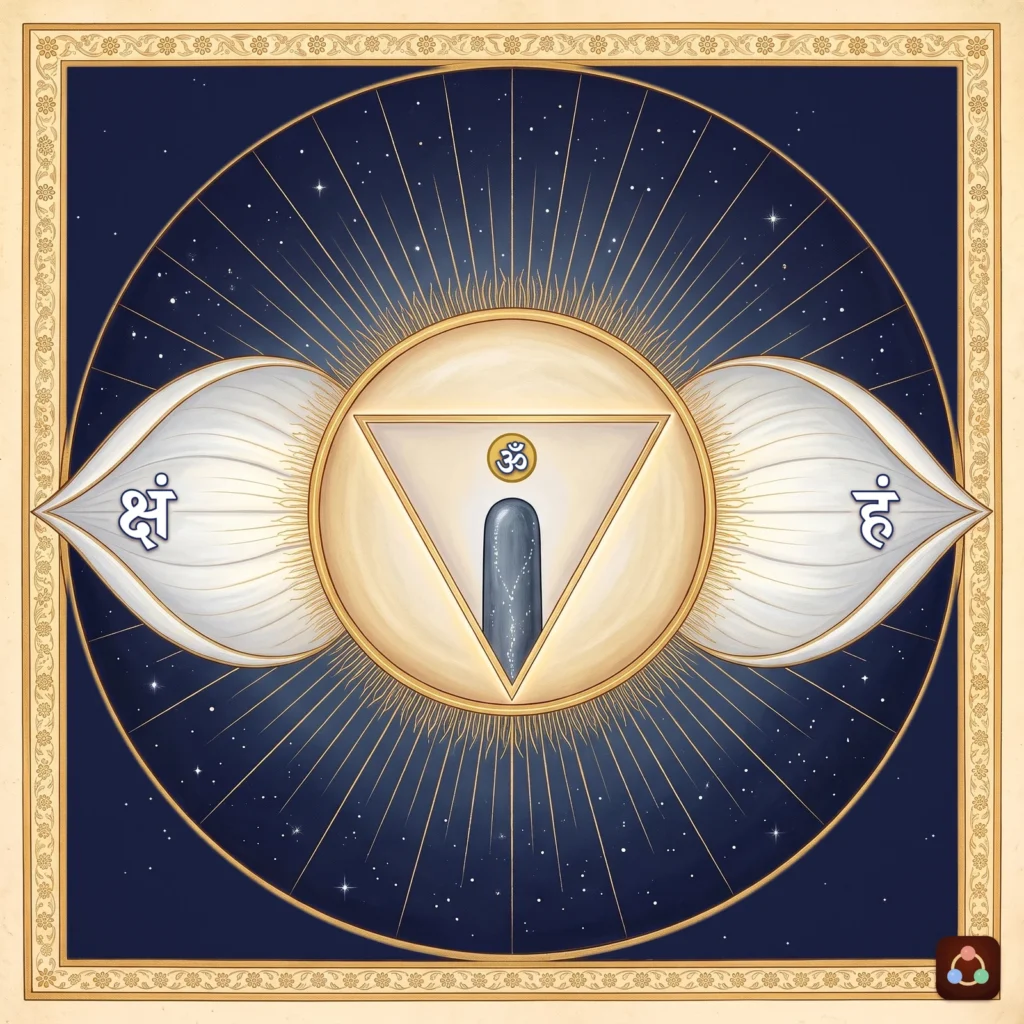
| Petals | Two, white |
| Letters on the petals | हं क्षं (ha and ksha), each with the bindu, white |
| What it holds | The subtle mind (manas), in the Shat-chakra-nirupana (verse 33); in Woodroffe’s own account also Mahat and Prakriti. No gross element |
| Its shape | A triangle, the Yoni, in the pericarp; in Woodroffe’s account the inverted triangle |
| Bija | ॐ (Om), the Pranava, in the pericarp, above the linga |
| Linga | Itara, in the triangle, “like a chain of lightning flashes” (verse 33) |
| Deity | Shiva as Itara, in his phallic form (verse 33); Parama Shiva above, in the Bindu (verses 37 and 38 and the summary). The Soundarya Lahari names Para-shambhu-natha with the Supreme Consciousness, Cit-paramba (verse 36), and the table in the 1937 commentary on verse 35 names Shiva |
| Ruling goddess | Hakini, in the Shat-chakra-nirupana and in the Lalita Sahasranama alike |
| Bodily tissue | Marrow |
| Knot | Rudra’s, in Woodroffe’s account of the rise; Brahma’s, at the end of the Ajna, in the 1937 commentary |
| Rays | Sixty-four (Soundarya Lahari 14) |
| Soundarya Lahari | Verses 9, 14, 32, 35, 36, 41 and 99 (101 in the 1937 book) |
What the Shat-chakra-nirupana says
The Shat-chakra-nirupana gives the Ajna seven verses, 32 to 38. Here is what they show, from the outside in, and then what the yogi is said to see.
The petals. The lotus is “like the moon, (beautifully white)”. On its two petals are the letters ha and ksha, “which are also white and enhance its beauty” (verse 32). The commentary says the two letters are white by nature, and on white petals their whiteness is the more charming. It calls the letters kalas, because they are the seeds of kalas. Another text that the commentator quotes calls the letters “variegated in colour”, and a note to the summary says that the word karbura means white and also variegated. The lotus “shines with the glory of Dhyana“, which the commentary takes to mean that its body shines like the glory of the power of meditation. Woodroffe’s own account says the two letters finish the fifty letters of the six lotuses, which have fifty petals between them, and that the two petals are white.
Hakini. “Inside it is the Shakti Hakini, whose six faces are like so many moons. She has six arms, in one of which She holds a book; two others are lifted up in the gestures of dispelling fear and granting boons, and with the rest She holds a skull, a small drum, and a rosary. Her mind is pure” (verse 32). Woodroffe’s note says she is not carrying a book: the hand makes the sign of knowledge. The commentary says that with six hands there should be six objects, but that some read the word as one, a gesture that conveys learning, which would give her four arms, and that “different manuscripts give different readings”. A meditation verse that the commentator quotes gives her more: she is white, she abides in the marrow, she holds the small drum, the rudraksha rosary, the skull, the sign of the book and the gesture, she is fond of food cooked with turmeric, as the translation puts it “Turmini”, and she is elated by drinking nectar. (One reading of the word for “in the marrow” is “in the chakra”.) She sits on a white lotus. The summary of the verses adds three eyes on each of her six faces, and lists a book among the things in her hands, which is the other way of reading the verse. Our painting does not show her.
The mind. “Within this Lotus dwells the subtle mind (Manas). It is well known” (verse 33). The commentary asks the obvious question: the mind is beyond the senses, so what is the proof that it is here? Its answer is that it is well known, handed down from one generation to the next as something realised, and that the scriptures say the manas selects and rejects. In Woodroffe’s own account the Ajna is the seat of the subtle tattvas, Mahat and Prakriti, and he says that “commonly and shortly it is said that Manas is the Tattva of the Ajna Chakra.” As the mental centre, he adds, it also includes the other aspects of the mind and the Self in the form of Om.
The triangle and the linga. “Inside the Yoni in the pericarp is the Shiva called Itara, in His phallic form. He here shines like a chain of lightning flashes” (verse 33). The Yoni is the triangle. The summary of the verses calls it a triangle, and Woodroffe’s own account calls it the inverted triangle, so our painting turns it point down. Itara is explained by Vishvanatha as “that which enables one to cross Kala“, time. The commentary says the linga is white and resembles continuous streaks of lightning, and a text it quotes, the Bhuta-shuddhi Tantra, gives it as “crystalline and with three eyes”. Woodroffe lists it as the third of three lingas: Svayambhu at the Muladhara, Bana at the heart, Itara at the Ajna. Our painting shows a dark pillar with a faint chain of lights in it.
Om. The verse goes on: “The first Bija of the Vedas, which is the abode of the most excellent Shakti and which by its lustre makes visible the Brahma-sutra, is also there” (verse 33). The first bija is Om, and the Brahma-sutra, Woodroffe notes, is the channel called Chitrini. Verse 35 describes the Pranava more closely: in the triangle dwells the combination of letters that forms it, “the inner Atma as pure mind (Buddhi)”, like a flame in its radiance; above it a half moon; above that the letter ma shining as a bindu; above that Nada, white as Balarama and shedding the rays of the moon. The commentary adds that a and u join into o, and the half moon and the bindu complete Om.
The order of meditation. The commentary notes that the order in which the verse names these things is not the order in which to meditate on them. By their sense, it says, the order is this: first Hakini in the pericarp; in the triangle above her, the Itara linga; in the triangle above him, the Pranava; and above the Pranava itself, the manas. Our painting shows the linga in the triangle and the Pranava on a small gold disc above it.
The fruit. Verse 34 promises much to the sadhaka who meditates on this lotus: that he can quickly enter another’s body at will, becomes the best of sages, all-knowing and all-seeing, a benefactor of all, versed in all the scriptures, that he realises his unity with the Brahman and gains excellent powers, becomes famous and long-lived, and is the creator, destroyer and preserver of the three worlds. The commentary says that the last line is praise, in the old phrase prashamsa-vada, or else that it means he is absorbed in the Supreme when the body dissolves. These are a tradition’s promises about meditation. They are not medical claims.
What the yogi sees. Verse 36 is about a practice. When the yogi “closes the house which hangs without support”, and his mind by repeated practice dissolves in this place, “the abode of uninterrupted bliss”, he sees sparks of fire shining above the triangle. The commentary says that closing the house means Yoni-mudra, or else Khechari-mudra. It quotes a passage that Woodroffe’s note names as the Sharada Tilaka: the ears are closed with the thumbs, the eyes with the index fingers, the nostrils with the middle fingers and the mouth with the other fingers, and the breath is held. I give this as a record of the tradition. It is not advice, and holding the breath like this is something to learn from a teacher, if at all. The commentary also says that the knowledge comes from the Guru by service, “and not by ten million of Shastras”. After the sparks, the yogi sees a light like a flaming lamp, bright as the morning sun, shining between the sky and the earth (verse 37). The commentary says this light stretches from the Muladhara to the Sahasrara, and that here Parama Shiva is present, as he is in the Sahasrara. Of this place, verse 38 says that the yogi at the time of death places his breath here and enters the Supreme Purusha. The commentary takes this to be the Bindu, which it calls the abode of Vishnu, and describes how a practised yogi, knowing that death is near, leads the breath up through the centres. I give it as what the tradition says of death, and not as guidance for anyone.
The summary. After verse 38, the summary of the verses puts it in one picture. Hakini is in the pericarp. Above her, in a triangle, is the Itara linga, “lightning-like”. Above that, in another triangle, is the inner Atma, lustrous like a flame, with sparks floating on its four sides round a light that makes visible all that is between the Muladhara and the Brahmarandhra. Above it is the manas, and above the manas, in the region of the moon, is Hamsa, in whom is Parama Shiva with his Shakti.
The knot. Woodroffe’s own pages place a knot here. In his account of the Kundalini’s rise, the Devi reaches the Ajna, “the Knot of Rudra”, where Paramashiva, Siddhakali and all else there are dissolved in her, and after passing it she unites with Paramashiva. In another place he writes that the breath, having forced the knot of Rudra at the Ajna, goes to the abode of Ishvara. His chapter on the centres adds that at the places of the three lingas the force of Maya is in great strength.
What the Soundarya Lahari says
The Soundarya Lahari gives the Ajna a verse of its own, 36. The commentary brings the Ajna into several more.
Verse 36 is this centre’s own verse.
ತವಾಜ್ಞಾಚಕ್ರಸ್ಥಂ ತಪನಶಶಿಕೋಟಿ-ದ್ಯುತಿಧರಂಪರಂ ಶಂಭುಂ ವಂದೇ ಪರಿಮಿಲಿತಪಾರ್ಶ್ವಂ ಪರಚಿತಾ ।ಯಮಾರಾಧ್ಯನ್ ಭಕ್ತ್ಯಾ ರವಿಶಶಿಶುಚೀನಾಮವಿಷಯೇನಿರಾಲೋಕೇಽಲೋಕೇ ನಿವಸತಿ ಹಿ ಭಾಲೋಕಭುವನೇ
MeaningI bow to the supreme Shambhu seated in your ajna chakra (between the eyebrows, the centre of mind), bearing the brightness of ten million suns and moons, his sides merged with the supreme consciousness that is you. Whoever worships him with devotion comes to dwell in a realm the light of sun, moon and fire does not reach, which no eye can see, and which shines by its own light. Tradition takes this to be the thousand-petalled sahasrara. This verse begins a meditation on the chakras, from mind down to earth. Read verse 36
The 1937 commentary says that this verse begins six stanzas on the six centres of the Devi’s form, from the subtle to the gross, and that in each the practitioner worships Shiva and the Shakti as the deities of that centre. The Shiva here is Para-shambhu-natha, and the Supreme Consciousness embracing his side is Cit-paramba. They are to be imagined in the middle, with sixty-four Manasa-mayukhas, the rays of the mind, around them. The commentary says the “luminous region” is the Sahasrara, the abode of perpetual moonshine, and that the sun, the moon and fire are in the lower regions, the Anahata, the Ajna and the Muladhara. It also records a dispute. Lakshmidhara, as the book reports him, reads the first words as the four Shiva-chakras of the Sri Chakra, in the middle of the practitioner’s eyebrows, and not the two-petalled lotus. Kameshvara-suri answers that “your” would then be needless, and that the two-petalled lotus is meant. Read verse 36
Verse 9 names the manas “between the eyebrows”, and the commentary says that this is the Ajna, with the manas taking in the five senses of knowing and the five of acting, eleven tattvas in all. It says that because the Devi is bent on breaking through the knot of Brahma on her way to the Sahasrara, she stays here only for a trice, showing herself as a streak of lightning. It adds that one who conquers the mind is said to gain powers such as clairvoyance and telepathy, and calls all such powers pitfalls on the way to the goal. Read verse 9
Verse 14 counts the rays of light in each centre. In the Ajna, which it calls of the character of mind, there are sixty-four. In its note on the same verse, the commentary says that a radiance called Para reaches from the Brahmarandhra to the Ajna, and that this is the deity who presides over the marrow. Read verse 14
Verse 32. In the commentary on this verse the nectar that flows from the moon in the Sahasrara drenches the lunar region of the Ajna, and the fifteen kalas of the moon there become the Nityas, “perpetually shining”. The Ajna, it says, “being the seat of the Moon, is the region of nectar”.
Verse 35. The table in its commentary gives the deities and lokas of the tattvas. Against manas it names the world of Tapas and the deity Shiva, with the Ajna as its centre.
Verse 41. In the account of worship that the 1937 book gives, and then names as Lakshmidhara’s view, the Devi is brought from the Vishuddhi “to the Ajna chakra”, where she is honoured with the waving of lights. “Thereafter, suddenly, like a streak of lightning, she flashes into the thousand-petalled lotus.” Read verse 41
Near the end of the poem, at verse 101 in the 1937 book’s numbering, which is verse 99 on this site, the commentary returns to the centres. Lakshmidhara, as the book reports him, holds that those who worship the Mother in the Ajna attain the liberation called sarupya, similarity of form with the Devi, which the book says is distinct from union with her. The commentary on the same verse also puts the three knots in a different order from the one that Woodroffe gives. Of three circles that it names, it says, one is of the character of the knot of Rudra at the end of the Svadhishthana, another of Vishnu’s at the end of the Anahata, and the third of Brahma’s at the end of the Ajna. Read verse 99
What the Lalita Sahasranama says
The yogini of the Ajna (names 521 to 527). For this centre the Lalita Sahasranama names Hakini.
| No. | Name | Meaning |
|---|---|---|
| 521 | ājñā-cakrābja-nilayā | Who dwells in the two-petalled lotus of the Ajna chakra |
| 522 | śukla-varṇā | White in colour |
| 523 | ṣaḍānanā | Six-faced |
| 524 | majjā-saṃsthā | Who is the deity of the marrow |
| 525 | haṃsavatī-mukhya-śakti-samanvitā | Accompanied by the chief Shaktis Hamsavati and Kshamavati (in the two petals, as the page glosses it) |
| 526 | haridrānnaika-rasikā | Fond of food flavoured with turmeric |
| 527 | hākinī-rūpa-dhāriṇī | Who is in the form of the goddess Hakini |
Here the two lists agree, which they do not at every centre. In both, the goddess of the Ajna is Hakini, she is white, she has six faces, she is the goddess of the marrow, and she likes food flavoured with turmeric. In the Shat-chakra-nirupana the six faces are in the verse itself, and the white colour is in the summary and in the meditation verse that the commentator quotes; the marrow and the turmeric are only in that quoted meditation verse. Woodroffe’s second list, from another account, also puts the marrow with the Ajna and Hakini. In names 521 to 527 the Lalita Sahasranama says nothing of her arms or weapons, and it adds what the Shat-chakra-nirupana does not: two Shaktis who go with her, Hamsavati and Kshamavati, which the page glosses as in the two petals.
Other names touch this centre. Name 103 says she stays within the Ajna. It stands between the names that break the knot of Vishnu (102) and the knot of Rudra (104), and name 100 breaks the knot of Brahma before them. In this list, then, the knots fall in the order Brahma, Vishnu, Rudra, and the Ajna lies between Vishnu’s and Rudra’s. For Vishnu and Rudra, Woodroffe’s order is the same, and the 1937 commentary’s is the reverse. Name 379 gives her an abode called Odyana, which the page glosses as in the Ajna chakra; name 593 places her in the forehead, between the eyebrows; and name 828 calls her ajna itself, divine command.
Three texts, one lotus
On the two petals, the letters, the goddess and the marrow, the texts agree. They differ on the knots and on what the centre holds.
| Shat-chakra-nirupana | Lalita Sahasranama | Soundarya Lahari | |
|---|---|---|---|
| Petals and letters | Two white petals, हं क्षं (verse 32) | Two-petalled lotus (521) | Two petals, ha and ksha (the 1937 book, pp. 31 to 32) |
| What it holds | The subtle mind (verse 33); in Woodroffe’s account also Mahat and Prakriti | The mind, with the five senses of knowing and the five of acting (verse 9); sixty-four rays “of the character of mind” (verse 14) | |
| Who dwells here | The Itara linga in the triangle; above, in the Bindu, Parama Shiva (verses 33, 37, 38) | Para-shambhu-natha and Cit-paramba (verse 36); Shiva, in the table in the 1937 commentary on verse 35 | |
| Ruling goddess | Hakini | Hakini (527) | Not named: the Supreme Consciousness, Cit-paramba, embraces Shambhu’s side (verse 36) |
| Her form | White, six faces (three eyes on each, in the summary), six arms: the sign of knowledge, the gestures that dispel fear and grant boons, a skull, a small drum, a rosary | White (522), six-faced (523); no arms or weapons named | |
| Bodily tissue | Marrow (the meditation verse quoted, and Woodroffe’s second list) | Marrow (524) | Marrow, in the 1937 commentary on verse 14 |
| Favourite food | Food cooked with turmeric (the meditation verse quoted) | Food flavoured with turmeric (526) | |
| The knots | Rudra’s knot at the Ajna, in Woodroffe’s account of the rise | In the order Brahma (100), Vishnu (102), Rudra (104); the Ajna named between Vishnu’s and Rudra’s (103) | Brahma’s knot at the end of the Ajna, Vishnu’s at the end of the Anahata, Rudra’s at the end of the Svadhishthana (1937 commentary on verse 99) |
| Fruit of worship | Quick entry into another’s body, wisdom, fame, long life (verse 34); death in yoga (verse 38) | Sarupya, likeness of form with the Devi, Lakshmidhara, as the book reports him (verse 99) | |
| Rays | Sixty-four (verse 14) |
What it means for the inner life
The texts read the Ajna in a few simple ways.
It is the centre of command. The name says it. The Guru’s command is received here, and the commentary on verse 36 reads “your Ajna” as within the Devi’s command.
It is the centre of the mind. The commentary on verse 9 puts the manas here, with the senses that know and the senses that act. The Shat-chakra-nirupana says the manas is here and that it selects and rejects.
It is the last of the six, and a threshold. In the 1937 commentary, the Devi stays here only for a trice. In Woodroffe’s account of the rise, she passes the last knot here and then unites with Paramashiva. After it there is no seventh lotus, only the Sahasrara.
It is a place of light. In the Shat-chakra-nirupana the yogi sees sparks, then a light like a flame, then Parama Shiva. In the Soundarya Lahari, Shambhu shines with the radiance of countless suns and moons.
It is a pair, and one. Two petals, and a pair of letters, ha and ksha. Shambhu’s side is embraced by the Supreme Consciousness in verse 36.
Its powers are not the goal. The 1937 commentary on verse 9 calls the powers that come from mastering the mind pitfalls to be avoided, and says the goal lies higher.
What lies here in the body
I am a physician, so let me say plainly what sits at this level.
Between the eyebrows, just above the root of the nose, is the flat patch of bone called the glabella, and behind the bone of the forehead lie the frontal sinuses and, behind them, the frontal lobes of the brain, which have to do with planning, attention and self-control. Deep in the middle of the head, below the brain and behind the bridge of the nose, lies the pituitary gland, in a small hollow of the skull bone called the sella turcica. It makes or releases hormones that guide the thyroid, the adrenal glands, growth, milk production, the ovaries and testes, and the water balance of the body. Just above it the two optic nerves meet and cross, at the optic chiasm. Further back, in the midline, is the small pineal gland, which makes melatonin and follows the day and night signals that reach it from the eyes. This is standard anatomy, and I have not tied it to a page of any one textbook here. Kalicharana’s commentary does not name the pituitary or the pineal gland.
A century ago some writers tried to match the chakras to nerve centres. Professor Sarkar’s list, which Woodroffe mentions, matches the six chakras to the sacral, prostatic, epigastric, cardiac, laryngeal (or pharyngeal) and cavernous plexuses, and the Sahasrara to the medulla. Woodroffe says this last match cannot be right. Brajendranath Seal went another way. He called the Ajna the “circle of command over movements”, with two lobes, which he took to be the cerebellum, and he set beside it a “Manas chakra” with six lobes, a sensory centre at the base of the brain that receives the messages of the eye, the ear, the nose, the tongue and the skin. In his scheme the Ajna sends the orders of the will down to the nerves that move the body. The cerebellum does sit at the back of the skull and helps to coordinate movement, but it is not between the eyebrows. Woodroffe’s own view was that such matches must be a matter of opinion. He himself lists, as possible matches for the Ajna, the cavernous plexus, the pineal gland, the pituitary body and the cerebellum, adds that each centre “may have more than one of such correspondences”, and says that the two upper centres “denote various forms of cerebral activity”.
Is there any study of meditation for this part of the body? There is a good deal on attention, if not on the Ajna. A 2022 review and meta-analysis of brain scans in focused attention meditation found 28 studies. Ten of them, with 200 people in all, could be pooled. They pointed to three brain networks, the default-mode, salience and executive control networks, and found that the size of the activity changed with experience, mindfulness and skill at attention. These were scans of people at one time, so they show what the brains of meditators look like while they practise, and not what meditation does to a brain over the years. A 2024 systematic review of mindfulness and meditation reported links with emotional control and brain structure, and asked for more diverse studies.
The yoga tradition has a gazing practice, trataka, in which one gazes steadily at a candle flame or a point. The verses I read do not describe it, and I do not treat it as a test of the Ajna. But it trains the eyes and the attention, and it has been studied. A 2023 systematic review of yoga and eye pressure in glaucoma found 6 studies, and three good randomised trials in its pooled analysis showed more fall in eye pressure in the yoga groups than in the control groups. The practices included trataka and slow breathing, and the authors point to small studies and differing practices. The same review notes that studies of inverted postures showed a rapid rise in eye pressure soon after the start, so anyone with glaucoma should ask their eye doctor before trying an inverted posture. A 2021 trial in Egypt in 60 people with diabetes and glaucoma found that a month of daily trataka was followed by lower eye pressure, blood pressure and blood sugar in the study group, with no change in the control group. A 2026 trial of 12 weeks of trataka in 49 adults with mild to moderate dry eye found better symptom scores and tear break-up time, but no change in two other tear measures, the Schirmer score and the height of the tear meniscus, and the control group had no intervention. A 2026 trial in 120 healthy young adults found a quicker go-response reaction time and less distortion on an optical illusion test after 8 weeks. None of these trials tells us what happens at the Ajna, and a group that is not given anything to do is a weak comparison. If you have glaucoma, do not stop your eye drops, and do not stare at a flame for long in place of treatment. Pain in the eye, a sudden change in your sight, or a headache that is new and severe should be shown to a doctor.
The one study I found that named the Ajna is the same sound-meditation study that named the other centres. It measured the “energy” of all seven chakras with a camera that reads the glow around the fingertips, in 15 volunteers after one session. I know of no evidence that this device measures any function of the body. I found no study that has tested the Ajna itself in a way medicine accepts.
Sources
- Arthur Avalon (Sir John Woodroffe), The Serpent Power, Ganesh and Co, Madras. Shat-chakra-nirupana, verses 32 to 38, with the commentary of Kalicharana, pp. 395 to 414 (the summary, p. 414); chapter V, pp. 126 to 127; p. 93; pp. 153 to 159; and the pages on the knots and the rise of the Kundalini, near pp. 220 to 221, 236 and 238 (page numbers read from the running heads of an OCR text, and they may be one page out).
- Adi Shankaracharya, Saundarya-Lahari, with transliteration, English translation and commentary by S. Subrahmanya Sastri and T. R. Srinivasa Ayyangar, drawing on Lakshmidhara and other commentators. Theosophical Publishing House, Adyar, 1937. Pp. 31 to 32; verse 9, pp. 57 to 59; verse 14, pp. 76, 78 and 79; verse 32, pp. 129 to 130; verse 35, p. 143; verse 36, pp. 144 to 146; verse 41, p. 163; verse 101, pp. 252 to 253.
- The meanings of verses 9, 14, 32, 36, 41 and 99 on Jeevana Sutra, and in the Soundarya Lahari app.
- Lalita Sahasranama, names 100 to 104, 379, 521 to 527, 593 and 828. Numbers and meanings as in Sanskrit Documents, lalita1000.
- Ganesan S and others. Focused attention meditation in healthy adults: a systematic review and meta-analysis of cross-sectional functional MRI studies. Neuroscience and Biobehavioral Reviews 2022; 141: 104846. doi:10.1016/j.neubiorev.2022.104846
- Calderone A and others. Neurobiological changes induced by mindfulness and meditation: a systematic review. Biomedicines 2024; 12(11): 2613. doi:10.3390/biomedicines12112613
- Chetry D and others. Effect of yoga on intra-ocular pressure in patients with glaucoma: a systematic review and meta-analysis. Indian Journal of Ophthalmology 2023; 71(5): 1757 to 1765. doi:10.4103/ijo.IJO_2054_22
- Ismail AMA and others. Effect of trataka on intraocular pressure, autonomic control and blood glucose in diabetic patients with high-tension primary open-angle glaucoma: a randomized controlled trial. Journal of Complementary and Integrative Medicine 2021; 19(4): 1013 to 1018. doi:10.1515/jcim-2021-0041
- Abraham L and others. Yoga as a cost-effective adjunct therapy for dry eye: clinical outcomes from a 12-week randomized controlled trial. Frontiers in Medicine 2026; 13: 1795593. doi:10.3389/fmed.2026.1795593
- Yadav K and others. Effects of trataka practice on reaction time and visual perception in young adults: a randomized controlled trial. International Journal of Yoga 2026; 19(2): 195 to 200. doi:10.4103/ijoy.ijoy_252_25
- Veerabrahmachar R and others. Immediate effect of Nada Yoga meditation on energy levels and alignment of seven chakras as assessed by electro-photonic imaging: a randomized controlled crossover pilot study. Advances in Mind-Body Medicine 2023; 37: 11 to 16. PubMed 37119541