ಏಳೂ ಚಕ್ರಗಳು · ಹಿಂದಿನದು: ಅನಾಹತ · ಮುಂದಿನದು: ಆಜ್ಞಾ
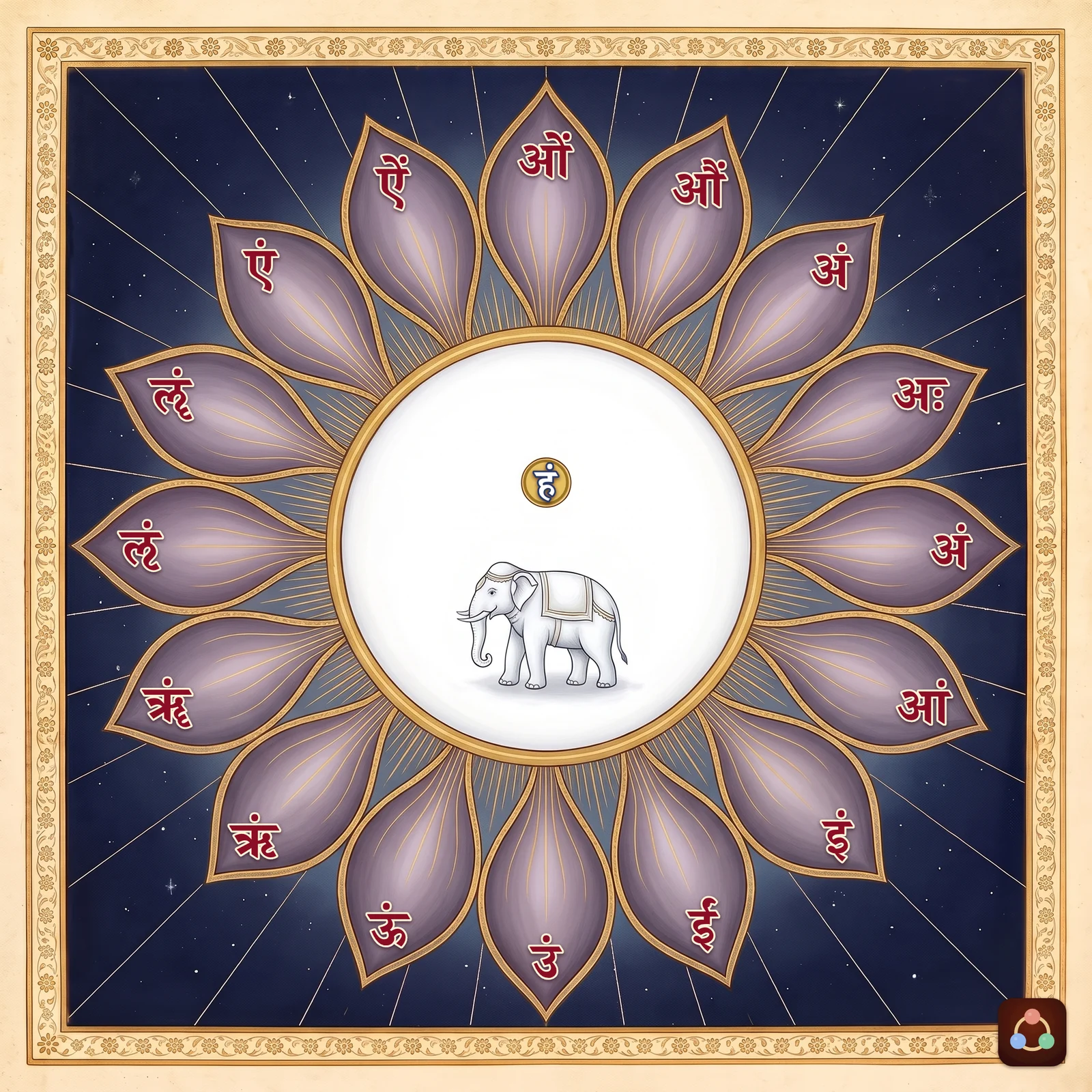
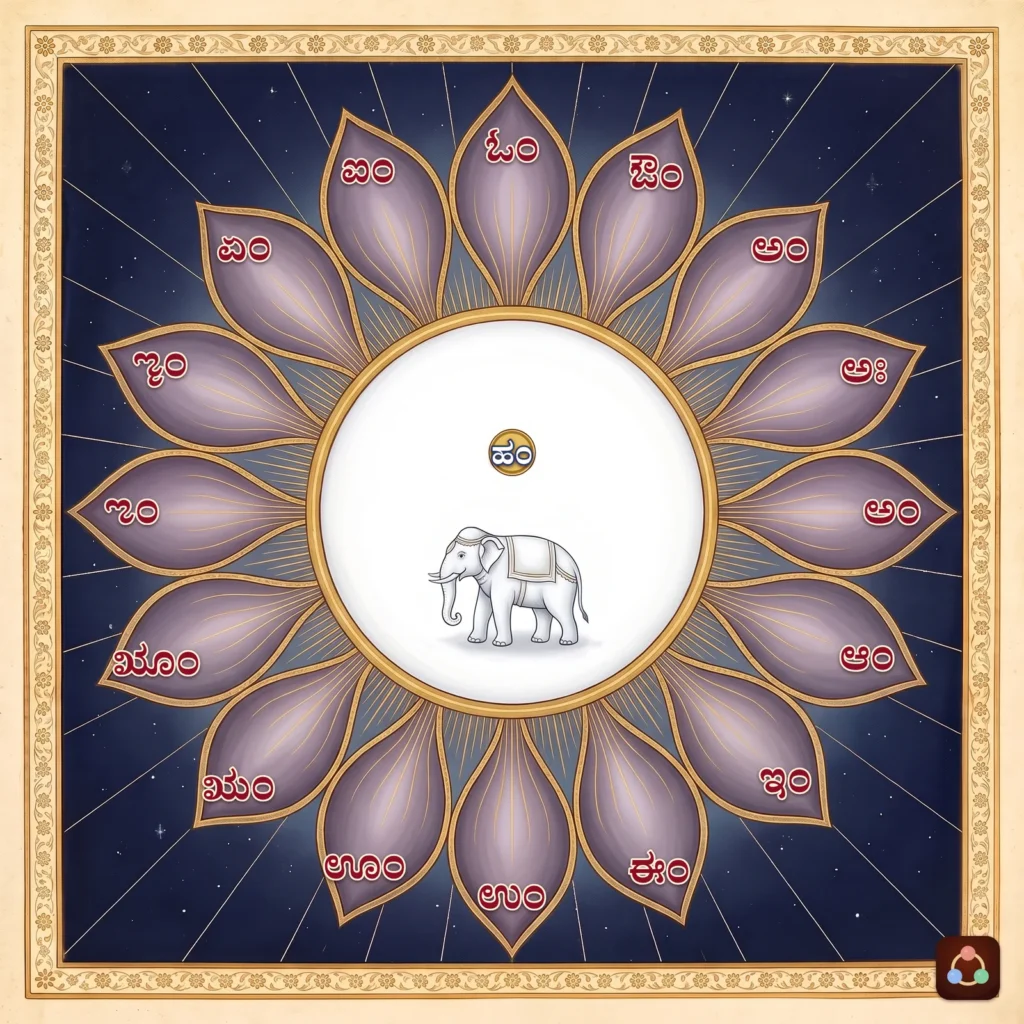
ಧೂಮ್ರವರ್ಣದ ನೇರಳೆ ಕಮಲದ ನಡುವೆ, ಹುಣ್ಣಿಮೆಯ ಚಂದ್ರನಂತೆ ದುಂಡಗಿರುವ ಬಿಳಿಯ ವೃತ್ತವೊಂದು ನೆಲೆಸಿದೆ.
ಆ ವೃತ್ತದೊಳಗೆ ಬಿಳಿಯ ಆನೆಯೊಂದು ನಿಂತಿದೆ; ಅದರ ಮೇಲೆ, ಒಂದು ಪುಟ್ಟ ಚಿನ್ನದ ಬಿಲ್ಲೆಯ ಮೇಲೆ, ಆಕಾಶದ ಬೀಜಾಕ್ಷರವಿದೆ. ಇವೆಲ್ಲದರ ಸುತ್ತಲೂ ಹದಿನಾರು ದಳಗಳು ಅರಳಿವೆ; ಆ ಪ್ರತಿ ದಳದ ಮೇಲೂ ಕಡುಗೆಂಪು ಬಣ್ಣದ ಸ್ವರಾಕ್ಷರವಿದೆ.
ಗಂಟಲಿನ ಭಾಗದಲ್ಲಿರುವ ಐದನೆಯ ಕಮಲವೇ ಈ ವಿಶುದ್ಧಿ. ಇಲ್ಲಿ ಷಟ್ಚಕ್ರ ನಿರೂಪಣ ಮತ್ತು ಸೌಂದರ್ಯ ಲಹರಿ ಎರಡೂ ಒಂದೇ ಮಾತನ್ನು ಹೇಳುತ್ತವೆ: ಎರಡೂ ಗ್ರಂಥಗಳು ಇಲ್ಲಿ ಆಕಾಶ ತತ್ತ್ವವನ್ನು ಕಾಣುತ್ತವೆ. ಸೌಂದರ್ಯ ಲಹರಿಯು ಈ ಕೇಂದ್ರಕ್ಕೆಂದೇ ಒಂದು ಶ್ಲೋಕವನ್ನು ಮೀಸಲಿಟ್ಟಿದೆ; ಅದೇ ಸ್ಫಟಿಕ ಮತ್ತು ಚಂದ್ರಕಿರಣಗಳ ಶ್ಲೋಕ.
ಈ ಪುಟದಲ್ಲಿಹೆಸರು · ಇದು ಎಲ್ಲಿದೆ? · ಗ್ರಂಥಗಳು ವರ್ಣಿಸುವ ಕಮಲ · ಷಟ್ಚಕ್ರ ನಿರೂಪಣ ಏನು ಹೇಳುತ್ತದೆ? · ಸೌಂದರ್ಯ ಲಹರೀ ಏನು ಹೇಳುತ್ತದೆ? · ಲಲಿತಾ ಸಹಸ್ರನಾಮ ಏನು ಹೇಳುತ್ತದೆ? · ಮೂರು ಗ್ರಂಥಗಳು, ಒಂದೇ ಕಮಲ · ಅಂತರಂಗದ ಬದುಕಿಗೆ ಇದರ ಅರ್ಥವೇನು? · ದೇಹದ ಈ ಜಾಗದಲ್ಲಿ ಏನಿದೆ? · ಆಕರಗಳು
ಹೆಸರು
ವಿಶುದ್ಧ ಎಂದರೆ ‘ಶುದ್ಧವಾದದ್ದು’. ಷಟ್ಚಕ್ರ ನಿರೂಪಣದ ವ್ಯಾಖ್ಯಾನವು ಇದಕ್ಕೆ ಎರಡು ಕಾರಣಗಳನ್ನು ನೀಡುತ್ತದೆ. ಮೊದಲನೆಯದಾಗಿ, ಈ ಕಮಲದ ಸತ್ವವೇ ತೇಜಸ್ಸು ಅಂದರೆ ಬೆಳಕು; ಹಾಗಾಗಿ ಇದು ಕಲ್ಮಶಗಳಿಂದ ಮುಕ್ತವಾಗಿ ಪವಿತ್ರವಾಗಿದೆ. ಎರಡನೆಯದಾಗಿ, ಹಂಸದ ದರ್ಶನದಿಂದ ಜೀವನು ಪರಿಶುದ್ಧನಾಗುವುದರಿಂದಲೇ ಈ ಕಮಲಕ್ಕೆ ವಿಶುದ್ಧಿ ಎಂಬ ಹೆಸರು ಬಂದಿದೆ ಎಂದು ಹೇಳುವ ಶ್ಲೋಕವೊಂದನ್ನು ಅದು ಎತ್ತಿ ಹೇಳುತ್ತದೆ. ವುಡ್ರಫ್ ಅವರು ಚಕ್ರಗಳ ವಿವರಣೆ ನೀಡುವಾಗ ದೇವೀಭಾಗವತದಿಂದಲೂ (7. 35) ಇದೇ ಕಾರಣವನ್ನು ಎತ್ತಿ ತೋರಿಸುತ್ತಾರೆ. ಅವರು ‘ಭಾರತೀಸ್ಥಾನ’ ಎಂಬ ಇನ್ನೊಂದು ಹೆಸರನ್ನೂ ಹೇಳುತ್ತಾರೆ; ಅದು ವಾಕ್ ದೇವಿಯ ನೆಲೆ ಎಂದು ಅವರ ಟಿಪ್ಪಣಿ ವಿವರಿಸುತ್ತದೆ.
ಇದು ಎಲ್ಲಿದೆ?
ಷಟ್ಚಕ್ರ ನಿರೂಪಣವು ಇದನ್ನು ‘ಗಂಟಲಿನಲ್ಲಿ’ ಇರಿಸುತ್ತದೆ (ಶ್ಲೋಕ 28 ಮತ್ತು 29). ಈ ಶ್ಲೋಕಗಳ ಸಾರಾಂಶವು ಗಂಟಲಿನ ಬುಡದಲ್ಲಿ ಎಂದು ಹೇಳುತ್ತದೆ. ಗಂಟಲಿನ ಬುಡದ ಭಾಗದಲ್ಲಿ, ಬೆನ್ನುಹುರಿಯ ಒಳಗೆ ಈ ಕೇಂದ್ರವಿದೆ ಎಂದು ವುಡ್ರಫ್ ಹೇಳುತ್ತಾರೆ; ಜೊತೆಗೆ ‘ಚಕ್ರಗಳಿರುವುದು ಬೆನ್ನುಹುರಿಯ ಒಳಗಿರುವ ಸುಷುಮ್ನಾದಲ್ಲಿ’ ಎಂಬ ಮಾತನ್ನು ಮತ್ತೆ ನೆನಪಿಸುತ್ತಾರೆ.
ಈ ಗ್ರಂಥಗಳಲ್ಲಿ ಬರುವ ಪ್ರತಿಯೊಂದು ಕಮಲದಂತೆಯೇ, ಇದು ಕೂಡ ದೇಹದ ಆಯಾ ಭಾಗಕ್ಕೆ ಎದುರಾಗಿ ಬೆನ್ನುಹುರಿಯ ಒಳಗಿರುವ ಕೇಂದ್ರವೇ ಹೊರತು, ಚರ್ಮದ ಮೇಲಿರುವ ಜಾಗವಲ್ಲ.
ವುಡ್ರಫ್ ಅವರು ವಿಶುದ್ಧಿಯ ಮೇಲ್ಭಾಗದಲ್ಲಿ, ಅಂದರೆ ಅಂಗುಳಿನ ಬುಡದಲ್ಲಿ ‘ಲಲನಾ’ ಎಂಬ ಸಣ್ಣ ಕಮಲವೊಂದಿದೆ ಎಂದೂ ತಿಳಿಸುತ್ತಾರೆ. ಇದು ಕೆಂಪು ಬಣ್ಣದ್ದಾಗಿದ್ದು, ನಂಬಿಕೆ, ತೃಪ್ತಿ, ಇಂದ್ರಿಯ ನಿಗ್ರಹ ಮತ್ತು ಪ್ರೀತಿಯಂತಹ ಗುಣಗಳನ್ನು ಹೊತ್ತ ಹನ್ನೆರಡು ದಳಗಳನ್ನು ಹೊಂದಿದೆ. ಇದು ಮುಖ್ಯವಾದ ಆರು ಚಕ್ರಗಳಲ್ಲಿ ಒಂದಲ್ಲ, ಮತ್ತು ಷಟ್ಚಕ್ರ ನಿರೂಪಣವು ಇದನ್ನು ವಿವರಿಸುವುದಿಲ್ಲ.
ಗ್ರಂಥಗಳು ವರ್ಣಿಸುವ ಕಮಲ
| ದಳಗಳು | ಹದಿನಾರು, ಹೊಗೆ ನೇರಳೆ ಬಣ್ಣ |
| ದಳಗಳ ಮೇಲಿನ ಅಕ್ಷರಗಳು | ಅಂ ಆಂ ಇಂ ಈಂ ಉಂ ಊಂ ಋಂ ೠಂ ಌಂ ೡಂ ಏಂ ಐಂ ಓಂ ಔಂ ಅಂ ಅಃ (‘ಅ’ಯಿಂದ ‘ಅಃ’ವರೆಗಿನ ಹದಿನಾರು ಸ್ವರಗಳು), ಪ್ರತಿಯೊಂದರ ಮೇಲೆ ಬಿಂದು, ಕಡುಗೆಂಪು ಬಣ್ಣ |
| ತತ್ತ್ವ | ಆಕಾಶ: ಷಟ್ಚಕ್ರ ನಿರೂಪಣದಲ್ಲೂ ಸೌಂದರ್ಯ ಲಹರಿಯಲ್ಲೂ |
| ಸಂಬಂಧ | ಶಬ್ದ: ಶಬ್ದ ತನ್ಮಾತ್ರ, 9ನೆಯ ಶ್ಲೋಕದ 1937ರ ವ್ಯಾಖ್ಯಾನದಂತೆ |
| ಆಕಾರ | ಪೂರ್ಣಚಂದ್ರನಂತೆ ಬಿಳಿಯಾದ ವೃತ್ತ, ಅಂದರೆ ಆಕಾಶಮಂಡಲ; ಅದರೊಳಗೆ ತ್ರಿಕೋನ, ಅದರಲ್ಲಿ ಮೊಲದ ಗುರುತಿಲ್ಲದ ಚಂದ್ರಮಂಡಲ |
| ಬೀಜ | ಹಂ, ಬಿಳಿ ಬಣ್ಣ, ಬಿಳಿ ಬಟ್ಟೆ, ಹಿಮದಂತೆ ಬಿಳಿಯಾದ ಆನೆಯ ಮೇಲೆ ಕುಳಿತಿದೆ, ನಾಲ್ಕು ಕೈಗಳು |
| ದೇವತೆ | ಸದಾಶಿವ (28 ಮತ್ತು 29ನೆಯ ಶ್ಲೋಕಗಳು): ಹಿಮದಂತೆ ಬಿಳಿ ಮತ್ತು ಚಿನ್ನದ ಬಣ್ಣ, ಐದು ಮುಖ, ಹತ್ತು ಕೈ; ವ್ಯಾಖ್ಯಾನದಲ್ಲಿ ಅರ್ಧನಾರೀಶ್ವರ ರೂಪ, ಗಿರಿಜೆಯೊಂದಿಗೆ ಒಂದೇ ದೇಹ. 35ನೆಯ ಶ್ಲೋಕದ 1937ರ ವ್ಯಾಖ್ಯಾನದ ಪಟ್ಟಿಯಲ್ಲೂ ಸದಾಶಿವ; 37ನೆಯ ಶ್ಲೋಕದಲ್ಲಿ ವ್ಯೋಮೇಶ್ವರ ಮತ್ತು ವ್ಯೋಮೇಶ್ವರೀ |
| ಅಧಿದೇವತೆ | ಷಟ್ಚಕ್ರ ನಿರೂಪಣದಲ್ಲಿ ಶಾಕಿನೀ; ಲಲಿತಾ ಸಹಸ್ರನಾಮದಲ್ಲಿ ಡಾಕಿನೀ |
| ನಡುವೆ | ಇಡೀ ಚಂದ್ರಮಂಡಲ, “ಮಹಾಮೋಕ್ಷದ ಬಾಗಿಲು” |
| ಕಿರಣಗಳು | ಎಪ್ಪತ್ತೆರಡು (ಸೌಂದರ್ಯ ಲಹರೀ 14) |
| ಸೌಂದರ್ಯ ಲಹರೀ | ಶ್ಲೋಕ 9, 14, 32, 37, 41 ಮತ್ತು 99 (1937ರ ಪುಸ್ತಕದಲ್ಲಿ 101) |
ಷಟ್ಚಕ್ರ ನಿರೂಪಣ ಏನು ಹೇಳುತ್ತದೆ?
ಷಟ್ಚಕ್ರ ನಿರೂಪಣವು ವಿಶುದ್ಧಿಗೆ ನಾಲ್ಕು ಶ್ಲೋಕಗಳನ್ನು ನೀಡಿದೆ: ಮೊದಲು 28 ಮತ್ತು 29 ಒಟ್ಟಿಗೆ, ನಂತರ 30 ಮತ್ತು 31. ವುಡ್ರಫ್ ಅವರು ಇವುಗಳ ನಂತರ ಇನ್ನೊಂದು ಶ್ಲೋಕವನ್ನೂ ಮುದ್ರಿಸಿದ್ದಾರೆ; ಅದರ ಬಗ್ಗೆ ಈ ವಿಭಾಗದ ಕೊನೆಯಲ್ಲಿ ಪ್ರಸ್ತಾಪಿಸುತ್ತೇನೆ. ಅವು ತೋರಿಸುವುದನ್ನು ಹೊರಗಿನಿಂದ ಒಳಕ್ಕೆ ನೋಡೋಣ.
ದಳಗಳು. ‘ಧೂಮ್ರ ನೇರಳೆ ಛಾಯೆಯ’ ಹದಿನಾರು ದಳಗಳು. ಅವುಗಳ ಮೇಲೆ ‘ಮನಸ್ಸು ಬೆಳಗಿದವನಿಗೆ ಸ್ಪಷ್ಟವಾಗಿ ಕಾಣುವ’, ‘ಕಡುಗೆಂಪು ಛಾಯೆಯ ಹೊಳೆಯುವ ಸಕಲ ಸ್ವರಾಕ್ಷರಗಳು’ ಇವೆ (ಶ್ಲೋಕ 28 ಮತ್ತು 29). ‘ಅ’ ಕಾರದಿಂದ ಹಿಡಿದು ವಿಸರ್ಗದವರೆಗಿನ ಹದಿನಾರು ಸ್ವರಾಕ್ಷರಗಳು ಇವು ಎಂದು ವ್ಯಾಖ್ಯಾನ ಹೇಳುತ್ತದೆ; ಆ ಸಂಖ್ಯೆಯ ಆಧಾರದ ಮೇಲೆಯೇ ದಳಗಳ ಸಂಖ್ಯೆಯೂ ಹದಿನಾರು ಎಂದು ತೀರ್ಮಾನಿಸುತ್ತದೆ. ವುಡ್ರಫ್ ಆ ಅಕ್ಷರಗಳನ್ನು ಪಟ್ಟಿ ಮಾಡುತ್ತಾರೆ: ಅ, ಆ, ಇ, ಈ, ಉ, ಊ, ಋ, ೠ, ಌ, ೡ, ಏ, ಐ, ಓ, ಔ, ಮತ್ತು ಅಂ, ಅಃ ಎಂಬ ಎರಡು ಉಸಿರುಗಳು; ಇವುಗಳ ಮೇಲೆ ಬಿಂದು. ವ್ಯಾಖ್ಯಾನಕಾರರು ಎತ್ತಿ ಹೇಳುವ ಇನ್ನೊಂದು ಗ್ರಂಥವು ಕೇಸರಗಳು ಕೆಂಪಾಗಿವೆ ಎಂದೂ, ಈ ಕಮಲವು ಆಕಾಶ ಮಂಡಲದಿಂದ ಶೋಭಿತವಾಗಿದೆ ಎಂದೂ ಸೇರಿಸುತ್ತದೆ.
ಆಕಾಶ ಮಂಡಲ. ಕಮಲದ ಕರ್ಣಿಕೆಯ ಒಳಗೆ ‘ಹುಣ್ಣಿಮೆಯ ಚಂದ್ರನಂತೆ ದುಂಡಗಾಗಿ ಮತ್ತು ಬಿಳಿಯಾಗಿರುವ ಆಕಾಶ ಮಂಡಲ’ ಇದೆ. ವ್ಯಾಖ್ಯಾನವು ಇದರ ಆಕಾರ ಮತ್ತು ಬಣ್ಣವನ್ನು ವಿವರಿಸುತ್ತದೆ: ಈ ವೃತ್ತವು ಹುಣ್ಣಿಮೆಯ ಚಂದ್ರನಂತೆ ದುಂಡಗಿದೆ; ಶಾರದಾ ತಿಲಕವು ಹೇಳುವಂತೆ ಪ್ರತಿಯೊಂದು ಮಂಡಲವೂ ತನ್ನ ತತ್ತ್ವದಂತೆಯೇ ಇರುತ್ತದೆ, ಮತ್ತು ಆಕಾಶವು ಬಿಳಿಯಾದ್ದರಿಂದ ಇದು ಬಿಳಿಯಾಗಿದೆ. ಈ ವೃತ್ತದೊಳಗೆ ಹಲವಾರು ಚುಕ್ಕೆಗಳನ್ನಿಟ್ಟು ಚಿತ್ರಿಸುವುದುಂಟು ಎಂದು ವುಡ್ರಫ್ ಅವರ ಟಿಪ್ಪಣಿ ಸೇರಿಸುತ್ತದೆ. ಪ್ರಪಂಚಸಾರ ತಂತ್ರವೇ ಇದಕ್ಕೆ ಕಾರಣ: ಆಕಾಶದಲ್ಲಿ ಲೆಕ್ಕವಿಲ್ಲದಷ್ಟು ಸಣ್ಣ ರಂಧ್ರಗಳು ಅಥವಾ ಅಂತರಗಳಿವೆ, ಮತ್ತು ಈ ಅಂತರಗಳಿರುವುದರಿಂದಲೇ ವಸ್ತುಗಳು ಆಕಾಶದಲ್ಲಿ ಇರಲು ಸಾಧ್ಯವಾಗುತ್ತದೆ. ನಮ್ಮ ಚಿತ್ರ ಈ ವೃತ್ತವನ್ನು ಸರಳವಾಗಿ ತೋರಿಸುತ್ತದೆ.
ಬೀಜಾಕ್ಷರ ಮತ್ತು ಆನೆ. ಆ ವೃತ್ತದ ಮೇಲೆ, ‘ಹಿಮದಂತೆ ಬಿಳಿಯಾದ ಆನೆಯ ಮೇಲೆ ಬಿಳಿ ಬಣ್ಣದ ಅಂಬರದ ಬೀಜಾಕ್ಷರ ಕುಳಿತಿದೆ’ ಎಂದು ಶ್ಲೋಕ ಹೇಳುತ್ತದೆ. ಅಂಬರ ಎಂದರೆ ಆಕಾಶ, ಅಂದರೆ ಆಕಾಶ ಮಂಡಲ; ಆದರೆ ಈ ಪದಕ್ಕೆ ವಸ್ತ್ರ ಎಂಬ ಅರ್ಥವೂ ಇರುವುದರಿಂದ ‘ಬಿಳಿಯ ವಸ್ತ್ರವನ್ನು ಧರಿಸಿರುವ’ ಬೀಜಾಕ್ಷರ ಎಂದೂ ಇದನ್ನು ಓದಬಹುದು ಎಂದು ವುಡ್ರಫ್ ಗಮನಿಸುತ್ತಾರೆ. ಈ ಬೀಜಾಕ್ಷರವೇ ಹಂ. ವ್ಯಾಖ್ಯಾನವು ಇಲ್ಲಿ ಬರುವ ನಾಗ ಎಂಬ ಪದದ ಬಗ್ಗೆ ಎಚ್ಚರಿಕೆ ವಹಿಸುತ್ತದೆ: ಇಲ್ಲಿ ನಾಗ ಎಂದರೆ ಹಾವು ಎಂದಲ್ಲ, ಆನೆ ಎಂದು ಅರ್ಥ. ಅದು ಭೂತಶುದ್ಧಿಯ ಮಾತನ್ನು ಎತ್ತಿ ಹೇಳುತ್ತದೆ: ‘ಅದರೊಳಗೆ ಹಿಮದಂತೆ ಬಿಳಿಯಾದ ಆನೆಯ ಮೇಲೆ ವ್ಯೋಮದ ಬಿಳಿಯ ಬೀಜಾಕ್ಷರವಿದೆ.’ ಬೀಜಾಕ್ಷರಕ್ಕೆ ನಾಲ್ಕು ತೋಳುಗಳಿವೆ. ಎರಡು ಕೈಗಳಲ್ಲಿ ಪಾಶ ಮತ್ತು ಅಂಕುಶಗಳನ್ನು ಹಿಡಿದಿದ್ದು, ಇನ್ನೆರಡು ಕೈಗಳು ವರದ ಮತ್ತು ಅಭಯ ಮುದ್ರೆಗಳನ್ನು ತೋರುತ್ತಿವೆ (ಶ್ಲೋಕ 28 ಮತ್ತು 29).
ಸದಾಶಿವ. ಬೀಜಾಕ್ಷರದ ಮಡಿಲಿನಲ್ಲಿ ‘ಮೂರು ಕಣ್ಣುಗಳು, ಐದು ಮುಖಗಳು, ಹತ್ತು ಸುಂದರ ತೋಳುಗಳನ್ನು ಹೊಂದಿದ್ದು ಹುಲಿಯ ಚರ್ಮವನ್ನು ಧರಿಸಿರುವ, ಹಿಮದಂತೆ ಬಿಳಿಯಾದ ಮಹಾದೇವನು ಸದಾ ನೆಲೆಸಿದ್ದಾನೆ’. ‘ಆತನ ದೇಹವು ಪರ್ವತರಾಜನ ಮಗಳಾದ ಗಿರಿಜೆಯ ದೇಹದೊಂದಿಗೆ ಒಂದಾಗಿದೆ, ಮತ್ತು ಸದಾ-ಶಿವ ಎಂಬ ಹೆಸರಿನ ಅರ್ಥದಿಂದಲೇ ಆತ ಪ್ರಸಿದ್ಧನಾಗಿದ್ದಾನೆ’ (ಶ್ಲೋಕ 28 ಮತ್ತು 29). ವ್ಯಾಖ್ಯಾನವು ಇದು ಅರ್ಧನಾರೀಶ್ವರನಾದ ಶಿವ ಎಂದು ಹೇಳುತ್ತದೆ: ಎಡಭಾಗವು ಬಂಗಾರದ ಬಣ್ಣ, ಬಲಭಾಗವು ಹಿಮದಂತೆ ಬಿಳುಪು. ಆತನಿಗೆ ಕೆಳಮುಖವಾಗಿರುವ ಚಂದ್ರಕಲೆಯಿದ್ದು, ಅದರಿಂದ ನಿರಂತರವಾಗಿ ಅಮೃತ ಜಿನುಗುತ್ತಿರುತ್ತದೆ ಎಂದು ಹೇಳುವ ಶ್ಲೋಕವೊಂದನ್ನು ಅದು ಎತ್ತಿ ಹೇಳುತ್ತದೆ. ಹಾಗೆಯೇ ನಿರ್ವಾಣ ತಂತ್ರದಿಂದ ಇನ್ನೊಂದು ಚಿತ್ರಣವನ್ನೂ ನೀಡುತ್ತದೆ: ವೃಷಭದ ಮೇಲಿರುವ ಸಿಂಹಾಸನದ ಮೇಲೆ ದೇವಿ ಕುಳಿತಿದ್ದಾಳೆ; ಅವಳ ಬಲಭಾಗದಲ್ಲಿ ಸದಾಶಿವನಿದ್ದಾನೆ. ಆತನಿಗೆ ಐದು ಮುಖಗಳು, ಪ್ರತಿ ಮುಖದಲ್ಲೂ ಮೂರು ಕಣ್ಣುಗಳು, ಮೈತುಂಬಾ ಭಸ್ಮ, ಹುಲಿಯ ಚರ್ಮ ಮತ್ತು ಸರ್ಪಗಳ ಮಾಲೆಗಳಿವೆ. ತಾವು ಅನುವಾದಿಸಿದ ನಿರ್ವಾಣ ತಂತ್ರದ ಪಾಠದಲ್ಲಿ ತಪ್ಪಿದೆ ಎಂದು ವುಡ್ರಫ್ ಟಿಪ್ಪಣಿಯಲ್ಲಿ ಎಚ್ಚರಿಸಿ, ಇನ್ನೊಂದು ಆವೃತ್ತಿಯ ಓದನ್ನು ನೀಡುತ್ತಾರೆ. ಹತ್ತು ಕೈಗಳಲ್ಲಿರುವ ಆಯುಧಗಳನ್ನು ಈ ಶ್ಲೋಕ ಹೆಸರಿಸುವುದಿಲ್ಲ ಎಂದು ವ್ಯಾಖ್ಯಾನ ಹೇಳುತ್ತದೆ. ‘ಬೇರೆಡೆ’ ಬರುವ ಧ್ಯಾನಶ್ಲೋಕವೊಂದು ತ್ರಿಶೂಲ, ಕೊಡಲಿ, ಕತ್ತಿ, ವಜ್ರಾಯುಧ, ಅಗ್ನಿ, ನಾಗರಾಜ, ಗಂಟೆ, ಅಂಕುಶ, ಪಾಶ ಮತ್ತು ಅಭಯ ಮುದ್ರೆಯನ್ನು ಹೆಸರಿಸುತ್ತದೆ. ಶ್ಲೋಕಗಳ ಸಾರಾಂಶವು ವೃಷಭದ ಮೇಲಿರುವ ಸಿಂಹಾಸನವನ್ನು ಸೇರಿಸುತ್ತದೆ. ನಮ್ಮ ಚಿತ್ರದಲ್ಲಿ ಸದಾಶಿವನನ್ನು ತೋರಿಸಿಲ್ಲ.
ಶಾಕಿನೀ. ‘ಈ ಕಮಲದಲ್ಲಿ ನೆಲೆಸಿರುವ ಶಕ್ತಿ ಶಾಕಿನೀಯು ಅಮೃತ ಸಾಗರಕ್ಕಿಂತಲೂ ಪರಿಶುದ್ಧಳಾಗಿದ್ದಾಳೆ. ಅವಳ ವಸ್ತ್ರ ಹಳದಿ ಬಣ್ಣದ್ದು; ತನ್ನ ನಾಲ್ಕು ಕಮಲದಂತಹ ಕೈಗಳಲ್ಲಿ ಬಿಲ್ಲು, ಬಾಣ, ಪಾಶ ಮತ್ತು ಅಂಕುಶಗಳನ್ನು ಹಿಡಿದಿದ್ದಾಳೆ’ (ಶ್ಲೋಕ 30). ಇಲ್ಲಿ ಮೊದಲ ಸಾಲನ್ನು ವ್ಯಾಖ್ಯಾನಕಾರರು ಎರಡು ರೀತಿಯಲ್ಲಿ ಓದುತ್ತಾರೆ ಎಂದು ವುಡ್ರಫ್ ಗಮನಿಸುತ್ತಾರೆ: ಶಂಕರ ಮತ್ತು ವಿಶ್ವನಾಥರು ‘ಅಮೃತ ಸಾಗರಕ್ಕಿಂತಲೂ ಪರಿಶುದ್ಧಳು’ ಎಂದು ಓದಿದರೆ, ಕಾಳೀಚರಣರು ‘ಅಮೃತ ಸಾಗರದಂತೆ ಪರಿಶುದ್ಧಳು’ ಎಂದು ಓದುತ್ತಾರೆ. ಅಮೃತ ಸಾಗರವು ಬಿಳಿಯದಾಗಿಯೂ, ತಂಪಾಗಿಯೂ ಇದ್ದು ಅಮರತ್ವ ನೀಡುತ್ತದೆ; ಹಾಗೆಯೇ ಸ್ವಯಂ ಪ್ರಕಾಶ ಸ್ವರೂಪಿಣಿಯಾದ ಶಾಕಿನೀಯೂ ಬಿಳಿಯದಾಗಿದ್ದು ತಾಪವಿಲ್ಲದವಳು ಎಂದು ವ್ಯಾಖ್ಯಾನ ಹೇಳುತ್ತದೆ. ವ್ಯಾಖ್ಯಾನಕಾರರು ಎತ್ತಿ ಹೇಳುವ ಇನ್ನೊಂದು ಧ್ಯಾನಶ್ಲೋಕವು ಅವಳನ್ನು ಬೇರೆಯದೇ ರೀತಿಯಲ್ಲಿ ಚಿತ್ರಿಸುತ್ತದೆ: ಐದು ಮುಖಗಳು, ಪ್ರತಿಯೊಂದರಲ್ಲೂ ಮೂರು ಕಣ್ಣುಗಳು; ಪಾಶ, ಅಂಕುಶ, ಪುಸ್ತಕ ಮತ್ತು ಜ್ಞಾನಮುದ್ರೆ; ಅವಳು ಅಸ್ಥಿಧಾತುವಿನಲ್ಲಿ ನೆಲೆಸಿದ್ದು, ಕ್ಷೀರಾನ್ನವನ್ನು ಇಷ್ಟಪಡುತ್ತಾಳೆ. ಸಾಧಕನ ಧ್ಯೇಯ ಬೇರೆಯಾಗಿರುವುದರಿಂದಲೇ ಇಂತಹ ಎರಡು ಧ್ಯಾನಗಳಲ್ಲಿ ಆಕೆಯ ಕೈಯಲ್ಲಿರುವ ವಸ್ತುಗಳು ಬದಲಾಗುತ್ತವೆ ಎಂದು ವ್ಯಾಖ್ಯಾನ ವಿವರಿಸುತ್ತದೆ. ಆಕೆ ಅಸ್ಥಿಧಾತುವಿನ ಅಧಿದೇವತೆ ಎಂದು ವುಡ್ರಫ್ ಅವರ ಟಿಪ್ಪಣಿ ಸೇರಿಸುತ್ತದೆ. ಶ್ಲೋಕಗಳ ಸಾರಾಂಶವು ಅವಳು ಬಿಳಿಯ ಬಣ್ಣದವಳು, ನಾಲ್ಕು ತೋಳುಗಳು, ಐದು ಮುಖಗಳು ಮತ್ತು ಮೂರು ಕಣ್ಣುಗಳನ್ನು ಹೊಂದಿದ್ದು, ಹಳದಿ ಬಟ್ಟೆ ಧರಿಸಿ ಚಂದ್ರಮಂಡಲದಲ್ಲಿ ಮೂಳೆಗಳ ಮೇಲೆ ಕುಳಿತಿದ್ದಾಳೆ ಎಂದು ಹೇಳುತ್ತದೆ. ನಮ್ಮ ಚಿತ್ರದಲ್ಲಿ ಅವಳನ್ನು ತೋರಿಸಿಲ್ಲ.
ಚಂದ್ರಮಂಡಲ. ‘ಮೊಲದ ಕಲೆಯಿಲ್ಲದ ಸಂಪೂರ್ಣ ಚಂದ್ರಮಂಡಲವು ಈ ಕಮಲದ ಕರ್ಣಿಕೆಯಲ್ಲಿದೆ.’ ವುಡ್ರಫ್ ಅವರ ಟಿಪ್ಪಣಿ ಹೇಳುವಂತೆ ‘ಮೊಲದ ಕಲೆ’ ಎಂದರೆ ಚಂದ್ರನಲ್ಲಿ ಕಾಣುವ ಕಪ್ಪು ಕಲೆ, ‘ಚಂದ್ರನಲ್ಲಿರುವ ಮನುಷ್ಯ’; ವ್ಯಾಖ್ಯಾನವು ಶಾಕಿನೀಯನ್ನು ಈ ಕಳಂಕವಿಲ್ಲದ ಚಂದ್ರನಿಗೆ ಹೋಲಿಸುತ್ತದೆ. ‘ಯೋಗದ ಸಂಪತ್ತನ್ನು ಬಯಸುವ, ಪವಿತ್ರವಾದ ಮತ್ತು ಹತೋಟಿಯಲ್ಲಿರುವ ಇಂದ್ರಿಯಗಳುಳ್ಳವನಿಗೆ ಈ ಮಂಡಲ ಮಹಾ ಮುಕ್ತಿಯ ಹೆಬ್ಬಾಗಿಲು.’ ಕರ್ಣಿಕೆಯ ಒಳಗಿರುವ ಕ್ರಮವನ್ನು ವ್ಯಾಖ್ಯಾನವು ಹೀಗೆ ವಿವರಿಸುತ್ತದೆ: ಮೊದಲು ಆಕಾಶ ಮಂಡಲದ ವೃತ್ತ, ಅದರೊಳಗೆ ಒಂದು ತ್ರಿಕೋನ, ತ್ರಿಕೋನದೊಳಗೆ ಚಂದ್ರಮಂಡಲ, ಮತ್ತು ಅದರೊಳಗೆ ಹಂ ಬೀಜಾಕ್ಷರ. ಅದು ಇನ್ನೊಂದು ಗ್ರಂಥವನ್ನು ಎತ್ತಿ ಹೇಳುತ್ತದೆ: ಕರ್ಣಿಕೆಯಲ್ಲಿರುವ ತ್ರಿಕೋನದಲ್ಲಿ ಪೂರ್ಣಚಂದ್ರನನ್ನು ಧ್ಯಾನಿಸಿ; ಅಲ್ಲಿ ಆನೆಯ ಮೇಲೆ ಕುಳಿತಿರುವ ಹಿಮವರ್ಣದ, ಬಿಳಿಯ ವಸ್ತ್ರ ಧರಿಸಿದ ಆಕಾಶವನ್ನು, ಮತ್ತು ಅಲ್ಲಿ ಸದಾಶಿವನನ್ನು ಧ್ಯಾನಿಸಿ. ನಮ್ಮ ಚಿತ್ರ ವೃತ್ತವನ್ನು ಮಾತ್ರ ತೋರಿಸುತ್ತದೆ; ಅದರೊಳಗಿನ ತ್ರಿಕೋನ ಮತ್ತು ಚಂದ್ರಮಂಡಲ ಅದರಲ್ಲಿ ಇಲ್ಲ.
ಫಲ. ಆತ್ಮಜ್ಞಾನವನ್ನು ಸಂಪೂರ್ಣವಾಗಿ ಅರಿತು ಈ ಕಮಲದ ಮೇಲೆ ಮನಸ್ಸನ್ನು ನೆಲೆಗೊಳಿಸುವವನಿಗೆ ಶ್ಲೋಕ 31 ದೊಡ್ಡ ಭರವಸೆಯನ್ನೇ ನೀಡುತ್ತದೆ. ಆತ ‘ಅಡೆತಡೆಗಳಿಲ್ಲದ ಮಾನಸಿಕ ಶಾಂತಿಯನ್ನು ಹೊಂದಿದ, ವಾಕ್ಪಟುವೂ ಜ್ಞಾನಿಯೂ ಆದ ಮಹಾಮುನಿ’ಯಾಗುತ್ತಾನೆ. ಆತ ಭೂತ, ವರ್ತಮಾನ ಮತ್ತು ಭವಿಷ್ಯಗಳೆಂಬ ‘ತ್ರಿಕಾಲಗಳನ್ನು ನೋಡಬಲ್ಲವನಾಗುತ್ತಾನೆ’; ಎಲ್ಲರ ಹಿತ ಬಯಸುವವನಾಗಿ, ‘ರೋಗ ಮತ್ತು ದುಃಖಗಳಿಂದ ಮುಕ್ತನಾಗಿ ದೀರ್ಘಾಯುಷಿ’ಯಾಗುತ್ತಾನೆ; ಹಾಗೂ ‘ಹಂಸನಂತೆ ಅಂತ್ಯವಿಲ್ಲದ ಆಪತ್ತುಗಳನ್ನು ನಾಶಮಾಡುವವನು’ ಆಗುತ್ತಾನೆ. ಯೋಗದಿಂದ ದೊರೆಯುವ ಜ್ಞಾನದ ಮೂಲಕ ಆತ ತ್ರಿಕಾಲಗಳನ್ನು ಕಾಣುತ್ತಾನೆ ಎಂದು ವ್ಯಾಖ್ಯಾನ ಹೇಳುತ್ತದೆ; ಇನ್ನೂ ಕೆಲವರು ಹೇಳುವಂತೆ, ಆತ ಆತ್ಮದರ್ಶನ ಪಡೆದಿರುವುದರಿಂದ ಮತ್ತು ತಿಳಿಯಬೇಕಾದ ಎಲ್ಲವೂ ಆ ಆತ್ಮದಲ್ಲೇ ಇರುವುದರಿಂದ ಆತನಿಗೆ ಇದು ಸಾಧ್ಯವಾಗುತ್ತದೆ. ಮಂತ್ರಸಿದ್ಧಿಯ ಬಲದಿಂದ ಆತ ರೋಗಮುಕ್ತನಾಗುತ್ತಾನೆ ಎಂದೂ ಅದು ಹೇಳುತ್ತದೆ. ಮೊದಲ ಸಾಲಿಗೆ ‘ಯೋಗದಲ್ಲಿ ಸಿದ್ಧಿ ಪಡೆದವನು’ ಎಂಬ ಇನ್ನೊಂದು ಪಾಠಾಂತರವೂ ಇದೆ ಎಂದು ಅದು ಸೇರಿಸುತ್ತದೆ. ಇವೆಲ್ಲವೂ ಧ್ಯಾನದ ಕುರಿತು ಪರಂಪರೆ ನೀಡುವ ಭರವಸೆಗಳು; ಇವು ವೈದ್ಯಕೀಯ ವಾದಗಳಲ್ಲ.
ಇನ್ನೊಂದು ಶ್ಲೋಕ. ಸಾರಾಂಶದ ನಂತರ, ವುಡ್ರಫ್ ಅವರು 31ನೇ ಸಂಖ್ಯೆಯ ಇನ್ನೊಂದು ಶ್ಲೋಕವನ್ನು ಮುದ್ರಿಸಿದ್ದಾರೆ. ಕಾಳೀಚರಣ ಮತ್ತು ಶಂಕರರು ಇದನ್ನು ತೆಗೆದುಕೊಂಡಿಲ್ಲವೆಂದೂ, ಇದು ಬಲದೇವನ ಗ್ರಂಥದಲ್ಲಿದ್ದು ತ್ರಿಪುರಸಾರಸಮುಚ್ಚಯದಿಂದ (ಅಧ್ಯಾಯ 5, 26) ಬಂದಿದೆ ಎಂದೂ ಅವರ ಟಿಪ್ಪಣಿ ಹೇಳುತ್ತದೆ. ಈ ಕಮಲದಲ್ಲಿ ಮನಸ್ಸನ್ನು ನಿಲ್ಲಿಸಿ, ಕುಂಭಕದಲ್ಲಿ ಉಸಿರನ್ನು ಹಿಡಿದಿಟ್ಟ ಯೋಗಿಯು ಕೋಪಗೊಂಡರೆ ಮೂರೂ ಲೋಕಗಳನ್ನು ನಡುಗಿಸಬಲ್ಲನು; ಬ್ರಹ್ಮ, ವಿಷ್ಣು, ಹರಿಹರ, ಸೂರ್ಯ ಅಥವಾ ಗಣಪತಿಯರಲ್ಲೂ ಯಾರೂ ಆತನನ್ನು ತಡೆಯಲಾರರು ಎಂದು ಅದು ಹೇಳುತ್ತದೆ. ಇದು ಆತನ ಶಕ್ತಿಯ ಪ್ರಶಂಸೆಯಷ್ಟೇ ಎಂದು ಟಿಪ್ಪಣಿ ಹೇಳುತ್ತದೆ: ಒಂದು ವೇಳೆ ಆತ ಸಿಟ್ಟಿಗೆದ್ದರೆ ಮೂರೂ ಲೋಕಗಳನ್ನು ಅಲ್ಲಾಡಿಸಬಲ್ಲ ಎಂಬುದು ಇದರ ಅರ್ಥ.
ಸೌಂದರ್ಯ ಲಹರೀ ಏನು ಹೇಳುತ್ತದೆ?
ಸೌಂದರ್ಯ ಲಹರಿಯೂ ಇದೇ ತತ್ತ್ವವನ್ನು ಇಲ್ಲಿ ಇರಿಸುತ್ತದೆ ಮತ್ತು ಈ ಕೇಂದ್ರಕ್ಕೆಂದೇ ಒಂದು ಸ್ವತಂತ್ರ ಶ್ಲೋಕವನ್ನು (37) ನೀಡುತ್ತದೆ. ಇದರ ವ್ಯಾಖ್ಯಾನವು ವಿಶುದ್ಧಿಯನ್ನು ಇನ್ನೂ ಕೆಲವು ಶ್ಲೋಕಗಳಲ್ಲೂ ಪ್ರಸ್ತಾಪಿಸುತ್ತದೆ.
9ನೆಯ ಶ್ಲೋಕ ಆಕಾಶವನ್ನು ಹೃದಯದ ‘ಮೇಲೆ’ ಇರಿಸುತ್ತದೆ. 1937ರ ವ್ಯಾಖ್ಯಾನವು ಇದನ್ನು ‘ಸ್ಫಟಿಕದಂತೆ ನಿರ್ಮಲವಾದ’ ವಿಶುದ್ಧಿ ಚಕ್ರ ಎಂದು ವಿವರಿಸುತ್ತದೆ, ಮತ್ತು ಇಲ್ಲಿರುವ ಆಕಾಶವನ್ನು ಶಬ್ದ ತನ್ಮಾತ್ರೆಯ ರೂಪ ಎಂದು ಕರೆಯುತ್ತದೆ. ಅದು ಈ ಕೇಂದ್ರವನ್ನು ಶ್ರೀಚಕ್ರದ ಹದಿನಾಲ್ಕು ಕೋನಗಳ ಚಕ್ರಕ್ಕೆ ಜೋಡಿಸುತ್ತದೆ; ಇದನ್ನು ಗೆದ್ದವನಿಗೆ ಆಕಾಶದಲ್ಲಿ ಸಂಚರಿಸುವ ಶಕ್ತಿ ಬರುತ್ತದೆ ಎಂದೂ ಅದು ಹೇಳುತ್ತದೆ. ವಾಯುವಿನಂತೆಯೇ ಆಕಾಶದ ವಿಚಾರದಲ್ಲೂ ಈ ಎರಡೂ ಗ್ರಂಥಗಳ ಮಾತು ಒಂದೇ. ಷಟ್ಚಕ್ರ ನಿರೂಪಣವನ್ನು ಬರೆದ ಪೂರ್ಣಾನಂದರ ಕ್ರಮ ಸೌಂದರ್ಯ ಲಹರಿಯ ಕ್ರಮಕ್ಕಿಂತ ಬೇರೆ ಎಂದು 1937ರ ಪುಸ್ತಕ ಹೇಳುತ್ತದೆ. ಎರಡೂ ಪಟ್ಟಿಗಳನ್ನು ಪಕ್ಕಪಕ್ಕ ಇಟ್ಟರೆ, ನೀರು ಮತ್ತು ಅಗ್ನಿ ಎಲ್ಲಿ ಬರುತ್ತವೆ ಎನ್ನುವುದರಲ್ಲಿ ಮಾತ್ರ ಅವು ಬೇರೆ. ಶ್ಲೋಕ 9 ಓದಿ
14ನೆಯ ಶ್ಲೋಕ ಪ್ರತಿ ಚಕ್ರದಲ್ಲಿರುವ ಬೆಳಕಿನ ಕಿರಣಗಳನ್ನು ಎಣಿಸುತ್ತದೆ. ಆಕಾಶದ ಕೇಂದ್ರವಾದ ವಿಶುದ್ಧಿಯಲ್ಲಿ ಎಪ್ಪತ್ತೆರಡು ಕಿರಣಗಳಿವೆ. ಈ ಸಂಖ್ಯೆಯನ್ನು ವ್ಯಾಖ್ಯಾನವು ಹೀಗೆ ವಿವರಿಸುತ್ತದೆ: ಕಲ್ಪಸೂತ್ರಗಳ ಮೂವತ್ತಾರು ತತ್ತ್ವಗಳನ್ನು ಎರಡರಷ್ಟು ಮಾಡಿದಾಗ ಆಕಾಶಕ್ಕೆ ಸೇರಿದ ಎಪ್ಪತ್ತೆರಡು ಕಿರಣಗಳು ಬರುತ್ತವೆ. ಈ ಶ್ಲೋಕದ ವ್ಯಾಖ್ಯಾನದ ಹಿಂದಿನ ಭಾಗದಲ್ಲಿ, ಪರಮಪುರುಷನಿಂದ ಹುಟ್ಟಿದ ಐವರು ದೇವತೆಗಳು ಆಳುವ ಧಾತುಗಳನ್ನು ವಿಶುದ್ಧಿಯಿಂದ ಕೆಳಮುಖವಾಗಿ ಒಂದೊಂದಾಗಿ ಹೆಸರಿಸುತ್ತಾ, ಚರ್ಮವನ್ನು ವಿಶುದ್ಧಿಗೆ ನೀಡುತ್ತದೆ. ಶ್ಲೋಕ 14 ಓದಿ
37ನೆಯ ಶ್ಲೋಕ ಈ ಕೇಂದ್ರದ್ದೇ ಸ್ವಂತ ಶ್ಲೋಕ.
ವಿಶುದ್ಧೌ ತೇ ಶುದ್ಧ-ಸ್ಫಟಿಕವಿಶದಂ ವ್ಯೋಮಜನಕಂಶಿವಂ ಸೇವೇ ದೇವೀಮ್ ಅಪಿ ಶಿವಸಮಾನವ್ಯವಸಿತಾಮ್ ।ಯಯೋಃ ಕಾಂತ್ಯಾ ಯಾಂತ್ಯಾಃ ಶಶಿಕಿರಣಸಾರೂಪ್ಯಸರಣೇ-ರ್ವಿಧೂತಾಂತರ್ಧ್ವಾಂತಾ ವಿಲಸತಿ ಚಕೋರೀವ ಜಗತೀ
ಅರ್ಥನಿನ್ನ ವಿಶುದ್ಧಿ ಚಕ್ರದಲ್ಲಿ (ಗಂಟಲಿನಲ್ಲಿ), ಶುದ್ಧ ಸ್ಫಟಿಕದಂತೆ ಸ್ಪಷ್ಟವಾಗಿರುವ ಆಕಾಶಕ್ಕೆ ಮೂಲನಾದ ಶಿವನನ್ನು, ಮತ್ತು ಅವನಿಗೆ ಸಮಾನಳಾಗಿ ನಿಂತಿರುವ ದೇವಿಯನ್ನೂ ನಾನು ಸೇವಿಸುತ್ತೇನೆ. ಅವರಿಬ್ಬರ ಕಾಂತಿಯು ದಿಂಗಳಿನಂತೆ ಹರಿಯುತ್ತದೆ. ಒಳಗಿನ ಅಜ್ಞಾನದ ಕತ್ತಲೆಯನ್ನು ಕಳೆದುಕೊಂಡ ಜಗತ್ತು, ಚಂದ್ರನ ಬೆಳಕನ್ನೇ ಉಂಡು ಬದುಕುವ ಚಕೋರಿ ಹಕ್ಕಿಯಂತೆ ಈ ಬೆಳಕಿನಲ್ಲಿ ಸಂಭ್ರಮಿಸುತ್ತದೆ. ಶ್ಲೋಕ 37 ಓದಿ
ಕಮಲದ ನಡುವೆ ಧ್ಯಾನಿಸಬೇಕಾದ ಇಬ್ಬರು ದೇವತೆಗಳನ್ನು ವ್ಯೋಮೇಶ್ವರ ಮತ್ತು ವ್ಯೋಮೇಶ್ವರೀ ಎಂದು ವ್ಯಾಖ್ಯಾನ ಹೆಸರಿಸುತ್ತದೆ; ಅವರ ಸುತ್ತಲೂ ನಭಸ ಮಯೂಖಗಳು, ಅಂದರೆ ಆಕಾಶದ ಎಪ್ಪತ್ತೆರಡು ಕಿರಣಗಳು ಆವರಿಸಿವೆ. ಹೃದಯದಿಂದ ಹಿಡಿದು ಚಿತ್ ವರೆಗಿನ ಎಲ್ಲ ಎಪ್ಪತ್ತೆರಡು ಕಿರಣಗಳನ್ನು ಅಡಿಟಿಪ್ಪಣಿಯೊಂದು ಪಟ್ಟಿ ಮಾಡುತ್ತದೆ. ವ್ಯೋಮವನ್ನು ಹುಟ್ಟಿಸುವುದು ಎಂದರೆ ಆಕಾಶಕ್ಕೆ ಮೊದಲ ಕಾರಣವಾಗುವುದು ಎಂದರ್ಥ; ‘ಆತ್ಮನಿಂದ ಆಕಾಶವು ಹುಟ್ಟಿತು’ ಎಂದು ಉಪನಿಷತ್ತು ಹೇಳುತ್ತದಲ್ಲವೇ? ಶ್ಲೋಕದಲ್ಲಿ ಬರುವ ಚಕೋರಿ ಎಂಬ ಹಕ್ಕಿ ಚಂದ್ರಕಿರಣಗಳನ್ನೇ ಕುಡಿದು ಬದುಕುತ್ತದೆ ಎಂಬ ನಂಬಿಕೆಯಿದೆ. ಈ ಕೇಂದ್ರವನ್ನು ಆರಾಧಿಸಿದಾಗ, ಇಡಾ ಮತ್ತು ಪಿಂಗಳಾ ಎಂಬ ಎರಡು ನಾಡಿಗಳಲ್ಲಿ ಸೂರ್ಯ-ಚಂದ್ರರ ಸಾಮಾನ್ಯ ನಡವಳಿಕೆ ನಿಂತುಹೋಗುತ್ತದೆ ಮತ್ತು ದಳಗಳ ಮೇಲಿರುವ ಹದಿನಾರು ನಿತ್ಯಾದೇವಿಯರ ಪ್ರಭಾವವೂ ತಗ್ಗುತ್ತದೆ ಎಂದು ವ್ಯಾಖ್ಯಾನ ಸೇರಿಸುತ್ತದೆ. ಆಗ ಈ ಜಾಗವನ್ನು ಬೆಳಗುವ ಚಂದ್ರಕಿರಣಗಳ ಕೆಲಸವನ್ನು ಶಿವ ಮತ್ತು ದೇವಿಯರ ತೇಜಸ್ಸೇ ಮಾಡುತ್ತದೆ. ಈ ಶ್ಲೋಕದಲ್ಲಿರುವ ಶಿವನನ್ನು ಕೆಲ ವ್ಯಾಖ್ಯಾನಕಾರರು ಅರ್ಧನಾರೀಶ್ವರನೆಂದೇ ತಿಳಿಯುತ್ತಾರೆ ಎಂದೂ ಅದು ಹೇಳುತ್ತದೆ. ಶ್ಲೋಕ 37 ಓದಿ
32ನೆಯ ಶ್ಲೋಕ. ಈ ಶ್ಲೋಕದ ವ್ಯಾಖ್ಯಾನವು ದೇವಿಯ ಹದಿನಾರು ಕಲೆಗಳಾದ ಹದಿನಾರು ನಿತ್ಯಾದೇವಿಯರನ್ನು, ಪೂರ್ವಕ್ಕೆ ಮುಖ ಮಾಡಿರುವ ದಳದಿಂದ ಶುರುಮಾಡಿ ಹದಿನಾರು ದಳಗಳ ಮೇಲೆ ಇರಿಸುತ್ತದೆ. ಸಹಸ್ರಾರದ ಚಂದ್ರನ ಹದಿನಾರನೆಯ ಕಲೆಯು ಈ ಕಮಲದ ಹದಿನಾರನೆಯ ದಳದ ಮೇಲೆ ಪ್ರತಿಫಲಿಸುತ್ತದೆ ಎಂದೂ, ವಿಶುದ್ಧಿಯು ಚಂದ್ರಮಂಡಲದಲ್ಲಿದೆ ಎಂದೂ ಅದು ಹೇಳುತ್ತದೆ. ಇದೇ ರೀತಿಯಲ್ಲಿ ಹನ್ನೆರಡು ಆದಿತ್ಯರು ಅನಾಹತದ ಹನ್ನೆರಡು ದಳಗಳನ್ನು ಆವರಿಸಿಕೊಳ್ಳುತ್ತಾರೆ.
41ನೆಯ ಶ್ಲೋಕ. 1937ರ ಪುಸ್ತಕವು ಲಕ್ಷ್ಮೀಧರರ ಅಭಿಪ್ರಾಯವೆಂದು ವಿವರಿಸುವ ಪೂಜಾ ಕ್ರಮದಲ್ಲಿ, ದೇವಿಯು ಅನಾಹತದಲ್ಲಿ ಕುಳಿತು ಧೂಪ ಮತ್ತು ನೈವೇದ್ಯಗಳನ್ನು ಸ್ವೀಕರಿಸುತ್ತಾಳೆ. ‘ಅದರ ನಂತರ ಅವಳನ್ನು ವಿಶುದ್ಧಿಯಲ್ಲಿ ಪ್ರತಿಷ್ಠಾಪಿಸಬೇಕು.’ ಅಲ್ಲಿ ತನ್ನ ಸಖಿಯರೊಂದಿಗೆ ಮಾತನಾಡುತ್ತಿರುವಾಗ, ‘ಅಲ್ಲಿರುವ ಚಂದ್ರನ ಹದಿನಾರು ಕಲೆಗಳನ್ನು ರತ್ನಗಳಂತೆ ಭಾವಿಸಿ’ ಅವಳನ್ನು ಪೂಜಿಸುತ್ತಾರೆ; ನಂತರ ಅವಳನ್ನು ಆಜ್ಞಾ ಚಕ್ರಕ್ಕೆ ಕರೆದೊಯ್ಯುತ್ತಾರೆ. ಶ್ಲೋಕ 41 ಓದಿ
ಕಾವ್ಯದ ಕೊನೆಯ ಭಾಗದಲ್ಲಿ, 1937ರ ಪುಸ್ತಕದ ಲೆಕ್ಕದ 101ನೆಯ ಶ್ಲೋಕದಲ್ಲಿ (ಈ ತಾಣದಲ್ಲಿ ಅದು 99ನೆಯ ಶ್ಲೋಕ), ವ್ಯಾಖ್ಯಾನವು ಮತ್ತೆ ಈ ಕೇಂದ್ರಗಳತ್ತ ಮರಳುತ್ತದೆ. ಪುಸ್ತಕದಲ್ಲಿ ದಾಖಲಾಗಿರುವಂತೆ ಲಕ್ಷ್ಮೀಧರರ ಮತವೇನೆಂದರೆ: ವಿಶುದ್ಧಿಯಲ್ಲಿ ಜಗನ್ಮಾತೆಯನ್ನು ಆರಾಧಿಸುವವರು ಸಾಮೀಪ್ಯ ಎನ್ನುವ ಮುಕ್ತಿಯನ್ನು ಪಡೆಯುತ್ತಾರೆ; ಅದು ದೇವಿಗೆ ಬೇಕಾದ ಸುಖಸೌಕರ್ಯಗಳನ್ನು ನೋಡಿಕೊಳ್ಳುವ ಸೇವೆ ಎಂದು ಪುಸ್ತಕ ಹೇಳುತ್ತದೆ. ಅವರು ಹದಿನಾರು ದಳಗಳ ಲೆಕ್ಕವನ್ನೂ ಬಿಡಿಸಿ ಹೇಳುತ್ತಾರೆ: ವಿಶುದ್ಧಿಯ ಹದಿನಾರರಲ್ಲಿ ಹನ್ನೆರಡು ಅನಾಹತಕ್ಕೆ ಮತ್ತು ನಾಲ್ಕು ಮೂಲಾಧಾರಕ್ಕೆ ಸೇರುತ್ತವೆ; ಅಥವಾ ಇನ್ನೊಂದು ರೀತಿಯಲ್ಲಿ ಹೇಳುವುದಾದರೆ, ಹತ್ತು ಮಣಿಪೂರಕ್ಕೆ ಮತ್ತು ಆರು ಸ್ವಾಧಿಷ್ಠಾನಕ್ಕೆ ಸಲ್ಲುತ್ತವೆ. ಶ್ಲೋಕ 99 ಓದಿ
ಲಲಿತಾ ಸಹಸ್ರನಾಮ ಏನು ಹೇಳುತ್ತದೆ?
ವಿಶುದ್ಧಿಯ ಯೋಗಿನಿ (ನಾಮಗಳು 475ರಿಂದ 484). ಈ ಕೇಂದ್ರಕ್ಕೆ ಲಲಿತಾ ಸಹಸ್ರನಾಮವು ಡಾಕಿನೀ ದೇವಿಯನ್ನು ಹೆಸರಿಸುತ್ತದೆ.
| ಸಂಖ್ಯೆ | ನಾಮ | ಅರ್ಥ |
|---|---|---|
| 475 | ವಿಶುದ್ಧಿಚಕ್ರನಿಲಯಾ | ವಿಶುದ್ಧಿ ಚಕ್ರದಲ್ಲಿ ನೆಲೆಸಿರುವವಳು |
| 476 | ಆರಕ್ತವರ್ಣಾ | ತುಸು ಕೆಂಪು ಬಣ್ಣದವಳು |
| 477 | ತ್ರಿಲೋಚನಾ | ಮೂರು ಕಣ್ಣುಗಳುಳ್ಳವಳು |
| 478 | ಖಟ್ವಾಂಗಾದಿಪ್ರಹರಣಾ | ಖಟ್ವಾಂಗ ಎಂಬ ದಂಡ ಮೊದಲಾದ ಆಯುಧಗಳನ್ನು ಹಿಡಿದವಳು |
| 479 | ವದನೈಕಸಮನ್ವಿತಾ | ಒಂದೇ ಮುಖವುಳ್ಳವಳು |
| 480 | ಪಾಯಸಾನ್ನಪ್ರಿಯಾ | ಹಾಲಿನಲ್ಲಿ ಬೇಯಿಸಿದ ಸಿಹಿ ಅನ್ನದಲ್ಲಿ ಪ್ರೀತಿಯುಳ್ಳವಳು |
| 481 | ತ್ವಕ್ಸ್ಥಾ | ಚರ್ಮದ ಅಧಿದೇವತೆ |
| 482 | ಪಶುಲೋಕಭಯಂಕರೀ | ಲೋಕದ ಬಂಧನದಲ್ಲಿರುವ ಜೀವಿಗಳಲ್ಲಿ ಭಯ ಹುಟ್ಟಿಸುವವಳು |
| 483 | ಅಮೃತಾದಿಮಹಾಶಕ್ತಿಸಂವೃತಾ | ಅಮೃತಾ ಮೊದಲಾದ ಮಹಾಶಕ್ತಿಗಳಿಂದ ಸುತ್ತುವರಿದವಳು |
| 484 | ಡಾಕಿನೀಶ್ವರೀ | ಡಾಕಿನೀ ದೇವಿ |
ಇಲ್ಲಿ ಎರಡು ಪಟ್ಟಿಗಳು ಬೇರೆ ಬೇರೆ ದೇವತೆಗಳನ್ನು ಹೆಸರಿಸುತ್ತವೆ. ಷಟ್ಚಕ್ರ ನಿರೂಪಣದಲ್ಲಿ ಗಂಟಲು ಶಾಕಿನೀಗೆ ಸೇರಿದ್ದು; ಲಲಿತಾ ಸಹಸ್ರನಾಮದಲ್ಲಿ ಅದು ಡಾಕಿನೀಗೆ ಸೇರಿದ್ದು. ಇದೇ ಅದಲು-ಬದಲು ಮೂಲಾಧಾರದಲ್ಲೂ ಕಾಣುತ್ತದೆ; ಅಲ್ಲಿ ಷಟ್ಚಕ್ರ ನಿರೂಪಣವು ಡಾಕಿನೀಯನ್ನು ಹೆಸರಿಸಿದರೆ, ಲಲಿತಾ ಸಹಸ್ರನಾಮವು ಸಾಕಿನೀಯನ್ನು ಹೆಸರಿಸುತ್ತದೆ. ವುಡ್ರಫ್ ಅವರು ಇನ್ನೊಂದು ವಿವರಣೆಯಿಂದ ನೀಡುವ ಪಟ್ಟಿಯು ಲಲಿತಾ ಸಹಸ್ರನಾಮದ ಪರವಾಗಿದೆ: ಅದು ಡಾಕಿನೀಯನ್ನು ಚರ್ಮದ ಜೊತೆಗೆ ವಿಶುದ್ಧಿಯಲ್ಲಿಯೂ, ಶಾಕಿನೀಯನ್ನು ಅಸ್ಥಿಯ ಜೊತೆಗೆ ಮೂಲಾಧಾರದಲ್ಲಿಯೂ ಇರಿಸುತ್ತದೆ. ಶ್ಲೋಕ 14ರ ಮೇಲಿನ 1937ರ ವ್ಯಾಖ್ಯಾನವೂ ಚರ್ಮವನ್ನು ವಿಶುದ್ಧಿಗೇ ನೀಡುತ್ತದೆ. ಷಟ್ಚಕ್ರ ನಿರೂಪಣದ ಸ್ವಂತ ವ್ಯಾಖ್ಯಾನವೇ ಎತ್ತಿ ಹೇಳುವ ಧ್ಯಾನಶ್ಲೋಕವು ಶಾಕಿನೀಯನ್ನು ಅಸ್ಥಿಯಲ್ಲಿ ಇರಿಸುತ್ತದೆ; ಆದರೆ ಆ ಪಟ್ಟಿಗಳಲ್ಲಿ ಅಸ್ಥಿ ಇರುವುದು ಮೂಲಾಧಾರದಲ್ಲಿ. ದೇವಿಯ ರೂಪದಲ್ಲೂ ಅವು ಭಿನ್ನವಾಗಿವೆ. ಲಲಿತಾ ಸಹಸ್ರನಾಮದ ದೇವಿಯು ಕೊಂಚ ಕೆಂಪು ಛಾಯೆಯುಳ್ಳವಳು, ಮೂರು ಕಣ್ಣುಗಳು ಮತ್ತು ಒಂದು ಮುಖವಿದ್ದು, ಗದೆ ಮುಂತಾದ ಆಯುಧಗಳನ್ನು ಹಿಡಿದಿದ್ದಾಳೆ; ಆದರೆ ಷಟ್ಚಕ್ರ ನಿರೂಪಣದ ದೇವಿಯು ಬಿಳಿಯ ಬಣ್ಣದವಳು, ಹಳದಿ ಬಟ್ಟೆ ಧರಿಸಿದ್ದು, ನಾಲ್ಕು ಕೈಗಳಲ್ಲಿ ಬಿಲ್ಲು, ಬಾಣ, ಪಾಶ ಮತ್ತು ಅಂಕುಶಗಳನ್ನು ಹಿಡಿದಿದ್ದಾಳೆ.
ಆಕಾಶದ ಎಪ್ಪತ್ತೆರಡು ಕಿರಣಗಳನ್ನು ಪಟ್ಟಿ ಮಾಡುವ 1937ರ ಅಡಿಟಿಪ್ಪಣಿ ಈ ಎರಡರಲ್ಲಿ ಯಾವುದನ್ನೂ ಪ್ರತ್ಯೇಕವಾಗಿ ಆರಿಸಿಕೊಳ್ಳುವುದಿಲ್ಲ. ಡಾಕಿನೀ ಮತ್ತು ಶಾಕಿನೀ ಇಬ್ಬರೂ ಆ ಕಿರಣಗಳ ಸಾಲಿನಲ್ಲಿ ನಿಲ್ಲುತ್ತಾರೆ.
ಇನ್ನು ಮೂರು ನಾಮಗಳು ಶಬ್ದ ಮತ್ತು ಹಂಸವನ್ನು ಮುಟ್ಟುತ್ತವೆ. ನಾನು ಪೂರ್ತಿ ಓದಿದ 1ರಿಂದ 512ರವರೆಗಿನ ನಾಮಗಳಲ್ಲಿ, 299ನೆಯ ನಾಮವು ಅವಳನ್ನು ‘ನಾದರೂಪಿಣೀ’ ಎಂದೂ, 371ನೆಯದು ಮಾತನಾಡಿ ಕೇಳಿಸುವ ಶಬ್ದದ ರೂಪವಾದ ‘ವೈಖರೀರೂಪಾ’ ಎಂದೂ, 372ನೆಯದು ‘ಭಕ್ತರ ಮನಸ್ಸೆಂಬ ಸರೋವರದಲ್ಲಿ ಹಂಸದಂತಿರುವವಳು’ ಎಂದೂ ಕರೆಯುತ್ತದೆ.
ಮೂರು ಗ್ರಂಥಗಳು, ಒಂದೇ ಕಮಲ
ಹದಿನಾರು ದಳಗಳು ಮತ್ತು ಆಕಾಶ ತತ್ತ್ವದ ವಿಚಾರದಲ್ಲಿ ಎಲ್ಲ ಗ್ರಂಥಗಳ ಮಾತೂ ಒಂದೇ. ಆದರೆ ದೇವತೆ, ಈಶ್ವರ ಮತ್ತು ಈ ಕೇಂದ್ರ ನೀಡುವ ಫಲದ ವಿಚಾರದಲ್ಲಿ ಅವು ಬೇರೆಯಾಗುತ್ತವೆ.
| ಷಟ್ಚಕ್ರ ನಿರೂಪಣ | ಲಲಿತಾ ಸಹಸ್ರನಾಮ | ಸೌಂದರ್ಯ ಲಹರೀ | |
|---|---|---|---|
| ತತ್ತ್ವ | ಆಕಾಶ (ಶ್ಲೋಕ 28 ಮತ್ತು 29) | ಆಕಾಶ (ಶ್ಲೋಕ 9 ಮತ್ತು 14) | |
| ಬೀಜ | ಹಂ, ಹಿಮದಂತೆ ಬಿಳಿಯಾದ ಆನೆಯ ಮೇಲೆ | ಹಂ, 1937ರ ವ್ಯಾಖ್ಯಾನದ ಕ್ರಮದಂತೆ | |
| ಇಲ್ಲಿ ನೆಲೆಸಿರುವವರು | ಬೀಜದ ಮಡಿಲಲ್ಲಿ ಸದಾಶಿವ (ಶ್ಲೋಕ 28, 29); ವ್ಯಾಖ್ಯಾನದಲ್ಲಿ ಅರ್ಧನಾರೀಶ್ವರ | ವ್ಯೋಮೇಶ್ವರ ಮತ್ತು ವ್ಯೋಮೇಶ್ವರೀ (ಶ್ಲೋಕ 37); ಕೆಲವು ವ್ಯಾಖ್ಯಾನಕಾರರ ಪ್ರಕಾರ ಅರ್ಧನಾರೀಶ್ವರ; 35ನೆಯ ಶ್ಲೋಕದ 1937ರ ವ್ಯಾಖ್ಯಾನದ ಪಟ್ಟಿಯಲ್ಲಿ ಸದಾಶಿವ | |
| ಅಧಿದೇವತೆ | ಶಾಕಿನೀ | ಡಾಕಿನೀ | ಆಯ್ಕೆ ಮಾಡಿಲ್ಲ: ಎರಡೂ ಹೆಸರುಗಳು ಎಪ್ಪತ್ತೆರಡು ಕಿರಣಗಳ ನಡುವೆ ಇವೆ (ಶ್ಲೋಕ 37) |
| ರೂಪ | ಶ್ಲೋಕದಲ್ಲಿ ಹಳದಿ ಬಟ್ಟೆ, ನಾಲ್ಕು ಕೈಗಳಲ್ಲಿ ಬಿಲ್ಲು, ಬಾಣ, ಪಾಶ, ಅಂಕುಶ; ವ್ಯಾಖ್ಯಾನ ಮತ್ತು ಸಾರಾಂಶದಲ್ಲಿ ಬಿಳಿ ಬಣ್ಣ; ವ್ಯಾಖ್ಯಾನ ಉಲ್ಲೇಖಿಸುವ ಧ್ಯಾನ ಶ್ಲೋಕದಲ್ಲಿ ಐದು ಮುಖಗಳು, ಪ್ರತಿಯೊಂದರಲ್ಲೂ ಮೂರು ಕಣ್ಣುಗಳು | ತುಸು ಕೆಂಪು ಬಣ್ಣ, ಮೂರು ಕಣ್ಣುಗಳು, ಒಂದೇ ಮುಖ, ಖಟ್ವಾಂಗ ಮೊದಲಾದ ಆಯುಧಗಳು | |
| ದೇಹದ ಧಾತು | ಉಲ್ಲೇಖಿಸಿದ ಧ್ಯಾನ ಶ್ಲೋಕದಲ್ಲಿ ಮೂಳೆ | ಚರ್ಮ | 14ನೆಯ ಶ್ಲೋಕದ 1937ರ ವ್ಯಾಖ್ಯಾನದಲ್ಲಿ ಚರ್ಮ |
| ಪ್ರಿಯವಾದ ಆಹಾರ | ಹಾಲಿನ ಪದಾರ್ಥ (ಉಲ್ಲೇಖಿಸಿದ ಧ್ಯಾನ ಶ್ಲೋಕ) | ಹಾಲಿನಲ್ಲಿ ಬೇಯಿಸಿದ ಸಿಹಿ ಅನ್ನ | |
| ಕೇಂದ್ರದಲ್ಲಿ ಇರುವುದು | ಇಡೀ ಚಂದ್ರಮಂಡಲ, ಮಹಾಮೋಕ್ಷದ ಬಾಗಿಲು | ಚಂದ್ರಕಿರಣಗಳ ಕೆಲಸ ಮಾಡುವ ಶಿವ ಮತ್ತು ದೇವಿಯ ಕಾಂತಿ (37ನೆಯ ಶ್ಲೋಕ ಮತ್ತು ಅದರ ವ್ಯಾಖ್ಯಾನ); ವಿಶುದ್ಧಿ ಚಂದ್ರನ ಮಂಡಲದಲ್ಲಿದೆ | |
| ಪೂಜೆಯ ಫಲ | ವಾಕ್ಚತುರ ಮತ್ತು ಜ್ಞಾನಿಯಾದ ಋಷಿ, ಮೂರು ಕಾಲಗಳನ್ನು ಕಾಣುವವನು, ರೋಗ ಮತ್ತು ಶೋಕ ಇಲ್ಲದವನು (ಶ್ಲೋಕ 31) | ಸಾಮೀಪ್ಯ: ದೇವಿಯ ಸುಖಸೌಕರ್ಯಗಳ ಸೇವೆ, ಲಕ್ಷ್ಮೀಧರ, ಪುಸ್ತಕ ಹೇಳುವಂತೆ | |
| ಕಿರಣಗಳು | ಎಪ್ಪತ್ತೆರಡು (ಶ್ಲೋಕ 14) |
ಅಂತರಂಗದ ಬದುಕಿಗೆ ಇದರ ಅರ್ಥವೇನು?
ಗ್ರಂಥಗಳು ವಿಶುದ್ಧಿಯನ್ನು ಕೆಲವು ಸರಳ ರೀತಿಗಳಲ್ಲಿ ಅರ್ಥಮಾಡಿಸುತ್ತವೆ.
ಇದು ಪರಿಶುದ್ಧತೆಯ ಕೇಂದ್ರ. ಹೆಸರೇ ಅದನ್ನು ಹೇಳುತ್ತದೆ. ಇದಕ್ಕೆ ವ್ಯಾಖ್ಯಾನ ಎರಡು ಕಾರಣಗಳನ್ನು ನೀಡುತ್ತದೆ: ಇದರ ಸತ್ವವೇ ತೇಜಸ್ಸು, ಮತ್ತು ಹಂಸನನ್ನು ಕಂಡವನು ಪರಿಶುದ್ಧನಾಗುತ್ತಾನೆ.
ಇದು ಆಕಾಶದ ಕೇಂದ್ರ. ಆಕಾಶದಲ್ಲಿ ಸಣ್ಣ ಸಣ್ಣ ಅಂತರಗಳಿರುತ್ತವೆ ಎಂದೂ, ಅವುಗಳಿಂದಲೇ ವಸ್ತುಗಳು ಆಕಾಶದಲ್ಲಿ ಅಸ್ತಿತ್ವದಲ್ಲಿರಲು ಸಾಧ್ಯ ಎಂದೂ ವುಡ್ರಫ್ ಅವರ ಟಿಪ್ಪಣಿ ಹೇಳುತ್ತದೆ. 1937ರ ವ್ಯಾಖ್ಯಾನವು ಇಲ್ಲಿನ ಆಕಾಶವನ್ನು ಶಬ್ದ ತನ್ಮಾತ್ರೆ ಎಂದು ಕರೆಯುತ್ತದೆ.
ಇದು ಶಬ್ದ ಮತ್ತು ಮಾತಿನ ಕೇಂದ್ರ. ಭಾರತೀಸ್ಥಾನ ಎಂಬ ಹೆಸರು ಇದನ್ನು ವಾಕ್ ದೇವತೆಯ ಆವಾಸಸ್ಥಾನವನ್ನಾಗಿ ಮಾಡುತ್ತದೆ. ಇಲ್ಲಿ ಧ್ಯಾನಿಸುವವನು ವಾಕ್ಪಟುವೂ ಜ್ಞಾನಿಯೂ ಆಗುತ್ತಾನೆ ಎಂದು ಶ್ಲೋಕ ಭರವಸೆ ನೀಡುತ್ತದೆ. ಇತ್ತ 1937ರ ವ್ಯಾಖ್ಯಾನವು ಹೃದಯಕ್ಕೆ ಅನಾಹತ ಧ್ವನಿಯನ್ನೂ, ಗಂಟಲಿಗೆ ಶಬ್ದ ತತ್ತ್ವವನ್ನೂ ನೀಡುತ್ತದೆ.
ಇದು ಚಂದ್ರನ ಹೆಬ್ಬಾಗಿಲು. ಷಟ್ಚಕ್ರ ನಿರೂಪಣದಲ್ಲಿ ಕರ್ಣಿಕೆಯಲ್ಲಿರುವ ಚಂದ್ರಮಂಡಲವು ಮಹಾನ್ ಮುಕ್ತಿಯ ಬಾಗಿಲಾಗಿದೆ; ಪವಿತ್ರವಾದ, ಹತೋಟಿಯಲ್ಲಿರುವ ಇಂದ್ರಿಯಗಳನ್ನು ಹೊಂದಿದವರಿಗೆ ಇದು ತೆರೆದುಕೊಳ್ಳುತ್ತದೆ. ಸೌಂದರ್ಯ ಲಹರಿಯಲ್ಲಿ ಇದೇ ಜಾಗವನ್ನು ಶಿವ ಮತ್ತು ದೇವಿಯರ ತೇಜಸ್ಸು ಬೆಳಗುತ್ತದೆ; ಅದು ಚಂದ್ರಕಿರಣಗಳ ಕೆಲಸವನ್ನೇ ಮಾಡುತ್ತದೆ, ಮತ್ತು ಅಂತರಂಗದ ಕತ್ತಲೆ ಕರಗಿದ ಜಗತ್ತು ಚಕೋರ ಪಕ್ಷಿಯಂತೆ ಆ ಬೆಳಕಿನಲ್ಲಿ ನಲಿಯುತ್ತದೆ.
ಇದು ಜೋಡಿಯೂ ಹೌದು, ಒಂದೂ ಹೌದು. ಸದಾಶಿವನು ದೇವಿಯ ದೇಹದೊಂದಿಗೆ ಬೆರೆತಿದ್ದಾನೆ; ಅರ್ಧ ಬಂಗಾರ, ಇನ್ನರ್ಧ ಹಿಮ. ಶ್ಲೋಕ 37 ಶಿವ ಮತ್ತು ದೇವಿಯರನ್ನು ಒಟ್ಟಾಗಿ ಆರಾಧಿಸುತ್ತದೆ, ಮತ್ತು ಅಲ್ಲಿರುವ ಶಿವನನ್ನು ಕೆಲವರು ಅರ್ಧನಾರೀಶ್ವರ ಎಂದೇ ತಿಳಿಯುತ್ತಾರೆ ಎಂದು ವ್ಯಾಖ್ಯಾನ ಹೇಳುತ್ತದೆ.
ಇಲ್ಲಿ ದೊರೆಯುವ ಸಿದ್ಧಿಗಳೇ ಅಂತಿಮ ಗುರಿಯಲ್ಲ. ಶ್ಲೋಕ 9ರ ಮೇಲಿನ 1937ರ ವ್ಯಾಖ್ಯಾನವು ಆಕಾಶವನ್ನು ಗೆದ್ದವನಿಗೆ ಆಕಾಶದಲ್ಲಿ ಸಂಚರಿಸುವ ಶಕ್ತಿ ಬರುತ್ತದೆ ಎಂದು ಹೇಳುತ್ತದೆಯಾದರೂ, ಇಂತಹ ಸಿದ್ಧಿಗಳನ್ನು ‘ತಪ್ಪಿಸಿಕೊಳ್ಳಬೇಕಾದ ಹೊಂಡಗಳು’ ಎಂದು ಎಚ್ಚರಿಸುತ್ತದೆ. ನಿಜವಾದ ಗುರಿ ಇರುವುದು ಇದಕ್ಕೂ ಮೇಲೆ.
ದೇಹದ ಈ ಜಾಗದಲ್ಲಿ ಏನಿದೆ?
ನಾನು ವೈದ್ಯ. ಆದ್ದರಿಂದ ದೇಹದ ಈ ಮಟ್ಟದಲ್ಲಿ ಏನಿದೆ ಎಂದು ಸ್ಪಷ್ಟವಾಗಿ ಹೇಳುತ್ತೇನೆ.
ಕುತ್ತಿಗೆಯ ಮುಂಭಾಗದಲ್ಲಿ ಸ್ವರಪೆಟ್ಟಿಗೆ ಇದೆ; ನಾವು ಮಾತನಾಡುವಾಗ ಅಥವಾ ಹಾಡುವಾಗ ಉಸಿರಿನಿಂದ ಕಂಪಿಸುವ ಧ್ವನಿತಂತುಗಳು ಇಲ್ಲಿಯೇ ಇರುವುದು. ಸ್ವರಪೆಟ್ಟಿಗೆಯ ಹಿಂಭಾಗದಲ್ಲಿ ಗಂಟಲಕುಹರ ಇದೆ; ಇದು ಉಸಿರಾಟ ಮತ್ತು ನುಂಗುವಿಕೆ ಎರಡಕ್ಕೂ ಬಳಕೆಯಾಗುವ ಹಾದಿ. ಸ್ವರಪೆಟ್ಟಿಗೆಯ ಕೆಳಗೆ, ಶ್ವಾಸನಾಳದ ಮುಂಭಾಗದಲ್ಲಿ ಥೈರಾಯ್ಡ್ ಗ್ರಂಥಿ ನೆಲೆಸಿದೆ. ಇದು ದೇಹದ ರಾಸಾಯನಿಕ ಕ್ರಿಯೆಗಳ ವೇಗವನ್ನು ನಿರ್ಧರಿಸುವ ಹಾರ್ಮೋನುಗಳನ್ನು ಸ್ರವಿಸುವ ಒಂದು ಸಣ್ಣ ಗ್ರಂಥಿ. ಸ್ವರಪೆಟ್ಟಿಗೆಯ ಕೆಲಸಗಳನ್ನು ವೇಗಸ್ ನರದ ಕವಲುಗಳು ನೋಡಿಕೊಳ್ಳುತ್ತವೆ; ಇದೇ ನರವು ಹೃದಯದ ಬಡಿತವನ್ನೂ ನಿಧಾನಗೊಳಿಸುತ್ತದೆ. ಇದು ಸಾಮಾನ್ಯ ಶರೀರಶಾಸ್ತ್ರದ ವಿಷಯ, ಅದಕ್ಕಾಗಿ ಇಲ್ಲಿ ಯಾವುದೇ ಪಠ್ಯಪುಸ್ತಕದ ಪುಟವನ್ನು ಹೇಳಿಲ್ಲ.
ಒಂದು ಶತಮಾನದ ಹಿಂದೆ ಕೆಲವು ಲೇಖಕರು ಚಕ್ರಗಳನ್ನು ಇಂತಹ ನರಕೇಂದ್ರಗಳಿಗೆ ಹೊಂದಿಸಲು ಪ್ರಯತ್ನಿಸಿದರು. ವುಡ್ರಫ್ ಅವರು ಹೇಳುವ ಪ್ರೊಫೆಸರ್ ಸರ್ಕಾರ್ ಅವರ ಪಟ್ಟಿಯು ವಿಶುದ್ಧಿಯನ್ನು ಲಾರಿಂಜಿಯಲ್ ಅಥವಾ ಫಾರಿಂಜಿಯಲ್ ಪ್ಲೆಕ್ಸಸ್ಗೆ ಜೋಡಿಸುತ್ತದೆ. ಬ್ರಜೇಂದ್ರನಾಥ ಶೀಲರು ಇನ್ನೊಂದು ದಾರಿ ತುಳಿದರು. ಅವರು ಭಾರತೀಸ್ಥಾನವನ್ನು ‘ಬೆನ್ನುಹುರಿ ಮತ್ತು ಮೆಡುಲ್ಲಾ ಆಬ್ಲಾಂಗೇಟಾ ಸಂಧಿಸುವ ಜಾಗ’ ಎಂದು ಕರೆದರು; ಇದು ‘ನ್ಯೂಮೋಗ್ಯಾಸ್ಟ್ರಿಕ್ನಂತಹ ನರಗಳ ಮೂಲಕ ಸ್ವರಪೆಟ್ಟಿಗೆ ಮತ್ತು ಇತರ ಉಚ್ಚಾರಣಾ ಅಂಗಗಳನ್ನು’ ನಿಯಂತ್ರಿಸುತ್ತದೆ ಎಂದರು. ಈ ನ್ಯೂಮೋಗ್ಯಾಸ್ಟ್ರಿಕ್ ಎಂಬುದೇ ವೇಗಸ್ ನರ. ಆದರೆ ಆ ಸಂಧಿಸ್ಥಾನ ಇರುವುದು ತಲೆಬುರುಡೆಯ ಕೆಳಭಾಗದಲ್ಲಿ, ಅಂದರೆ ಗಂಟಲಿಗಿಂತ ಸಾಕಷ್ಟು ಮೇಲೆ; ನರಗಳು ಅಲ್ಲಿಂದ ಕೆಳಗೆ ಸ್ವರಪೆಟ್ಟಿಗೆಗೆ ಇಳಿಯುತ್ತವೆ. ಗಂಟಲಿನ ಕೇಂದ್ರ ಕ್ಯಾರೋಟಿಡ್, ಲಾರಿಂಜಿಯಲ್ ಅಥವಾ ಫಾರಿಂಜಿಯಲ್ ಪ್ಲೆಕ್ಸಸ್ಗಳಲ್ಲಿ ಯಾವುದಕ್ಕೆ ಹೊಂದುತ್ತದೆ ಎನ್ನುವುದು ‘ಕೇವಲ ಅಭಿಪ್ರಾಯದ ವಿಷಯ’ ಎನ್ನುವುದು ವುಡ್ರಫ್ ಅವರ ಸ್ವಂತ ಅಭಿಪ್ರಾಯ. ನಂತರದ ದಿನಗಳಲ್ಲಿ ಪಾಶ್ಚಿಮಾತ್ಯ ಲೇಖಕರು ವಿಶುದ್ಧಿಯನ್ನು ಹೆಚ್ಚಾಗಿ ಗಂಟಲಿನ ಚಕ್ರವೆಂದು ಕರೆದು ಅದಕ್ಕೆ ನೀಲಿ ಬಣ್ಣ ಬಳಿದರು. ಆದರೆ ಷಟ್ಚಕ್ರ ನಿರೂಪಣವು ಇದಕ್ಕೆ ಧೂಮ್ರ ನೇರಳೆ ಬಣ್ಣದ ದಳಗಳನ್ನೂ ಬಿಳಿಯ ವೃತ್ತವನ್ನೂ ನೀಡುತ್ತದೆ.
ದೇಹದ ಈ ಭಾಗಕ್ಕೆ ಧ್ವನಿ ಅಥವಾ ಮಂತ್ರ ಪಠಣದಿಂದ ಏನಾದರೂ ಪ್ರಯೋಜನವಿದೆಯೇ ಎಂದು ಅಧ್ಯಯನಗಳು ನಡೆದಿವೆಯೇ? ಅಲ್ಪಸ್ವಲ್ಪ ಅಳತೆಗಳು ನಡೆದಿವೆ, ಆದರೆ ಬಹಳವೇನೂ ಇಲ್ಲ. 2025ರ ವ್ಯಾಪ್ತಿ ವಿಮರ್ಶೆಯೊಂದು ಧ್ವನಿ ಮತ್ತು ಸ್ವಯಂಚಾಲಿತ ನರವ್ಯೂಹ ಎರಡನ್ನೂ ಒಟ್ಟಾಗಿ ಅಳೆದು ನೋಡಿದ 15 ಅಧ್ಯಯನಗಳನ್ನು ಪರಿಶೀಲಿಸಿತು. ಇವುಗಳಲ್ಲಿ ಹೆಚ್ಚಿನವು ಧ್ವನಿಯನ್ನೇ ವೃತ್ತಿಯಾಗಿ ಅವಲಂಬಿಸಿರುವ ಆರೋಗ್ಯವಂತ ವಯಸ್ಕರ ಮೇಲೆ ನಡೆದಿದ್ದವು. ಹಾಡುವುದು, ಧ್ವನಿಯನ್ನು ದೀರ್ಘವಾಗಿ ಎಳೆಯುವುದು ಮತ್ತು ಒತ್ತಡದ ನಡುವೆ ಮಾತನಾಡುವಂತಹ ಕೆಲಸಗಳನ್ನು ಅವರಿಗೆ ನೀಡಲಾಗಿತ್ತು. ಧ್ವನಿಯ ಬಳಕೆಯು ಸ್ವಯಂಚಾಲಿತ ನರವ್ಯೂಹದ ಕಾರ್ಯವನ್ನು ಬದಲಿಸಬಲ್ಲದು ಎಂದು ಲೇಖಕರು ಸೂಚಿಸಿದರಾದರೂ, ಇದನ್ನು ಆ ಕ್ಷೇತ್ರದ ಒಂದು ಸ್ಥೂಲ ಚಿತ್ರಣವೆಂದಷ್ಟೇ ಮುಂದಿಟ್ಟರು; ಯಾವುದೇ ಖಚಿತ ಪ್ರಯೋಜನದ ಸಾಕ್ಷಿ ಎಂದಲ್ಲ. ಓಂಕಾರ ಪಠಣದ ಅಧ್ಯಯನಗಳ ಕುರಿತು 2025ರಲ್ಲಿ ನಡೆದ ವಿಮರ್ಶೆಯೊಂದು 20 ಅಧ್ಯಯನಗಳನ್ನು ಕಂಡುಕೊಂಡಿತು: ಇವುಗಳಲ್ಲಿ 17 ಅರೆ-ಪ್ರಾಯೋಗಿಕ, ಅಂದರೆ ಯಾದೃಚ್ಛಿಕವಲ್ಲದ ಅಧ್ಯಯನಗಳು, ಮತ್ತು ಕೇವಲ 3 ಮಾತ್ರ ಯಾದೃಚ್ಛಿಕವಾಗಿದ್ದವು. ಹನ್ನೊಂದು ಅಧ್ಯಯನಗಳು ಮೆದುಳನ್ನು, 8 ಹೃದಯವನ್ನು ಮತ್ತು 1 ಶ್ವಾಸಕೋಶವನ್ನು ಗಮನಿಸಿದ್ದವು; ಇಪ್ಪತ್ತರಲ್ಲಿ 18 ಅಧ್ಯಯನಗಳು ಮೂರು ದಿನ ಅಥವಾ ಅದಕ್ಕಿಂತ ಕಡಿಮೆ ಅವಧಿಯದ್ದಾಗಿದ್ದವು. ಅವು ಮನಸ್ಸಿಗೆ ಹೆಚ್ಚಿನ ವಿಶ್ರಾಂತಿ ದೊರೆತದ್ದನ್ನೂ, ಹೃದಯ ಬಡಿತದ ವ್ಯತ್ಯಾಸ (ಹಾರ್ಟ್ ರೇಟ್ ವೇರಿಯಬಿಲಿಟಿ: ಉಸಿರೆಳೆದಾಗ ಮತ್ತು ಬಿಟ್ಟಾಗ ಹೃದಯದ ಬಡಿತದಲ್ಲಿ ಸಹಜವಾಗಿ ಆಗುವ ಏರಿಳಿತ) ಹೆಚ್ಚಿದದ್ದನ್ನೂ ವರದಿ ಮಾಡಿದವು. ಲೇಖಕರು ಈ ಅಧ್ಯಯನಗಳ ಗುಣಮಟ್ಟ ಸಾಧಾರಣ ಎಂದಷ್ಟೇ ತೀರ್ಮಾನಿಸಿ, ಹೆಚ್ಚು ಜನರ ಮೇಲೆ ದೀರ್ಘಕಾಲದ ಅಧ್ಯಯನಗಳು ನಡೆಯಬೇಕೆಂದು ಕೇಳಿಕೊಂಡಿದ್ದಾರೆ.
ಗುನುಗುವಿಕೆಯ ಕುರಿತಾಗಿಯೂ ಒಂದು ಸಣ್ಣ ಅಧ್ಯಯನ ನಡೆದಿದೆ. ಭ್ರಾಮರೀ ಪ್ರಾಣಾಯಾಮವನ್ನು ಐದು ನಿಮಿಷಗಳ ಕಾಲ ಮಾಡಿದ 20 ಮಂದಿ ಆರೋಗ್ಯವಂತ ವಯಸ್ಕರ ಪ್ರಾಯೋಗಿಕ ಅಧ್ಯಯನದಲ್ಲಿ, ವೇಗಸ್ ನರದ ಕಾರ್ಯಕ್ಷಮತೆಯ ಒಂದು ಅಳತೆ ಸುಮಾರು 30ರಿಂದ ಸುಮಾರು 46 ಮಿಲಿಸೆಕೆಂಡ್ಗೆ ಏರಿತು; ಇನ್ನೊಂದು ಅಳತೆ ಶೇಕಡಾ 8.7ರಿಂದ 19.9ಕ್ಕೆ ಏರಿತು. ಇಲ್ಲಿ ಹೋಲಿಕೆ ಮಾಡಲು ಬೇರೊಂದು ಗುಂಪು ಇರಲಿಲ್ಲ, ಮತ್ತು ಸಂಶೋಧಕರು ಈ ಫಲಿತಾಂಶಗಳನ್ನು ಪ್ರಾಥಮಿಕ ಹಂತದ್ದು ಎಂದಷ್ಟೇ ಕರೆದಿದ್ದಾರೆ. ಅಧಿಕ ರಕ್ತದೊತ್ತಡವಿರುವ 949 ಜನರಲ್ಲಿ 11 ಮನಸ್ಸು-ದೇಹದ ಅಭ್ಯಾಸಗಳನ್ನು ಹೋಲಿಸಿ ನೋಡಿದ 15 ಪರೀಕ್ಷೆಗಳ 2026ರ ನೆಟ್ವರ್ಕ್ ಮೆಟಾ ವಿಶ್ಲೇಷಣೆಯೊಂದು, ಸಿಸ್ಟಾಲಿಕ್ ಮತ್ತು ಡಯಾಸ್ಟಾಲಿಕ್ ರಕ್ತದೊತ್ತಡ ಎರಡರಲ್ಲೂ ಭ್ರಾಮರಿಯು ಉತ್ತಮ ಸ್ಥಾನದಲ್ಲಿದೆ ಎಂದು ತೋರಿಸಿತು. ಆದರೆ ಅಧ್ಯಯನಗಳ ಸಂಖ್ಯೆ ಮತ್ತು ಅವುಗಳಲ್ಲಿ ಭಾಗವಹಿಸಿದವರ ಪ್ರಮಾಣ ಸಣ್ಣದಾಗಿರುವುದರಿಂದ, ಈ ಶ್ರೇಯಾಂಕವನ್ನು ಎಚ್ಚರಿಕೆಯಿಂದ ನೋಡಬೇಕು ಎಂದು ಲೇಖಕರೇ ಹೇಳುತ್ತಾರೆ. ವೈದ್ಯನಾಗಿ ನಾನೊಂದು ಮಾತು ಸೇರಿಸುತ್ತೇನೆ: ಒಂದು ಅಳತೆಯಲ್ಲಿ ಬದಲಾವಣೆ ಕಂಡ ತಕ್ಷಣವೇ ಹೃದಯಾಘಾತ ಅಥವಾ ಲಕ್ವದ (ಸ್ಟ್ರೋಕ್) ಅಪಾಯ ಕಡಿಮೆಯಾಯಿತು ಎಂದು ಅರ್ಥವಲ್ಲ; ಈ ಅಧ್ಯಯನಗಳೂ ಅಂತಹ ವಾದವನ್ನು ಮುಂದಿಟ್ಟಿಲ್ಲ.
ಥೈರಾಯ್ಡ್ ಗ್ರಂಥಿಯ ಮೇಲಿನ ಅಧ್ಯಯನಗಳು ನಡೆದಿರುವುದು ಯೋಗದ ಹೆಸರಿನಲ್ಲೇ ಹೊರತು, ಈ ಚಕ್ರದ ಹೆಸರಿನಲ್ಲಲ್ಲ. ಹೈಪೋಥೈರಾಯ್ಡಿಸಮ್ (ಥೈರಾಯ್ಡ್ ಕಡಿಮೆ ಕೆಲಸ ಮಾಡುವುದು) ಸಮಸ್ಯೆಗೆ ಯೋಗ ಎಷ್ಟು ಸಹಕಾರಿ ಎಂದು 2024ರ ಎರಡು ವ್ಯವಸ್ಥಿತ ವಿಮರ್ಶೆಗಳು ಪರಿಶೀಲಿಸಿದವು. ಒಂದು ವಿಮರ್ಶೆಯು 516 ಜನರಿದ್ದ 11 ಅಧ್ಯಯನಗಳನ್ನು ಪರಿಶೀಲಿಸಿದರೆ, ಇನ್ನೊಂದು 421 ಜನರಿದ್ದ 8 ಅಧ್ಯಯನಗಳನ್ನು ಒಳಗೊಂಡಿತ್ತು. ಹೆಚ್ಚಿನ ಅಧ್ಯಯನಗಳು ರಕ್ತ ಪರೀಕ್ಷೆಯಲ್ಲಿ ಥೈರಾಯ್ಡ್ ಮಟ್ಟ ಮತ್ತು ಇತರ ಅಳತೆಗಳು ಸುಧಾರಿಸಿವೆ ಎಂದು ವರದಿ ಮಾಡಿದವು; ಆದರೆ ಆ ಅಧ್ಯಯನಗಳು ಸಣ್ಣದಾಗಿದ್ದವು ಮತ್ತು ಪರಸ್ಪರ ಭಿನ್ನವಾಗಿದ್ದವು, ಹಲವು ಅಧ್ಯಯನಗಳು ಯಾದೃಚ್ಛಿಕವಾಗಿರಲಿಲ್ಲ, ಮತ್ತು ಮೊದಲ ವಿಮರ್ಶೆಯ 11ರಲ್ಲಿ ಕೇವಲ ಒಂದು ಅಧ್ಯಯನ ಮಾತ್ರ ದೋಷದ ಅಪಾಯ ಕಡಿಮೆ ಇರುವಂತಹದ್ದಾಗಿತ್ತು. ಹೀಗಾಗಿ ಎರಡೂ ವಿಮರ್ಶೆಗಳು ಇನ್ನಷ್ಟು ಉತ್ತಮ ಗುಣಮಟ್ಟದ ಪರೀಕ್ಷೆಗಳು ಬೇಕು ಎಂದು ಹೇಳಿವೆ. ಇದರರ್ಥ ಯೋಗವು ಮಂದವಾದ ಥೈರಾಯ್ಡ್ಗೆ ಚಿಕಿತ್ಸೆ ನೀಡುತ್ತದೆ ಎಂದಲ್ಲ. ನಿಮಗೆ ಥೈರಾಯ್ಡ್ ಸಮಸ್ಯೆಯಿದ್ದರೆ, ನಿಮ್ಮ ವೈದ್ಯರನ್ನು ಕೇಳದೆ ಔಷಧಿಗಳನ್ನು ಬದಲಾಯಿಸಬೇಡಿ. ವಾರಗಟ್ಟಲೆ ಧ್ವನಿ ಒಡೆದು ಹೋಗಿರುವುದು, ಕುತ್ತಿಗೆಯಲ್ಲಿ ಗಂಟು ಕಾಣಿಸುವುದು ಅಥವಾ ನುಂಗಲು ಕಷ್ಟವಾಗುವುದು ಕಂಡುಬಂದರೆ ತಕ್ಷಣ ವೈದ್ಯರಿಗೆ ತೋರಿಸಬೇಕು.
ವಿಶುದ್ಧಿಯ ಹೆಸರೆತ್ತಿದ ಒಂದೇ ಒಂದು ಅಧ್ಯಯನ ನನಗೆ ಸಿಕ್ಕಿತು; ಅನಾಹತ ಚಕ್ರದ ಹೆಸರನ್ನೂ ಎತ್ತಿದ ಅದೇ ನಾದ-ಧ್ಯಾನದ ಅಧ್ಯಯನ ಅದು. ಅದು ಒಂದು ಅವಧಿಯ ನಂತರ 15 ಮಂದಿ ಸ್ವಯಂಸೇವಕರಲ್ಲಿ ಬೆರಳ ತುದಿಯ ಸುತ್ತಲಿನ ಪ್ರಭಾವಲಯವನ್ನು ಓದುವ ಕ್ಯಾಮೆರಾದ ಮೂಲಕ ಎಲ್ಲಾ ಏಳು ಚಕ್ರಗಳ ‘ಶಕ್ತಿ’ಯನ್ನು ಅಳೆದಿತ್ತು. ಆ ಸಾಧನ ದೇಹದ ಯಾವುದೇ ಕಾರ್ಯವನ್ನು ಅಳೆಯುತ್ತದೆ ಎನ್ನುವುದಕ್ಕೆ ನನಗೆ ತಿಳಿದ ಯಾವ ಪುರಾವೆಯೂ ಇಲ್ಲ. ವೈದ್ಯಕೀಯ ಜಗತ್ತು ಒಪ್ಪುವ ರೀತಿಯಲ್ಲಿ ಸ್ವತಃ ವಿಶುದ್ಧಿ ಚಕ್ರವನ್ನೇ ಪರೀಕ್ಷೆಗೆ ಒಳಪಡಿಸಿದ ಯಾವುದೇ ಅಧ್ಯಯನ ನನಗೆ ಕಂಡುಬಂದಿಲ್ಲ.
ಆಕರಗಳು
- ಆರ್ಥರ್ ಅವಲಾನ್ (ಸರ್ ಜಾನ್ ವುಡ್ರಫ್), ದಿ ಸರ್ಪೆಂಟ್ ಪವರ್, ಗಣೇಶ್ ಅಂಡ್ ಕೋ, ಮದ್ರಾಸ್. ಷಟ್ಚಕ್ರ ನಿರೂಪಣ, ಶ್ಲೋಕ 28ರಿಂದ 31, ಕಾಳೀಚರಣರ ವ್ಯಾಖ್ಯಾನದೊಂದಿಗೆ, ಪುಟ 384ರಿಂದ 394 (ಸಾರಾಂಶ ಪುಟ 392ರಿಂದ 393; ಹೆಚ್ಚುವರಿ ಶ್ಲೋಕ ಪುಟ 394); ಐದನೆಯ ಅಧ್ಯಾಯ, ಪುಟ 122ರಿಂದ 123; ಪುಟ 93; ಪುಟ 153ರಿಂದ 159.
- ಜಗದ್ಗುರು ಶ್ರೀ ಆದಿ ಶಂಕರಾಚಾರ್ಯ ಭಗವತ್ಪಾದ ಅವರ ಸೌಂದರ್ಯ ಲಹರೀ; ಎಸ್. ಸುಬ್ರಹ್ಮಣ್ಯ ಶಾಸ್ತ್ರಿ ಮತ್ತು ಟಿ. ಆರ್. ಶ್ರೀನಿವಾಸ ಅಯ್ಯಂಗಾರ್ ಅವರ ಲಿಪ್ಯಂತರ, ಇಂಗ್ಲಿಷ್ ಅನುವಾದ ಮತ್ತು ವ್ಯಾಖ್ಯಾನ (ಲಕ್ಷ್ಮೀಧರರೂ ಸೇರಿದಂತೆ ಹಲವು ವ್ಯಾಖ್ಯಾನಕಾರರನ್ನು ಆಧರಿಸಿದ್ದು). ಥಿಯಾಸಫಿಕಲ್ ಪಬ್ಲಿಷಿಂಗ್ ಹೌಸ್, ಅಡಯಾರ್, 1937. ಶ್ಲೋಕ 9, ಪುಟ 57ರಿಂದ 59; ಶ್ಲೋಕ 14, ಪುಟ 76, 78 ಮತ್ತು 80; ಶ್ಲೋಕ 32, ಪುಟ 127ರಿಂದ 129; ಶ್ಲೋಕ 35, ಪುಟ 143; ಶ್ಲೋಕ 37, ಪುಟ 147ರಿಂದ 148; ಶ್ಲೋಕ 41, ಪುಟ 163ರಿಂದ 164; ಶ್ಲೋಕ 101, ಪುಟ 252ರಿಂದ 253 ಮತ್ತು 256.
- 9, 14, 32, 37, 41 ಮತ್ತು 99ನೆಯ ಶ್ಲೋಕಗಳ ಅರ್ಥ, ಜೀವನ ಸೂತ್ರ ತಾಣದಲ್ಲಿ ಮತ್ತು ಸೌಂದರ್ಯ ಲಹರೀ ಆ್ಯಪ್ನಲ್ಲಿ.
- ಲಲಿತಾ ಸಹಸ್ರನಾಮ, ನಾಮ 299, 371, 372 ಮತ್ತು 475ರಿಂದ 484. ಸಂಖ್ಯೆಗಳು ಮತ್ತು ಅರ್ಥಗಳು ಸಂಸ್ಕೃತ ಡಾಕ್ಯುಮೆಂಟ್ಸ್, lalita1000 ಪ್ರಕಾರ.
- ಮೊರಾಲೆಸ್-ಲೂಕ್ ಮತ್ತು ಸಹಲೇಖಕರು, ಬಯಾಲಜಿ, 2025: ಧ್ವನಿ ಮತ್ತು ಸ್ವಯಂಚಾಲಿತ ನರವ್ಯೂಹದ ನಂಟು, ವ್ಯಾಪ್ತಿ ವಿಮರ್ಶೆ. doi:10.3390/biology14101382
- ಕುಮಾರ್ ಮತ್ತು ಸಹಲೇಖಕರು, ಅಡ್ವಾನ್ಸಸ್ ಇನ್ ಮೈಂಡ್ ಬಾಡಿ ಮೆಡಿಸಿನ್, 2025: ಓಂ ಧ್ಯಾನ, ಸಂಪ್ರದಾಯ, ವಿಜ್ಞಾನ ಮತ್ತು ಅಭ್ಯಾಸ, ಸಮಗ್ರ ವಿಮರ್ಶೆ. PubMed 40265989
- ಮಲ್ಹೋತ್ರಾ ಮತ್ತು ಸಹಲೇಖಕರು, ಇಂಟರ್ನ್ಯಾಷನಲ್ ಜರ್ನಲ್ ಆಫ್ ಯೋಗ ಥೆರಪಿ, 2026: ಭ್ರಾಮರೀ ಪ್ರಾಣಾಯಾಮದ ದೇಹ ಮತ್ತು ಮಿದುಳಿನ ಮೇಲಿನ ಪರಿಣಾಮ, ಹೃದಯ ಬಡಿತದ ವ್ಯತ್ಯಾಸ ಮತ್ತು ಇಇಜಿ ಆಧಾರಿತ ಅಧ್ಯಯನ. doi:10.17761/2026-D-25-00058
- ಕುಯಿ ಮತ್ತು ಸಹಲೇಖಕರು, ಫ್ರಂಟಿಯರ್ಸ್ ಇನ್ ಕಾರ್ಡಿಯೋವಾಸ್ಕ್ಯುಲರ್ ಮೆಡಿಸಿನ್, 2026: ಅಧಿಕ ರಕ್ತದೊತ್ತಡಕ್ಕೆ ಮನಸ್ಸು ಮತ್ತು ದೇಹದ ಚಿಕಿತ್ಸೆಗಳು, ನೆಟ್ವರ್ಕ್ ಮೆಟಾ ವಿಶ್ಲೇಷಣೆ. doi:10.3389/fcvm.2026.1677353
- ಬೈಶ್ಯ ಮತ್ತು ಮೆತ್ರಿ, ಜರ್ನಲ್ ಆಫ್ ಆಯುರ್ವೇದ ಅಂಡ್ ಇಂಟಿಗ್ರೇಟಿವ್ ಮೆಡಿಸಿನ್, 2024: ಹೈಪೋಥೈರಾಯ್ಡಿಸಮ್ ಮೇಲೆ ಯೋಗದ ಪರಿಣಾಮ, ವ್ಯವಸ್ಥಿತ ವಿಮರ್ಶೆ. doi:10.1016/j.jaim.2024.100891
- ಭಂಡಾರಿ ಮತ್ತು ಮಹತೋ, ಆನಲ್ಸ್ ಆಫ್ ನ್ಯೂರೋಸೈನ್ಸಸ್, 2024: ಹೈಪೋಥೈರಾಯ್ಡಿಸಮ್ ಮೇಲೆ ಯೋಗ ಚಿಕಿತ್ಸೆಯ ಪರಿಣಾಮ, ವ್ಯವಸ್ಥಿತ ವಿಮರ್ಶೆ. doi:10.1177/09727531241282516
- ವೀರಬ್ರಹ್ಮಾಚಾರ್ ಮತ್ತು ಸಹಲೇಖಕರು, ಅಡ್ವಾನ್ಸಸ್ ಇನ್ ಮೈಂಡ್ ಬಾಡಿ ಮೆಡಿಸಿನ್, 2023: ನಾದಯೋಗ ಧ್ಯಾನ ಮತ್ತು ಚಕ್ರಗಳ ಎಲೆಕ್ಟ್ರೋ ಫೋಟೋನಿಕ್ ಚಿತ್ರಣ. PubMed 37119541
All seven chakras · Before: Anahata · Next: Ajna
A white circle, round as the full moon, rests in the middle of a lotus of smoky purple.
In the circle stands a white elephant, and above him, on a small gold disc, is the seed-syllable of space. Around it all open sixteen petals, and on each petal is a vowel in crimson.
This is the Vishuddha, the fifth lotus, in the throat. Here the Shat-chakra-nirupana and the Soundarya Lahari agree: both see ether, the element of space. The Soundarya Lahari gives the centre its own verse, the verse of the crystal and the moonbeams.
On this pageThe name · Where it is · The lotus, as the texts describe it · What the Shat-chakra-nirupana says · What the Soundarya Lahari says · What the Lalita Sahasranama says · Three texts, one lotus · What it means for the inner life · What lies here in the body · Sources
The name
Vishuddha means “pure”. The Shat-chakra-nirupana’s commentary gives its reason in two ways. The lotus is pure, it says, because its substance is tejas, light, and so it is free of impurity. And it quotes a verse that says: because by the sight of the Hamsa the jiva, the living being, becomes pure, this lotus is called Vishuddha. Woodroffe, in his own account of the centres, gives the same reason from the Devibhagavata (VII. 35). He adds a second name, Bharatisthana, which his note explains as the abode of the Devi of speech.
Where it is
The Shat-chakra-nirupana places it “in the throat” (verses 28 and 29). The summary of the verses says at the base of the throat. Woodroffe says it lies at the spinal centre of the region at the base of the throat, and repeats that “the Chakras are in the Sushumna”, the channel within the spine.
As with every lotus in these texts, it is a centre within the spine, at the level of this part of the body, not a spot on the skin.
Woodroffe also tells of a small lotus above the Vishuddha, at the root of the palate, called Lalana. It is red, with twelve petals that carry qualities such as faith, contentment, self-command and affection. It is not one of the six, and the Shat-chakra-nirupana does not describe it.
The lotus, as the texts describe it
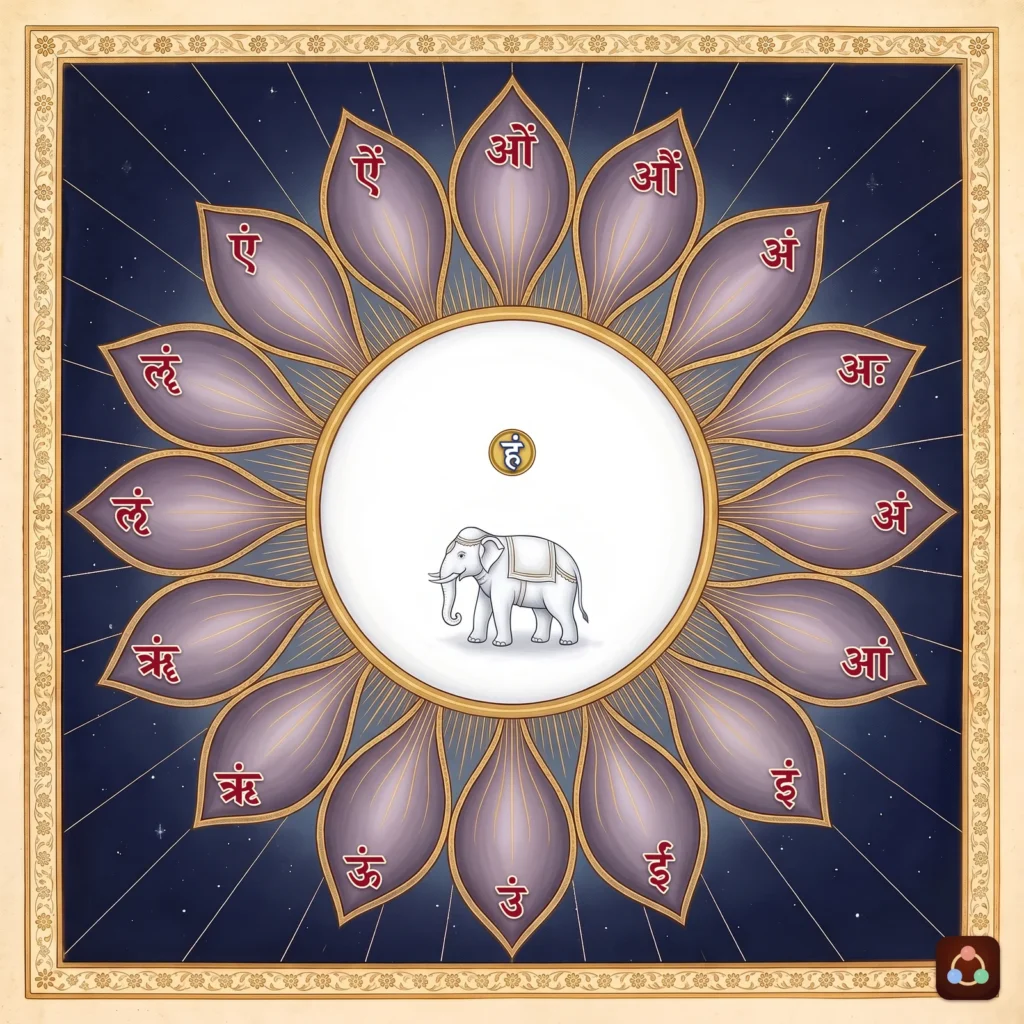
| Petals | Sixteen, a smoky purple |
| Letters on the petals | अं आं इं ईं उं ऊं ऋं ॠं ऌं ॡं एं ऐं ओं औं अं अः (the sixteen vowels, a to aḥ), each with the bindu, crimson |
| Element | Ether, or space (akasha), in the Shat-chakra-nirupana and in the Soundarya Lahari alike |
| Linked with | Sound: the subtle element of sound (shabda-tanmatra), in the 1937 commentary on verse 9 |
| Its shape | A circle, white like the full moon, the region of ether (verses 28 and 29); inside it, in the commentary, a triangle holding the region of the moon, without the mark of the hare (verse 30) |
| Bija | हं (ham), white, in white clothes, seated on a snow-white elephant, four-armed |
| Deity | Sadashiva, three-eyed, five-faced, ten-armed, in a tiger’s skin, one body with Girija (verses 28 and 29); in the commentary, Ardhanarishvara, snow-white and gold. The table in the 1937 commentary on verse 35 names Sadashiva too; verse 37 names Vyomeshvara and Vyomeshvari |
| Ruling goddess | Shakini in the Shat-chakra-nirupana; Dakini in the Lalita Sahasranama |
| In the middle | The whole region of the moon, “the gateway of great Liberation” |
| Rays | Seventy-two (Soundarya Lahari 14) |
| Soundarya Lahari | Verses 9, 14, 32, 37, 41 and 99 (101 in the 1937 book) |
What the Shat-chakra-nirupana says
The Shat-chakra-nirupana gives the Vishuddha four verses: 28 and 29 together, then 30 and 31. Woodroffe prints one more verse after them, which I come to at the end of this section. Here is what they show, from the outside in.
The petals. Sixteen petals “of a smoky purple hue”. On them are “all the shining vowels”, “of a crimson hue”, “distinctly visible to him whose mind is illumined” (verses 28 and 29). The commentary says they are the vowels from a to visarga, sixteen in all, and from their number it concludes that the petals are sixteen too. Woodroffe lists them: a, ā, i, ī, u, ū, ṛ, ṝ, ḷ, ḹ, e, ai, o, au, and the two breathings aṃ and aḥ, with the bindu above them. Another text that the commentator quotes adds that the filaments are ruddy and that the lotus is adorned by the region of ether.
The region of ether. In the pericarp of the lotus is “the Ethereal Region, circular in shape, and white like the full Moon”. The commentary explains the shape and the colour: the circle is round like the full moon, and it is white because, as the Sharada Tilaka says, each region takes after its element, and ether is white. Woodroffe’s note adds that this circle is sometimes drawn with a number of dots in it. The Prapanchasara Tantra is his reason: ether has countless small gaps in it, and it is because of these gaps that things exist in space. Our painting shows the circle plain.
The bija and the elephant. On the circle, the verse says, “on an elephant white as snow is seated the Bija of Ambara, who is white of colour”. Ambara is the sky, the ethereal region, and Woodroffe notes that the word also means clothing, so the line can also be read as the bija “whose raiment is white”. The bija is ham. The commentary takes care over the word naga: here it means an elephant, not a serpent. It quotes the Bhutashuddhi: “Inside it is the white Bija of Vyoma on a snow-white elephant.” The bija is four-armed. Two hands hold the noose and the goad, and two make the signs that grant boons and dispel fear (verses 28 and 29).
Sadashiva. In the lap of the bija “there ever dwells the great snow-white Deva, three-eyed and five-faced, with ten beautiful arms, and clothed in a tiger’s skin”. “His body is united with that of Girija”, the mountain’s daughter, “and He is known by what His name, Sada-shiva, signifies” (verses 28 and 29). The commentary says this is Shiva as Ardhanarishvara, the Lord who is half woman: golden on the left, snow-white on the right. It quotes a verse that gives him the down-turned digit of the moon, which constantly drops nectar. It also quotes the Nirvana Tantra for a picture of the Devi on a lion-seat set on a bull, with Sadashiva on her right, five-faced, three-eyed in each face, his body smeared with ashes, in a tiger’s skin and garlands of snakes. Woodroffe warns in a note that the text of the Nirvana Tantra he translated is faulty, and gives another edition’s reading. The commentary says the verse names no weapons for the ten hands. A meditation verse “elsewhere” gives a trident, a battle-axe, a sword, a thunderbolt, fire, the king of snakes, a bell, a goad, a noose, and the sign that dispels fear. The summary of the verses adds the lion-seat on the bull. Our painting does not show him.
Shakini. “Purer than the Ocean of Nectar is the Shakti Shakini who dwells in this Lotus. Her raiment is yellow, and in Her four lotus-hands She carries the bow, the arrow, the noose, and the goad” (verse 30). Woodroffe notes that the commentators read the first line in two ways: Shankara and Vishvanatha read “purer than”, and Kalicharana reads “pure like”, the ocean of nectar. The commentary says the ocean of nectar is white, cool and makes immortal, and that Shakini, who is light itself, is white and without heat. A meditation verse that the commentator quotes pictures her differently: five faces, each with three eyes; a noose, a goad, the sign of the book and the gesture of knowledge; she dwells in the bone and is fond of food made with milk. The commentary explains that two such meditations differ in what she holds because the seeker’s aim differs. Woodroffe’s note adds that she is the goddess of the bone tissue. The summary of the verses gives her white, four-armed, five-faced and three-eyed, in yellow clothes, seated on bones in the lunar region. Our painting does not show her.
The region of the moon. “The whole region of the Moon without the mark of the hare is in the pericarp of this Lotus.” The “mark of the hare” is the dark patch on the moon, the “man in the moon”, Woodroffe’s note says, and the commentary says Shakini is likened to the stainless moon. “This region is the gateway of great Liberation for him who desires the wealth of Yoga and whose senses are pure and controlled.” The commentary sets out the order inside the pericarp: first the ethereal circle, then a triangle inside it, then the moon’s region inside the triangle, and then the bija ham. It quotes another text: think of the full moon in the triangle in the pericarp, and there the snowy ether seated on an elephant, in white raiment, and there Sadashiva. Our painting shows the circle and not the triangle or the moon’s region inside it.
The fruit. Verse 31 promises much to the one who has full knowledge of the Self and fixes his mind on this lotus. He becomes “a great Sage, eloquent and wise”, with “uninterrupted peace of mind”. He “sees the three periods”, past, present and future, and becomes the benefactor of all, “free from disease and sorrow and long-lived”, and “like Hamsa, the destroyer of endless dangers”. The commentary says he sees the three times through the knowledge that yoga gives, and that some say it is because he has seen the Self, and all things to be known are in it. It says he is free from disease through success in his mantra. Another reading of the first line, it adds, is “one who has obtained perfection in yoga”. These are a tradition’s promises about meditation. They are not medical claims.
A further verse. After the summary, Woodroffe prints another verse, also numbered 31. His note says that Kalicharana and Shankara did not take it up, that it is found in Baladeva’s text, and that it comes from the Tripurasara-samuchchaya (chapter V, 26). It says that a yogi whose mind is fixed on this lotus, and whose breath is held, is able, if he is angry, to move all three worlds, and that none of Brahma, Vishnu, Hari-Hara, Surya or Ganapa can resist him. A note calls this praise of his power: were he to become angry, it says, he could move the three worlds.
What the Soundarya Lahari says
The Soundarya Lahari places the same element here and gives the centre one verse of its own, 37. The commentary brings the Vishuddha into several more.
Verse 9 puts ether “above” the heart. The 1937 commentary explains that this means the centre “clear as crystal”, the Vishuddhi, and calls ether here the form of shabda-tanmatra, the subtle element of sound. It ties the centre to the fourteen-spoked figure of the Sri Chakra, and says that one who masters it is said to gain the power of travelling through the ethereal regions. On ether, as on air, the two texts agree. The 1937 book notes that Purnananda, who wrote the Shat-chakra-nirupana, has a scheme at variance with the Soundarya Lahari’s. Set side by side, the two lists differ only in where water and fire go. Read verse 9
Verse 14 counts the rays of light in each centre. In the Vishuddhi, the centre of ether, there are seventy-two. The commentary explains the number: the thirty-six tattvas of the Kalpa-sutras, counted twice, give seventy-two as of ether. Earlier in the commentary on this verse, it names the tissues over which five deities born of the Supreme preside, taking the centres in order from the Vishuddhi downward, and gives the skin to the Vishuddhi. Read verse 14
Verse 37 is this centre’s own verse.
ವಿಶುದ್ಧೌ ತೇ ಶುದ್ಧ-ಸ್ಫಟಿಕವಿಶದಂ ವ್ಯೋಮಜನಕಂಶಿವಂ ಸೇವೇ ದೇವೀಮ್ ಅಪಿ ಶಿವಸಮಾನವ್ಯವಸಿತಾಮ್ ।ಯಯೋಃ ಕಾಂತ್ಯಾ ಯಾಂತ್ಯಾಃ ಶಶಿಕಿರಣಸಾರೂಪ್ಯಸರಣೇ-ರ್ವಿಧೂತಾಂತರ್ಧ್ವಾಂತಾ ವಿಲಸತಿ ಚಕೋರೀವ ಜಗತೀ
MeaningIn your vishuddhi chakra (at the throat, the centre of ether) I serve Shiva, clear as pure crystal, the begetter of ether, and I serve the Devi too, who stands there as his equal. Their radiance flows like moonlight itself. The world, its inner darkness of ignorance shaken off, rejoices in it as the chakori bird rejoices in the moon, for the chakori is said to live on moonbeams alone. Read verse 37
The commentary names the two deities Vyomeshvara and Vyomeshvari, to be meditated on in the middle of the lotus, surrounded by the seventy-two Nabhasa-mayukhas, the rays of the sky. A footnote lists all seventy-two, from the first, Hridaya, to the last, Chit. Generating Vyoman means being the first cause of ether, as the scripture says, “From the Atman is generated Ether”. The chakori, the she-partridge of the verse, is the bird said to live on moonbeams. The commentary adds that when this centre is worshipped, the ordinary working of the sun and the moon in the two side channels, ida and pingala, is held back, and the sixteen Nityas on the petals lose their influence. It is then the light of Shiva and the Devi alone that does the moonbeams’ work of lighting this region. It also says that some commentators take the Shiva of this verse to be Ardhanarishvara. Read verse 37
Verse 32. The commentary on this verse places the sixteen Nityas, the sixteen phases of the Devi, on the sixteen petals, beginning with the petal that points east. It also speaks of the sixteenth phase of the moon of the Sahasrara as reflected on the sixteenth petal of this lotus, and says the Vishuddhi lies in the region of the Moon. The twelve Adityas take the twelve petals of the Anahata in the same way.
Verse 41. In the account of worship that the 1937 book gives, and then names as Lakshmidhara’s view, the Devi is seated in the Anahata and receives incense and food. “Thereafter in the Vishuddhi she should be enthroned.” While she talks there with her companions, she is worshipped “with the crystal-like sixteen Kalas of the Moon there, as with so many gems”, and then she is taken on to the Ajna. Read verse 41
Near the end of the poem, at verse 101 in the 1937 book’s numbering, which is verse 99 on this site, the commentary returns to the centres. Lakshmidhara, as the book reports him, holds that those who worship the Mother in the Vishuddhi attain the liberation called samipya, which the book defines as ministering to the comforts of the Devi. He also explains the sixteen petals. Of the Vishuddhi’s sixteen, twelve stand for the Anahata and four for the Muladhara; or, he says in another way, ten stand for the Manipura and six for the Svadhishthana. Read verse 99
What the Lalita Sahasranama says
The yogini of the Vishuddha (names 475 to 484). For this centre the Lalita Sahasranama names Dakini.
| No. | Name | Meaning |
|---|---|---|
| 475 | viśuddhi-cakra-nilayā | Who dwells in the Vishuddhi chakra |
| 476 | āraktavarṇā | Slightly red (rosy) in colour |
| 477 | trilocanā | Three-eyed |
| 478 | khaṭvāṅgādi-praharaṇā | Armed with a club (khatvanga) and other weapons |
| 479 | vadanaika-samanvitā | Who has only one face |
| 480 | pāyasānna-priyā | Fond of sweet rice cooked in milk |
| 481 | tvaksthā | Who is the deity of the skin |
| 482 | paśuloka-bhayaṅkarī | Who strikes fear into beings bound to the world |
| 483 | amṛtādi-mahāśakti-saṃvṛtā | Surrounded by Amrita and other great Shaktis |
| 484 | ḍākinīśvarī | The goddess Dakini |
Here the two lists name different goddesses. In the Shat-chakra-nirupana the throat belongs to Shakini; in the Lalita Sahasranama it belongs to Dakini. The same swap shows at the Muladhara, where the Shat-chakra-nirupana names Dakini and the Lalita Sahasranama names Sakini. A list that Woodroffe gives from another account sides with the Lalita Sahasranama: it puts Dakini at the Vishuddha, with the skin, and Shakini at the Muladhara, with the bone. The 1937 commentary on verse 14 also gives the skin to the Vishuddhi. The meditation verse on Shakini quoted in the Shat-chakra-nirupana’s own commentary puts her in the bone, the tissue that belongs to the Muladhara in those lists. They differ on her look too. The Lalita Sahasranama’s goddess is slightly red, three-eyed and one-faced, with a club and other weapons; the Shat-chakra-nirupana’s is white, with yellow clothes, and four hands that hold a bow, an arrow, a noose and a goad.
The 1937 footnote that lists the seventy-two rays of ether does not choose between the two. Dakini and Shakini both stand among those rays.
Three other names touch sound and the swan. Among names 1 to 512, which I read in full, 299 calls her “she who is in the form of sound”, 371 calls her the form of vaikhari, sound in its spoken, heard form, and 372 calls her “the swan in the minds of her devotees”.
Three texts, one lotus
On the sixteen petals and on ether, the texts agree. They differ on the goddess, on the god, and on what the centre gives.
| Shat-chakra-nirupana | Lalita Sahasranama | Soundarya Lahari | |
|---|---|---|---|
| Element | Ether (verses 28 and 29) | Ether (verses 9 and 14) | |
| Bija | हं (ham), on a snow-white elephant | हं (ham), in the 1937 commentary’s scheme | |
| Who dwells here | Sadashiva, in the lap of the bija (verses 28 and 29); Ardhanarishvara, in the commentary | Vyomeshvara and Vyomeshvari (verse 37), with Ardhanarishvara as the view of some commentators; Sadashiva, in the table in the 1937 commentary on verse 35 | |
| Ruling goddess | Shakini | Dakini | Not chosen: both stand among the seventy-two rays (verse 37) |
| Her form | In the verse, yellow clothes and four hands (bow, arrow, noose, goad); white, in the commentary and the summary; in a meditation verse the commentary quotes, five faces, three eyes in each | Slightly red, three-eyed, one face, with a club and other weapons | |
| Bodily tissue | Bone, in the meditation verse quoted | Skin | Skin, in the 1937 commentary on verse 14 |
| Favourite food | Food made with milk (the meditation verse quoted) | Sweet rice cooked in milk | |
| What the centre holds | The whole region of the moon, the gateway of great Liberation | The lustre of Shiva and the Devi, doing the work of moonbeams (verse 37 and its commentary); the Vishuddhi lies in the region of the Moon | |
| Fruit of worship | A sage, eloquent and wise, seeing the three periods, free from disease and sorrow (verse 31) | Samipya, ministering to the Devi’s comforts, Lakshmidhara, as the book reports him | |
| Rays | Seventy-two (verse 14) |
What it means for the inner life
The texts read the Vishuddha in a few simple ways.
It is the centre of purity. The name says it. The commentary gives two reasons: its substance is light, and the one who sees the Hamsa is made pure.
It is the centre of space. Woodroffe’s note says that ether is full of small gaps, and that because of them things exist in space. The 1937 commentary calls ether here the subtle element of sound.
It is the centre of sound and speech. The name Bharatisthana makes it the seat of the Devi of speech. The verse promises the one who meditates here that he will be eloquent and wise. The 1937 commentary, for its part, gives the heart the unstruck sound, and the throat the element of sound.
It is the gate of the moon. In the Shat-chakra-nirupana the lunar region in the pericarp is the gateway of great liberation, open to the one whose senses are pure and controlled. In the Soundarya Lahari the same place is lit by the lustre of Shiva and the Devi, which does the work of moonbeams, and the world, with its inner darkness gone, rejoices in it as the chakori bird does.
It is a pair, and one. Sadashiva is united with the Devi’s body, half gold and half snow. Verse 37 worships Shiva and the Devi together, and the commentary says some take its Shiva to be Ardhanarishvara.
Its powers are not the goal. The 1937 commentary on verse 9 says that one who masters ether is said to gain the power of travelling through the sky, and calls such powers “pitfalls”. The goal lies above.
What lies here in the body
I am a physician, so let me say plainly what sits at this level.
In the front of the neck lies the larynx, the voice box, with the vocal folds that the breath sets humming when we speak or sing. Behind the larynx is the pharynx, the passage that serves both breathing and swallowing. Below the larynx, in front of the windpipe, lies the thyroid gland, a small gland that makes hormones which set the pace of the body’s chemistry. The larynx is served by branches of the vagus nerve, which also slows the heart. This is standard anatomy, and I have not tied it to a page of any one textbook here.
A century ago some writers tried to match the chakras to such nerve centres. Professor Sarkar’s list, which Woodroffe mentions, lines the Vishuddha up with the laryngeal or pharyngeal plexus. Brajendranath Seal went another way. He called the Bharatisthana “the junction of the spinal cord with the medulla oblongata”, which “by means of nerves like the pneumogastric” regulates “the larynx and other organs of articulation”. The pneumogastric is the vagus. That junction is at the base of the skull, well above the throat, and the nerves go down from there to the voice box. Woodroffe’s own view was that whether the throat centre fits the carotid, the laryngeal or the pharyngeal plexus must be a matter of opinion. Later writers in the West often call the Vishuddha the throat chakra and paint it blue. The Shat-chakra-nirupana gives it smoky purple petals and a white circle.
Is there any study of voice or chanting for this part of the body? Something has been measured, if not much. A scoping review in 2025 gathered 15 studies that measured voice and the autonomic nervous system together, mostly in healthy adults whose work needs the voice. The tasks ranged from singing and held notes to speech under strain. The authors suggested that voice use can change autonomic function, and they offered the review as a map of the field, not as proof of any benefit. A 2025 review of studies of chanting Om found 20 studies: 17 were quasi-experimental, which means not randomised, and 3 were randomised. Eleven watched the brain, 8 the heart and 1 the lungs, and 18 of the 20 lasted three days or less. They reported more relaxation and greater heart rate variability, which is the size of the heart’s natural speeding and slowing with each breath. The authors rated the quality of the studies as fair, and they asked for longer studies in more people.
Humming has had a small study of its own. In a pilot of 20 healthy adults who did one five-minute session of bhramari, the humming bee breath, one measure of vagal tone rose from about 30 to about 46 milliseconds, and a second from 8.7 to 19.9 per cent. There was no comparison group, and the authors call the findings preliminary. A 2026 network meta-analysis of 15 trials in 949 people with high blood pressure, comparing 11 mind-body practices, ranked bhramari among the more favourable for both systolic and diastolic pressure. The authors say the number of studies and their sizes are small, and that the ranking should be read with caution. I would add that a change in a measurement is not the same as fewer heart attacks or strokes, and none of these studies claims that.
The thyroid has been studied under the heading of yoga, not of this chakra. Two systematic reviews in 2024 looked at yoga for hypothyroidism. One covered 11 studies in 516 people, and the other 8 studies in 421 people. Most reported better thyroid blood tests and other measures, but the studies were small and varied, many were not randomised, and in the first review only one of the 11 had a low risk of bias. Both reviews call for better trials. This does not mean yoga treats an underactive thyroid. If you have a thyroid condition, do not change your medicine without speaking to your own doctor. Hoarseness that lasts for weeks, a lump in the neck, or trouble swallowing should be shown to a doctor.
The one study I found that named the Vishuddha is the same sound-meditation study that named the Anahata. It measured the “energy” of all seven chakras with a camera that reads the glow around the fingertips, in 15 volunteers after one session. I know of no evidence that this device measures any function of the body. I found no study that has tested the Vishuddha itself in a way medicine accepts.
Sources
- Arthur Avalon (Sir John Woodroffe), The Serpent Power, Ganesh and Co, Madras. Shat-chakra-nirupana, verses 28 to 31, with the commentary of Kalicharana, pp. 384 to 394 (the summary, pp. 392 to 393; the further verse, p. 394); chapter V, pp. 122 to 123; p. 93; pp. 153 to 159.
- Adi Shankaracharya, Saundarya-Lahari, with transliteration, English translation and commentary by S. Subrahmanya Sastri and T. R. Srinivasa Ayyangar, drawing on Lakshmidhara and other commentators. Theosophical Publishing House, Adyar, 1937. Verse 9, pp. 57 to 59; verse 14, pp. 76, 78 and 80; verse 32, pp. 127 to 129; verse 35, p. 143; verse 37, pp. 147 to 148; verse 41, pp. 163 to 164; verse 101, pp. 252 to 253 and 256.
- The meanings of verses 9, 14, 32, 37, 41 and 99 on Jeevana Sutra, and in the Soundarya Lahari app.
- Lalita Sahasranama, names 299, 371, 372 and 475 to 484. Numbers and meanings as in Sanskrit Documents, lalita1000.
- Morales-Luque C and others. Mapping the neurophysiological link between voice and autonomic function: a scoping review. Biology 2025; 14(10): 1382. doi:10.3390/biology14101382
- Kumar R and others. Tradition, science and practice of Om dhyana (meditation): a comprehensive review. Advances in Mind-Body Medicine 2025; 39(2): 17 to 25. PubMed 40265989
- Malhotra V and others. Physiological and neurodynamic effects of bhramari pranayama: study based on HRV and EEG activity. International Journal of Yoga Therapy 2026; 36(2). doi:10.17761/2026-D-25-00058
- Cui H and others. Mind-body therapies intervention for essential hypertension: network meta-analysis based on the antihypertensive effect. Frontiers in Cardiovascular Medicine 2026; 13: 1677353. doi:10.3389/fcvm.2026.1677353
- Baishya A, Metri K. Effects of yoga on hypothyroidism: a systematic review. Journal of Ayurveda and Integrative Medicine 2024; 15(2): 100891. doi:10.1016/j.jaim.2024.100891
- Bhandari RB, Mahto PK. Effect of yoga therapy on hypothyroidism: a systematic review. Annals of Neurosciences 2024; 32(3): 207 to 218. doi:10.1177/09727531241282516
- Veerabrahmachar R and others. Immediate effect of Nada Yoga meditation on energy levels and alignment of seven chakras as assessed by electro-photonic imaging: a randomized controlled crossover pilot study. Advances in Mind-Body Medicine 2023; 37: 11 to 16. PubMed 37119541