
ವಿಷ್ಣುವಿಗೆ ನಾಲ್ಕು ಸಾಲಿನಲ್ಲಿ ನಮಸ್ಕರಿಸುವ ಚಿಕ್ಕ ಪ್ರಾರ್ಥನೆ ಇದು.
ಹೊಕ್ಕುಳಲ್ಲಿ ಕಮಲವುಳ್ಳವನು, ನೀರಿನ ಮೇಲೆ ಮಲಗಿರುವವನು, ಕೇಶವ, ಅನಂತ ಮತ್ತು ವಾಸುದೇವ ಎಂಬ ಹೆಸರುಗಳಿಂದ ಅವನನ್ನು ನೆನೆದು ಶಾಂತವಾಗಿ ದಿನವನ್ನು ಮುಗಿಸುತ್ತೇವೆ.
ಶ್ಲೋಕ (ಕನ್ನಡ)
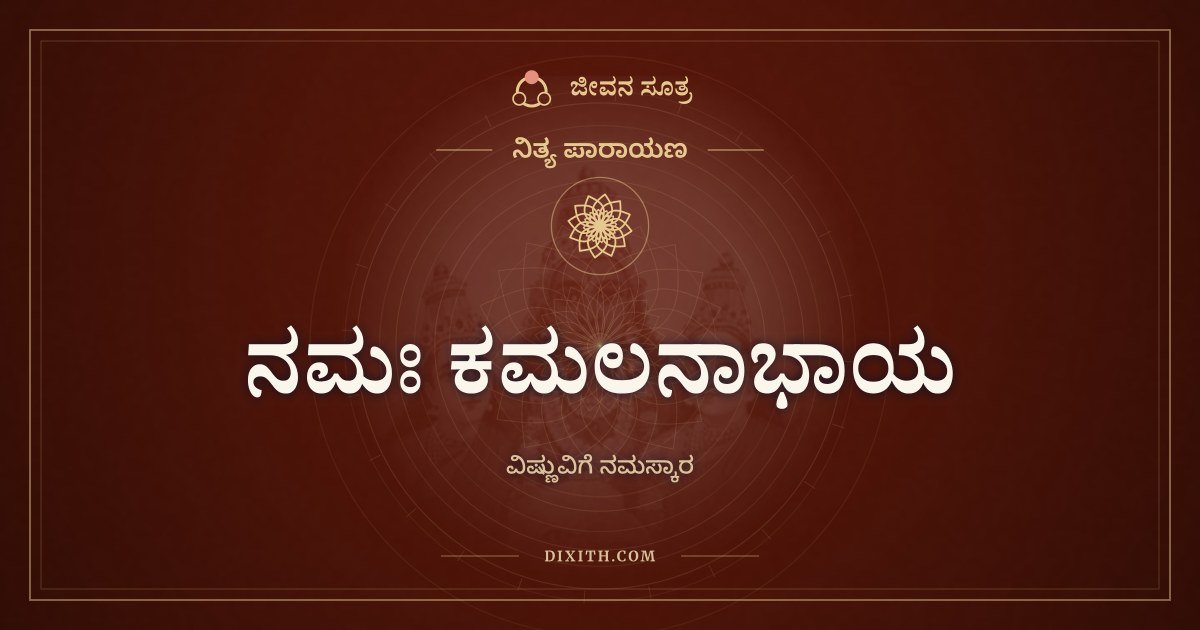
ನಮಃ ಕಮಲನಾಭಾಯ
ನಮಸ್ತೇ ಜಲಶಾಯಿನೇ ।
ನಮಸ್ತೇ ಕೇಶವಾನಂತ
ವಾಸುದೇವ ನಮೋಽಸ್ತು ತೇ ॥
ಶ್ಲೋಕ (ದೇವನಾಗರಿ)
नमः कमलनाभाय
नमस्ते जलशायिने ।
नमस्ते केशवानंत
वासुदेव नमोऽस्तु ते ॥
ಶ್ಲೋಕ (IAST)
namaḥ kamalanābhāya
namaste jalaśāyine |
namaste keśavānaṃta
vāsudeva namo’stu te ||
ಪದಶಃ ಅರ್ಥ
- ನಮಃ (नमः, namaḥ) = ನಮಸ್ಕಾರ (salutation)
- ಕಮಲನಾಭಾಯ (कमलनाभाय, kamalanābhāya) = ಹೊಕ್ಕುಳಲ್ಲಿ ಕಮಲವುಳ್ಳವನಿಗೆ (to the one with a lotus in his navel)
- ನಮಸ್ತೇ (नमस्ते, namaste) = ನಿನಗೆ ನಮಸ್ಕಾರ (ನಮಃ + ತೇ) (salutation to you)
- ಜಲಶಾಯಿನೇ (जलशायिने, jalaśāyine) = ನೀರಿನ ಮೇಲೆ ಮಲಗಿರುವವನಿಗೆ (to the one who rests on the waters)
- ನಮಸ್ತೇ (नमस्ते, namaste) = ನಿನಗೆ ನಮಸ್ಕಾರ (ನಮಃ + ತೇ) (salutation to you)
- ಕೇಶವಾನಂತ (केशवानंत, keśavānaṃta) = ಕೇಶವನೇ, ಅನಂತನೇ (ಕೇಶವ + ಅನಂತ) (O Keshava, O Ananta)
- ವಾಸುದೇವ (वासुदेव, vāsudeva) = ವಾಸುದೇವನೇ (O Vasudeva)
- ನಮೋಽಸ್ತು (नमोऽस्तु, namo’stu) = ನಮಸ್ಕಾರ ಇರಲಿ (ನಮಃ + ಅಸ್ತು) (let there be salutation)
- ತೇ (ते, te) = ನಿನಗೆ (to you)
ಸಂಪೂರ್ಣ ಅರ್ಥ (ಕನ್ನಡ)
ಹೊಕ್ಕುಳಲ್ಲಿ ಕಮಲವುಳ್ಳವನಿಗೆ ನಮಸ್ಕಾರ. ನೀರಿನ ಮೇಲೆ ಮಲಗಿರುವ ನಿನಗೆ ನಮಸ್ಕಾರ. ಕೇಶವನೇ, ಅನಂತನೇ, ವಾಸುದೇವನೇ, ನಿನಗೆ ನಮಸ್ಕಾರ ಇರಲಿ.
ಸಂಪೂರ್ಣ ಅರ್ಥ (ಇಂಗ್ಲಿಷ್)
Salutation to the one with a lotus in his navel. Salutation to you who rest on the waters. O Keshava, O Ananta, O Vasudeva, may there be salutation to you.
ಈ ಶ್ಲೋಕದ ಬಗ್ಗೆAbout this verse
ಇದೊಂದು ವಿಷ್ಣುವಿನ ಪ್ರಣಾಮ ಶ್ಲೋಕ. ಇದರ ಕರ್ತೃ ತಿಳಿದಿಲ್ಲ. ಒಂದು ತಾಣದಲ್ಲಿ ಇದನ್ನು ವಿಷ್ಣು ಸಹಸ್ರನಾಮದ ಮಾಹಾತ್ಮ್ಯ ಭಾಗದಲ್ಲಿ ಇಟ್ಟಿದ್ದಾರೆ. ಅದನ್ನು ನಾವು ಖಚಿತಪಡಿಸಿಲ್ಲ, ಆದ್ದರಿಂದ ಮೂಲ ತಿಳಿದಿಲ್ಲ ಎಂದೇ ಹೇಳುತ್ತೇವೆ.
This is a pranama verse to Vishnu. The author is unknown. One site files it under a Mahatmya section of a Vishnu Sahasranama text. We have not verified that, so we say the source is unknown.
ಕಮಲನಾಭ ಎಂದರೆ ಹೊಕ್ಕುಳಲ್ಲಿ ಕಮಲವುಳ್ಳವನು, ಜಲಶಾಯಿ ಎಂದರೆ ನೀರಿನ ಮೇಲೆ ಮಲಗಿದವನು. ಕೇಶವ, ಅನಂತ ಮತ್ತು ವಾಸುದೇವ ವಿಷ್ಣುವಿನ ಹೆಸರುಗಳು.
Kamalanabha means one with a lotus in the navel, and jalashayi means one who lies on the waters. Keshava, Ananta and Vasudeva are names of Vishnu.
ಕೊನೆಯ ಪಾದವನ್ನು ನಮೋಽಸ್ತುತೇ ಎಂದು ಜೋಡಿಸಿ ಬರೆಯುವ ಆವೃತ್ತಿಯೂ ಇದೆ. ನಾವು ನಮೋಽಸ್ತು ತೇ ಎಂದು ಬಿಡಿಸಿ ಬರೆದಿದ್ದೇವೆ.
Some versions join the last foot as namo stute. We have written it split as namo astu te.
ಆಧಾರ: ಹಲವು ಮೂಲಗಳು. ಆವೃತ್ತಿಗಳು ಭಿನ್ನವಾಗಿರುವಲ್ಲಿ ಅದನ್ನು ಇಲ್ಲಿ ಸೂಚಿಸಿದ್ದೇವೆ.
Sources: several. Where versions differ, we have noted it here.
ಇಂದಿನ ಬದುಕಿಗೆFor life today
ದಿನದ ಕೊನೆಯಲ್ಲಿ ಹದಿನೈದು ಸೆಕೆಂಡಿನ ಒಂದು ನಮಸ್ಕಾರ ಮನಸ್ಸನ್ನು ಹಗುರ ಮಾಡಬಲ್ಲದು. ಫೋನ್ ಪಕ್ಕಕ್ಕಿಟ್ಟು ಇದನ್ನು ಹೇಳಿ ಮಲಗಬಹುದು.
A fifteen-second salutation at the end of the day can lighten the mind. We can put the phone aside, say it and then sleep.
ನೀರಿನ ಮೇಲೆ ಶಾಂತವಾಗಿ ಮಲಗಿರುವ ಚಿತ್ರ ವಿಶ್ರಾಂತಿಯ ಚಿತ್ರವೂ ಹೌದು. ಅದನ್ನು ನೆನೆದು ಮಲಗುವುದು ನಮಗೆ ನೆಮ್ಮದಿ ಕೊಡಬಹುದು.
The picture of resting calmly on the water is also a picture of rest. Sleeping with it in mind may bring us some peace.
ಪಾಠದಲ್ಲಿ ತಪ್ಪೋ ಬೇರೆ ಪಾಠಾಂತರವೋ ಕಂಡಿತೇ? ನಮಗೆ ತಿಳಿಸಿ.
Noticed a mistake or a different reading? Tell us.

ಪ್ರತಿಕ್ರಿಯೆ ಬರೆಯಿರಿ