
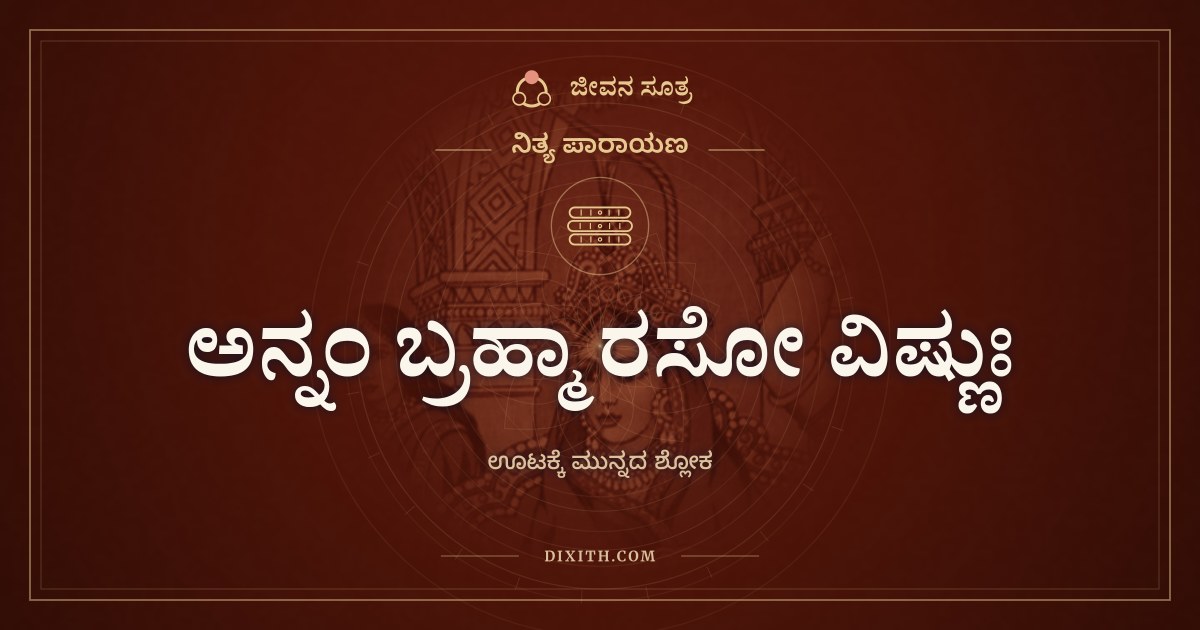
ಊಟಕ್ಕೆ ಕುಳಿತಾಗ ಹೇಳುವ ಶ್ಲೋಕಗಳಲ್ಲಿ ಇದು ಬಹಳ ಜನಪ್ರಿಯ. ಅನ್ನವೇ ಬ್ರಹ್ಮ, ಅದರ ರಸವೇ ವಿಷ್ಣು, ಉಣ್ಣುವವನೇ ಮಹೇಶ್ವರ ಎಂದು ಇದು ಊಟವನ್ನು ಒಂದು ಪೂಜೆಯನ್ನಾಗಿ ನೋಡುತ್ತದೆ.
ಹೀಗೆ ತಿಳಿದು ಉಂಡವನಿಗೆ ಅನ್ನದೋಷ ಅಂಟುವುದಿಲ್ಲ ಎಂದು ಶ್ಲೋಕದ ಎರಡನೆಯ ಸಾಲು ಹೇಳುತ್ತದೆ.
ಶ್ಲೋಕ (ಕನ್ನಡ)
ಅನ್ನಂ ಬ್ರಹ್ಮಾ ರಸೋ ವಿಷ್ಣುರ್ಭೋಕ್ತಾ ದೇವೋ ಮಹೇಶ್ವರಃ ।
ಏವಂ ಜ್ಞಾತ್ವಾ ತು ಯೋ ಭುಂಕ್ತೇ ಅನ್ನದೋಷೋ ನ ಲಿಪ್ಯತೇ ॥
ಶ್ಲೋಕ (ದೇವನಾಗರಿ)
अन्नं ब्रह्मा रसो विष्णुर्भोक्ता देवो महेश्वरः ।
एवं ज्ञात्वा तु यो भुङ्क्ते अन्नदोषो न लिप्यते ॥
ಶ್ಲೋಕ (IAST)
annaṃ brahmā raso viṣṇurbhoktā devo maheśvaraḥ |
evaṃ jñātvā tu yo bhuṅkte annadoṣo na lipyate ||
ಪದಶಃ ಅರ್ಥ
- ಅನ್ನಂ ಬ್ರಹ್ಮಾ (अन्नं ब्रह्मा, annaṃ brahmā) = ಅನ್ನವೇ ಬ್ರಹ್ಮ (the food is Brahma)
- ರಸಃ ವಿಷ್ಣುಃ (रसः विष्णुः, rasaḥ viṣṇuḥ) = ಅದರ ರಸವೇ ವಿಷ್ಣು (its essence is Vishnu)
- ಭೋಕ್ತಾ ದೇವಃ ಮಹೇಶ್ವರಃ (भोक्ता देवः महेश्वरः, bhoktā devaḥ maheśvaraḥ) = ಉಣ್ಣುವವನೇ ಮಹೇಶ್ವರ ದೇವ (the one who eats is the god Maheshvara)
- ಏವಂ ಜ್ಞಾತ್ವಾ ತು (एवं ज्ञात्वा तु, evaṃ jñātvā tu) = ಹೀಗೆ ತಿಳಿದು (knowing it thus)
- ಯಃ ಭುಂಕ್ತೇ (यः भुङ्क्ते, yaḥ bhuṅkte) = ಯಾರು ಉಣ್ಣುತ್ತಾರೋ (whoever eats)
- ಅನ್ನದೋಷಃ (अन्नदोषः, annadoṣaḥ) = ಅನ್ನದ ದೋಷ (any fault in the food)
- ನ ಲಿಪ್ಯತೇ (न लिप्यते, na lipyate) = ಅಂಟುವುದಿಲ್ಲ (does not cling)
ಸಂಪೂರ್ಣ ಅರ್ಥ (ಕನ್ನಡ)
ಅನ್ನವೇ ಬ್ರಹ್ಮ, ಅದರ ರಸವೇ ವಿಷ್ಣು, ಉಣ್ಣುವವನೇ ಮಹೇಶ್ವರ. ಹೀಗೆ ತಿಳಿದು ಯಾರು ಉಣ್ಣುತ್ತಾರೋ ಅವರಿಗೆ ಅನ್ನದ ದೋಷ ಅಂಟುವುದಿಲ್ಲ.
ಸಂಪೂರ್ಣ ಅರ್ಥ (ಇಂಗ್ಲಿಷ್)
The food is Brahma, its essence is Vishnu, and the one who eats is the god Maheshvara. Whoever eats knowing this is not touched by any fault in the food.
ಈ ಶ್ಲೋಕದ ಬಗ್ಗೆAbout this verse
ಅನ್ನದೋಷ ಎಂದರೆ ಆಹಾರದ ಮೂಲ, ಅದನ್ನು ಬೇಯಿಸಿದವರ ಮನಸ್ಥಿತಿ ಅಥವಾ ಅದನ್ನು ಪಡೆದ ರೀತಿಯಿಂದ ಬರಬಹುದಾದ ದೋಷ ಎಂದು ಪರಂಪರೆ ತಿಳಿಯುತ್ತದೆ. ಊಟವನ್ನು ದೇವರ ಅರಿವಿನೊಂದಿಗೆ ಮಾಡಿದರೆ ಅದು ಕಳೆಯುತ್ತದೆ ಎಂಬುದು ಈ ಶ್ಲೋಕದ ಆಶಯ.
Tradition understands annadosha as a fault that may attach to food from its source, from the state of mind of the one who cooked it, or from the way it was obtained. The hope of this verse is that eating with awareness of the divine removes it.
ಈ ಶ್ಲೋಕದ ಮೂಲ ಗ್ರಂಥವನ್ನು ಖಚಿತವಾಗಿ ಹೇಳಲಾಗದು. ಬ್ರಹ್ಮಾರ್ಪಣಂ, ಅನ್ನಪೂರ್ಣೇ ಸದಾಪೂರ್ಣೇ ಮತ್ತು ಅಹಂ ವೈಶ್ವಾನರೋ ಭೂತ್ವಾ ಎಂಬ ಊಟದ ಇತರ ಶ್ಲೋಕಗಳಿಗೆ ಈ ತಾಣದಲ್ಲಿ ಬೇರೆ ಪುಟಗಳಿವೆ.
The original source cannot be fixed with certainty. Other mealtime verses, Brahmarpanam, Annapurne sadapurne and Aham vaishvanaro bhutva, have their own pages on this site.
ಆಧಾರ: ಹಲವು ಮೂಲಗಳು. ಆವೃತ್ತಿಗಳು ಭಿನ್ನವಾಗಿರುವಲ್ಲಿ ಅದನ್ನು ಇಲ್ಲಿ ಸೂಚಿಸಿದ್ದೇವೆ.
Sources: several. Where versions differ, we have noted it here.
ಇಂದಿನ ಬದುಕಿಗೆFor life today
ಟಿವಿ ಅಥವಾ ಫೋನ್ ನೋಡುತ್ತ ಉಣ್ಣುವಾಗ ಎಷ್ಟು ತಿಂದೆವು, ಏನು ತಿಂದೆವು ಎಂಬುದೇ ಗೊತ್ತಾಗುವುದಿಲ್ಲ. ಊಟಕ್ಕೆ ಮುನ್ನ ಒಂದು ಕ್ಷಣ ನಿಂತು ಈ ಶ್ಲೋಕ ಹೇಳುವುದು, ಗಮನವಿಟ್ಟು ಮಿತವಾಗಿ ಉಣ್ಣುವ ಅಭ್ಯಾಸಕ್ಕೆ ಒಳ್ಳೆಯ ಆರಂಭ. ಅದು ಹೊಟ್ಟೆಗೂ ಒಳ್ಳೆಯದು.
When we eat in front of the television or the phone, we hardly notice how much or what we ate. Pausing for a moment before a meal to say this verse is a good start to the habit of eating with attention and in moderation, which is good for the stomach too.
ಪಾಠದಲ್ಲಿ ತಪ್ಪೋ ಬೇರೆ ಪಾಠಾಂತರವೋ ಕಂಡಿತೇ? ನಮಗೆ ತಿಳಿಸಿ.
Noticed a mistake or a different reading? Tell us.
ಪ್ರತಿಕ್ರಿಯೆ ಬರೆಯಿರಿ