
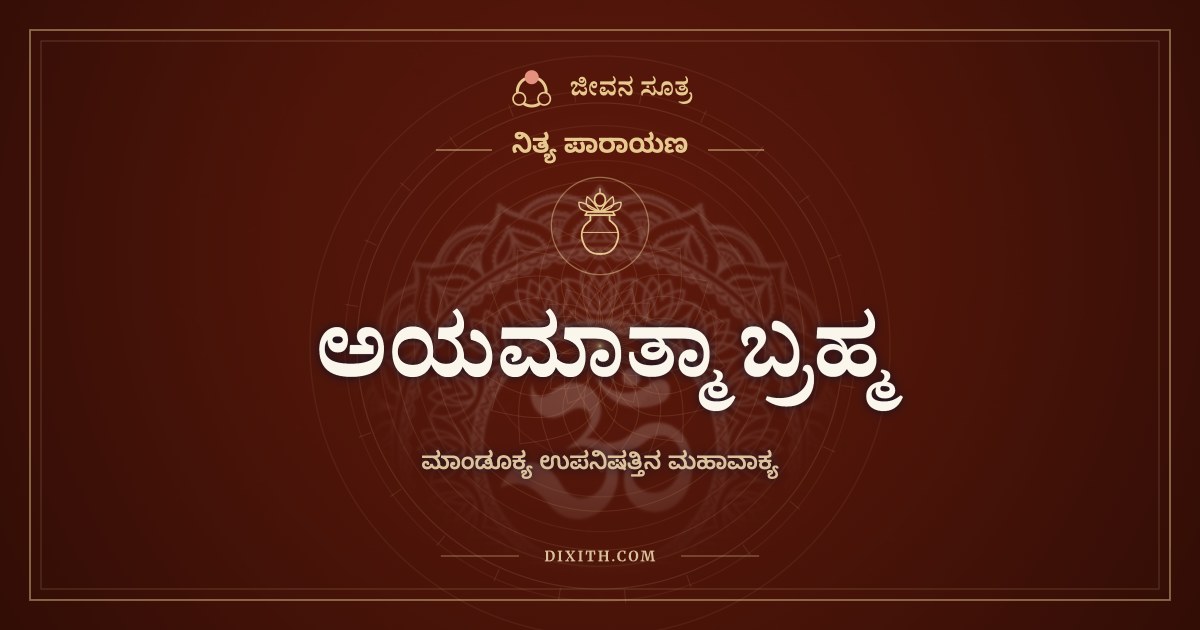
ಅಥರ್ವವೇದದ ಮಾಂಡೂಕ್ಯ ಉಪನಿಷತ್ತು ಚಿಕ್ಕದಾದರೂ ಆಳವಾದ ಗ್ರಂಥ, ಓಂಕಾರ ಮತ್ತು ಆತ್ಮದ ನಾಲ್ಕು ಸ್ಥಿತಿಗಳನ್ನು ವಿವರಿಸುತ್ತದೆ.
ಅದರ ಆರಂಭದಲ್ಲೇ ಬರುವ ಅಯಮಾತ್ಮಾ ಬ್ರಹ್ಮ ಎಂಬ ವಾಕ್ಯ, ಈ ಆತ್ಮ ಬ್ರಹ್ಮಕ್ಕಿಂತ ಬೇರೆಯಲ್ಲ ಎಂದು ನೇರವಾಗಿ ಹೇಳುತ್ತದೆ.
ಶ್ಲೋಕ (ಕನ್ನಡ)
ಅಯಮಾತ್ಮಾ ಬ್ರಹ್ಮ ॥
ಶ್ಲೋಕ (ದೇವನಾಗರಿ)
अयमात्मा ब्रह्म ॥
ಶ್ಲೋಕ (IAST)
ayamātmā brahma ||
ಪದಶಃ ಅರ್ಥ
- ಅಯಮ್ ಆತ್ಮಾ (अयम् आत्मा, ayam ātmā) = ಈ ಆತ್ಮವು (this self, this atman)
- ಬ್ರಹ್ಮ (ब्रह्म, brahma) = ಬ್ರಹ್ಮವೇ ಆಗಿದೆ (is Brahman)
- ಅಯಮಾತ್ಮಾ ಬ್ರಹ್ಮ (अयमात्मा ब्रह्म, ayamātmā brahma) = ಈ ಆತ್ಮವೇ ಬ್ರಹ್ಮ ಎಂಬ ಪೂರ್ಣ ವಾಕ್ಯ (the full statement: this very self is Brahman)
ಸಂಪೂರ್ಣ ಅರ್ಥ (ಕನ್ನಡ)
ಈ ಆತ್ಮವೇ ಬ್ರಹ್ಮ.
ಸಂಪೂರ್ಣ ಅರ್ಥ (ಇಂಗ್ಲಿಷ್)
This very self (atman) is Brahman.
ಈ ವಾಕ್ಯದ ಬಗ್ಗೆAbout this verse
ಮಾಂಡೂಕ್ಯ ಉಪನಿಷತ್ತಿನ ಈ ವಾಕ್ಯ, ಜಾಗೃತ, ಸ್ವಪ್ನ, ಸುಷುಪ್ತಿ ಮತ್ತು ತುರೀಯ ಎಂಬ ಆತ್ಮದ ನಾಲ್ಕು ಸ್ಥಿತಿಗಳ ವಿವರಣೆಗೆ ಮುನ್ನುಡಿಯಂತೆ ಬರುತ್ತದೆ.
This statement from the Mandukya Upanishad serves as a prelude to its description of the four states of the self: waking, dream, deep sleep and the fourth, turiya.
ಬೇರೆ ಮಹಾವಾಕ್ಯಗಳು ಆತ್ಮ ಬ್ರಹ್ಮಗಳ ಅಭೇದವನ್ನು ಪರೋಕ್ಷವಾಗಿ ಹೇಳಿದರೆ, ಇದು ಅದನ್ನು ಅತ್ಯಂತ ನೇರವಾಗಿ ಸಾರುತ್ತದೆ.
While the other mahavakyas point to the oneness of atman and Brahman indirectly, this one states it in the most direct way.
ಆಧಾರ: ಹಲವು ಮೂಲಗಳು. ಆವೃತ್ತಿಗಳು ಭಿನ್ನವಾಗಿರುವಲ್ಲಿ ಅದನ್ನು ಇಲ್ಲಿ ಸೂಚಿಸಿದ್ದೇವೆ.
Sources: several. Where versions differ, we have noted it here.
ಇಂದಿನ ಬದುಕಿಗೆFor life today
ನಾನು ಎಂಬ ಭಾವದ ಒಳಗೆ ಎಷ್ಟೋ ಆಳಕ್ಕೆ ಇಳಿದರೆ ಸಿಗುವುದೇ ಈ ಆತ್ಮ ಎಂಬ ನೆನಪು, ಆತ್ಮವಿಶ್ವಾಸಕ್ಕೆ ಒಂದು ಗಟ್ಟಿ ನೆಲೆ ಕೊಡುತ್ತದೆ.
The reminder that going deep enough within the sense of “I” leads to this very atman gives a firm ground for inner confidence.
ಪಾಠದಲ್ಲಿ ತಪ್ಪೋ ಬೇರೆ ಪಾಠಾಂತರವೋ ಕಂಡಿತೇ? ನಮಗೆ ತಿಳಿಸಿ.
Noticed a mistake or a different reading? Tell us.
ಪ್ರತಿಕ್ರಿಯೆ ಬರೆಯಿರಿ