
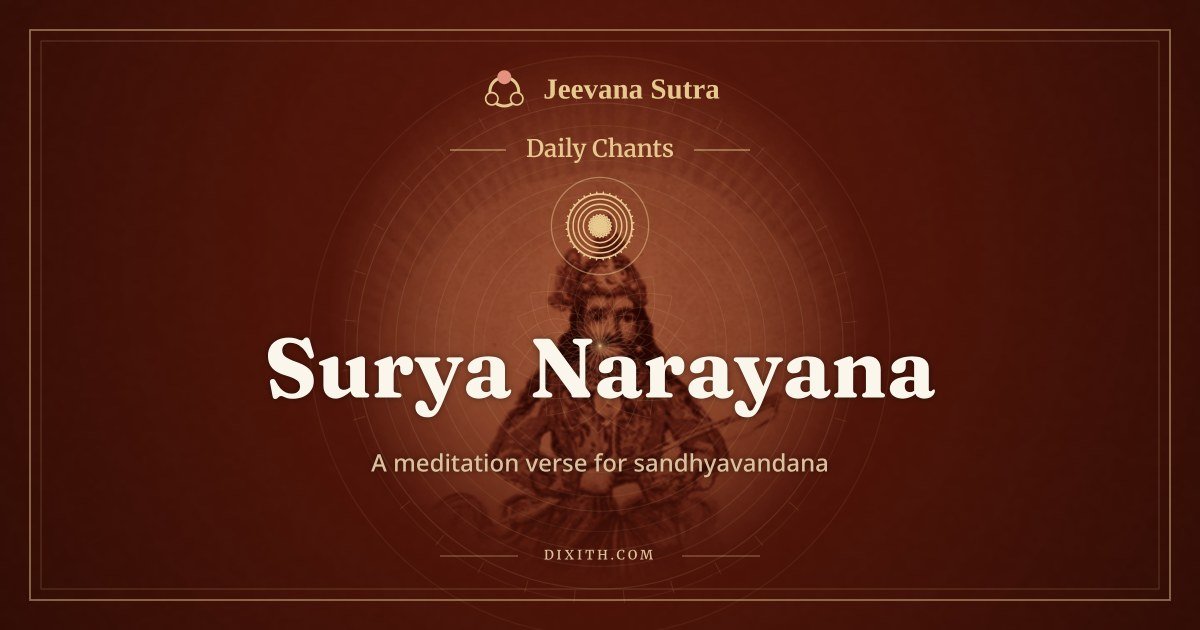
This is a verse for meditating on Narayana seated on a lotus in the middle of the sun’s disc. It is said while saluting the sun in sandhyavandana, before Surya Namaskara, and in morning prayers.
This idea of seeing the sun visible in the sky as the dwelling place of God is very old in our tradition.
Verse (Devanagari)
ध्येयः सदा सवितृमण्डलमध्यवर्ती
नारायणः सरसिजासनसन्निविष्टः ।
केयूरवान् मकरकुण्डलवान् किरीटी
हारी हिरण्मयवपुर्धृतशङ्खचक्रः ॥
Verse (IAST)
dhyeyaḥ sadā savitṛmaṇḍalamadhyavartī
nārāyaṇaḥ sarasijāsanasanniviṣṭaḥ |
keyūravān makarakuṇḍalavān kirīṭī
hārī hiraṇmayavapurdhṛtaśaṅkhacakraḥ ||
Word by word
- ध्येयः सदा (dhyeyaḥ sadā) = to be meditated upon always
- सवितृमण्डलमध्यवर्ती (savitṛmaṇḍalamadhyavartī) = dwelling in the middle of the sun’s disc
- नारायणः (nārāyaṇaḥ) = Narayana
- सरसिजासनसन्निविष्टः (sarasijāsanasanniviṣṭaḥ) = seated on a lotus seat
- केयूरवान् (keyūravān) = wearing armlets
- मकरकुण्डलवान् (makarakuṇḍalavān) = wearing makara shaped earrings
- किरीटी (kirīṭī) = crowned
- हारी (hārī) = wearing a necklace
- हिरण्मयवपुः (hiraṇmayavapuḥ) = with a golden body
- धृतशङ्खचक्रः (dhṛtaśaṅkhacakraḥ) = holding the conch and the discus
Full meaning
Narayana, seated on a lotus in the middle of the sun’s disc, is to be meditated upon always. He wears armlets, makara shaped earrings, a crown and a necklace. His body shines like gold, and he holds the conch and the discus.
About this verse
The verse has a special place in the Vaishnava tradition, which sees Savitr, the deity of the Gayatri mantra, as Narayana. People of every tradition also say it when saluting the sun. The metre is vasantatilaka.
Many follow it with salutations using the twelve names of the sun, beginning Om mitraya namah, which have their own page.
Sources: several. Where versions differ, we have noted it here.
For life today
The old habit of standing for a few minutes facing the gentle morning sun is good for body and mind. Staring straight at the sun harms the eyes, so turning the face to the light is enough. Saying this verse then is a way of thanking the light that returns every day without fail.
Noticed a mistake or a different reading? Tell us.


Leave a comment