
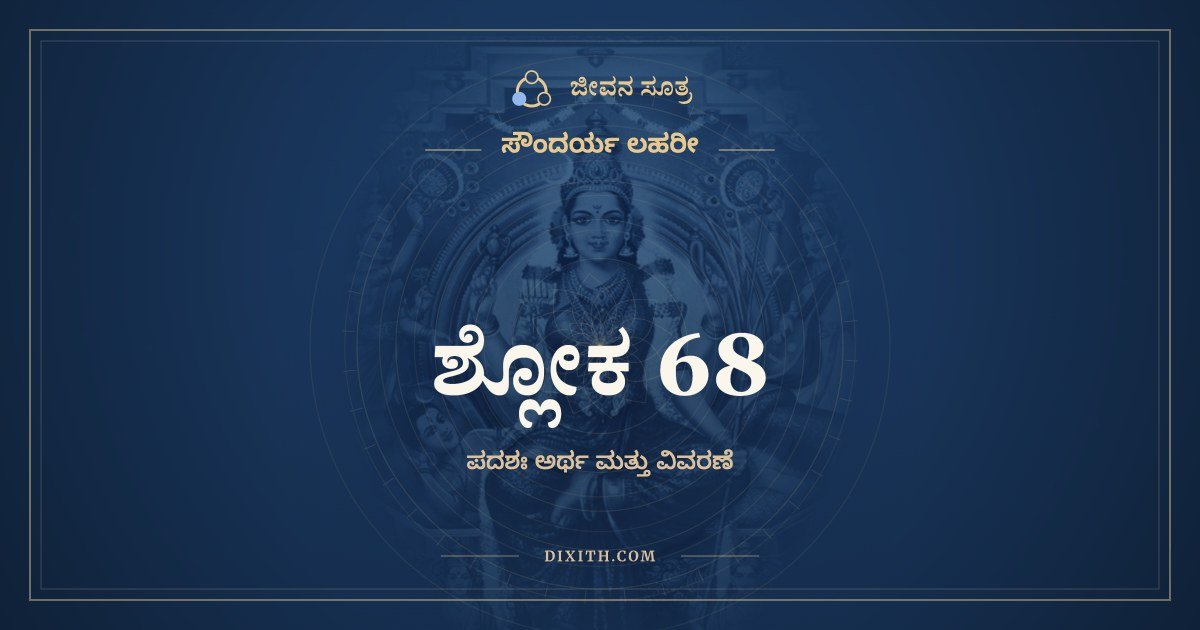
ಶ್ಲೋಕ (ಕನ್ನಡ)
ಭುಜಾಶ್ಲೇಷಾನ್ ನಿತ್ಯಂ ಪುರದಮಯಿತುಃ ಕಂಟಕವತೀ
ತವ ಗ್ರೀವಾ ಧತ್ತೇ ಮುಖಕಮಲನಾಲಶ್ರಿಯಮಿಯಮ್ ।
ಸ್ವತಃ ಶ್ವೇತಾ ಕಾಲಾ ಗುರುಬಹುಲಜಂಬಾಲಮಲಿನಾ
ಮೃಣಾಲೀಲಾಲಿತ್ಯಂ ವಹತಿ ಯದಧೋ ಹಾರಲತಿಕಾ ॥ 68 ॥
ಶ್ಲೋಕ (ದೇವನಾಗರಿ)
भुजाश्लेषान् नित्यं पुरदमयितुः कण्टकवती
तव ग्रीवा धत्ते मुखकमलनालश्रियमियम् ।
स्वतः श्वेता काला गुरुबहुलजम्बालमलिना
मृणालीलालित्यं वहति यदधो हारलतिका ॥ 68 ॥
ಶ್ಲೋಕ (English IAST)
bhujāśleṣān nityaṃ puradamayituḥ kaṇṭakavatī
tava grīvā dhatte mukhakamalanālaśriyamiyam |
svataḥ śvetā kālā gurubahulajambālamalinā
mṛṇālīlālityaṃ vahati yadadho hāralatikā || 68 ||
ಪದಶಃ ಅರ್ಥ
- ಭುಜಾಶ್ಲೇಷಾತ್ (भुजाश्लेषात्, bhujāśleṣāt) = ಅಪ್ಪುಗೆಯಿಂದ (from the embrace)
- ನಿತ್ಯಂ (नित्यं, nityaṃ) = ಸದಾ (always)
- ಪುರದಮಯಿತುಃ (पुरदमयितुः, puradamayituḥ) = ತ್ರಿಪುರಾರಿ ಶಿವನ (of Shiva, the destroyer of the cities)
- ಕಂಟಕವತೀ (कण्टकवती, kaṇṭakavatī) = ರೋಮಾಂಚನಗೊಂಡ, ಮುಳ್ಳುದಂಟಿನಂತೆ (thrilled, and so bristling like a thorny stalk)
- ತವ ಗ್ರೀವಾ (तव ग्रीवा, tava grīvā) = ನಿನ್ನ ಕುತ್ತಿಗೆ (your neck)
- ಧತ್ತೇ (धत्ते, dhatte) = ಹೊಂದಿದೆ (holds)
- ಮುಖಕಮಲನಾಲಶ್ರಿಯಂ (मुखकमलनालश्रियं, mukhakamalanālaśriyaṃ) = ಮುಖಕಮಲದ ದಂಟಿನ ಶೋಭೆಯನ್ನು (the beauty of the stalk of the lotus of your face)
- ಇಯಂ (इयं, iyaṃ) = ಈ (this)
- ಸ್ವತಃ ಶ್ವೇತಾ (स्वतः श्वेता, svataḥ śvetā) = ಸಹಜವಾಗಿ ಬಿಳುಪಾದ (white by nature)
- ಕಾಲಾಗುರುಬಹುಲಜಂಬಾಲಮಲಿನಾ (कालागुरुबहुलजम्बालमलिना, kālāgurubahulajambālamalinā) = ಕಪ್ಪು ಅಗರುವಿನ ದಟ್ಟ ಲೇಪವೆಂಬ ಕೆಸರಿನಿಂದ ಮಸುಕಾದ (dimmed by the thick mud of black agaru paste)
- ಮೃಣಾಲೀಲಾಲಿತ್ಯಂ (मृणालीलालित्यं, mṛṇālīlālityaṃ) = ತಾವರೆ ದಂಟಿನ ನಾರಿನ ಸೊಬಗನ್ನು (the grace of the lotus-stalk fibres)
- ವಹತಿ (वहति, vahati) = ಹೊತ್ತಿದೆ (carries)
- ಯತ್ ಅಧಃ (यत् अधः, yat adhaḥ) = ಅದರ ಕೆಳಗಿರುವ (which lies below it)
- ಹಾರಲತಿಕಾ (हारलतिका, hāralatikā) = ಮುತ್ತಿನ ಹಾರ (the string of pearls)
ಸಂಪೂರ್ಣ ಅರ್ಥ (ಕನ್ನಡ)
ಶಿವನ ಅಪ್ಪುಗೆಯಿಂದ ಸದಾ ರೋಮಾಂಚನಗೊಂಡಿರುವ ನಿನ್ನ ಕುತ್ತಿಗೆ, ಮುಖಕಮಲದ ಮುಳ್ಳುಳ್ಳ ದಂಟಿನ ಶೋಭೆಯನ್ನು ಹೊಂದಿದೆ. ಅದರ ಕೆಳಗಿರುವ ಮುತ್ತಿನ ಹಾರ ಸಹಜವಾಗಿ ಬಿಳುಪಾಗಿದ್ದರೂ, ಕಪ್ಪು ಅಗರುವಿನ ದಟ್ಟ ಲೇಪದಿಂದ ಸ್ವಲ್ಪ ಮಸುಕಾಗಿ, ಕೆಸರಿನಿಂದ ಮೇಲೆದ್ದ ತಾವರೆ ದಂಟಿನ ನಾರಿನಂತೆ ಕಾಣುತ್ತದೆ.
ಸಂಪೂರ್ಣ ಅರ್ಥ (ಇಂಗ್ಲಿಷ್)
Your neck, always thrilled by the embrace of Shiva, the destroyer of the cities, has the beauty of the bristling stalk that holds up the lotus of your face. Below it, the string of pearls, white by nature but dimmed by the thick black agaru paste as though by mud, has the grace of the fibres of that lotus stalk.
ಶ್ಲೋಕ 68ರ ಸಾಂಪ್ರದಾಯಿಕ ವಿಧಿವಿಧಾನಗಳ ವಿವರಗಳುTraditional ritual details for shloka 68
- ಫಲ (ಸಿದ್ಧಿ)Result
- ಸರ್ಕಾರದಿಂದ ಅನುಕೂಲ ಮತ್ತು ಜನರ ಮೇಲೆ ಪ್ರಭಾವFavour from the government, and influence with people
- ಬೀಜ ಮಂತ್ರBeeja mantra
- ಹ್ರೀಂhrīṃ
- ಯಂತ್ರYantra
- ಬೆಳ್ಳಿಯ ತಟ್ಟೆಯಲ್ಲಿ ಸಮವಾಗಿ ಹರಡಿದ ಕುಂಕುಮದ ಮೇಲೆ ಬರೆದ ಯಂತ್ರDrawn on kumkum spread evenly in a silver dish
ಪಾರಂಪರಿಕ ಚಿತ್ರದ ಆಧಾರದ ಮೇಲೆ ಪುನರ್ರಚಿತ ಯಂತ್ರದ ಚಿತ್ರ.
- ದಿಕ್ಕುDirection
- ಪೂರ್ವಾಭಿಮುಖವಾಗಿ ಕುಳಿತುSitting facing east
- ಜಪJapa count
- ದಿನಕ್ಕೆ 1000 ಬಾರಿ1000 times a day
- ಅವಧಿDuration
- 45 ದಿನ45 days
- ನೈವೇದ್ಯNaivedya / offering
- ಅನ್ನ, ಜೇನುತುಪ್ಪ ಮತ್ತು ಅಡಿಕೆ ಸಹಿತ ವೀಳ್ಯದೆಲೆCooked rice, honey, and betel leaves with areca nut
ಈ ವಿವರಗಳು ಮೂಲ ‘ಸೌಂದರ್ಯ ಲಹರಿ’ಯಲ್ಲಿ ಇಲ್ಲ ಎಂಬುದನ್ನು ಮೊದಲೇ ಸ್ಪಷ್ಟಪಡಿಸುತ್ತೇವೆ. ಪ್ರತಿ ಶ್ಲೋಕಕ್ಕೂ ಒಂದು ವಿಶಿಷ್ಟ ಯಂತ್ರ, ಬೀಜಮಂತ್ರ, ನಿಗದಿತ ಜಪಸಂಖ್ಯೆ ಮತ್ತು ನಿರ್ದಿಷ್ಟ ಫಲವನ್ನು ಜೋಡಿಸುವ ಪದ್ಧತಿಯು ನಂತರದ ಶತಮಾನಗಳ ಸಂಪ್ರದಾಯದಿಂದ ರೂಪುಗೊಂಡಿದ್ದಾಗಿದೆ. ಅಲ್ಲದೆ, ಈ ತಾಂತ್ರಿಕ ವಿವರಗಳು ಒಂದು ಹಸ್ತಪ್ರತಿಯಿಂದ ಮತ್ತೊಂದಕ್ಕೆ ಸ್ವಲ್ಪ ಮಟ್ಟಿಗೆ ಭಿನ್ನವಾಗಿರುತ್ತವೆ. ಇದೊಂದು ಪ್ರಾಚೀನ ಸಂಪ್ರದಾಯದ ದಾಖಲೆಯಷ್ಟೇ ಹೊರತು ಯಾವುದೇ ರೀತಿಯ ವೈದ್ಯಕೀಯ ಚಿಕಿತ್ಸಾ ಸಲಹೆಯಲ್ಲ.These details are not part of the original Saundarya Lahari, as we wish to state clearly at the outset. Associating each verse with a specific yantra, a seed syllable (bija mantra), a required chanting count (japa count), and a resulting benefit is a practice that evolved in later centuries. Furthermore, these technical details vary slightly from one text to another. This compilation represents a record of a traditional practice rather than any form of medical advice.
ಆಧಾರ: ಹಲವು ಮೂಲ ಗ್ರಂಥಗಳು. ಆಕರಗಳಲ್ಲಿ ಭಿನ್ನತೆ ಇರುವಲ್ಲಿ, ಗೊಂದಲವಿಡದೆ ಎರಡೂ ಆವೃತ್ತಿಗಳನ್ನು ಇಲ್ಲಿ ದಾಖಲಿಸಲಾಗಿದೆ.Sources: Several traditional texts. Where these sources differ, both versions have been provided here for completeness.
ಪಾಠದಲ್ಲಿ ತಪ್ಪೋ ಬೇರೆ ಪಾಠಾಂತರವೋ ಕಂಡಿತೇ? ನಮಗೆ ತಿಳಿಸಿ.
Noticed a mistake or a different reading? Tell us.
ಪ್ರತಿಕ್ರಿಯೆ ಬರೆಯಿರಿ