
ಶ್ಲೋಕ (ಕನ್ನಡ)
ಸಂಧ್ಯಾ ಘರ್ಮದಿನಾತ್ಯಯೋ ಹರಿಕರಾಘಾತಪ್ರಭೂತಾನಕ-
ಧ್ವಾನೋ ವಾರಿದಗರ್ಜಿತಂ ದಿವಿಷದಾಂ ದೃಷ್ಟಿಚ್ಛಟಾ ಚಂಚಲಾ ।
ಭಕ್ತಾನಾಂ ಪರಿತೋಷಬಾಷ್ಪವಿತತಿರ್ವೃಷ್ಟಿರ್ಮಯೂರೀ ಶಿವಾ
ಯಸ್ಮಿನ್ನುಜ್ಜ್ವಲತಾಂಡವಂ ವಿಜಯತೇ ತಂ ನೀಲಕಂಠಂ ಭಜೇ ॥ 54 ॥
ಶ್ಲೋಕ (ದೇವನಾಗರಿ)
सन्ध्या घर्मदिनात्ययो हरिकराघातप्रभूतानक-
ध्वानो वारिदगर्जितं दिविषदां दृष्टिच्छटा चञ्चला ।
भक्तानां परितोषबाष्पविततिर्वृष्टिर्मयूरी शिवा
यस्मिन्नुज्ज्वलताण्डवं विजयते तं नीलकण्ठं भजे ॥ 54 ॥
ಶ್ಲೋಕ (English IAST)
sandhyā gharmadinātyayo harikarāghātaprabhūtānaka-
dhvāno vāridagarjitaṃ diviṣadāṃ dṛṣṭicchaṭā cañcalā |
bhaktānāṃ paritoṣabāṣpavitatirvṛṣṭirmayūrī śivā
yasminnujjvalatāṇḍavaṃ vijayate taṃ nīlakaṇṭhaṃ bhaje || 54 ||
ಪದಶಃ ಅರ್ಥ
- ಸಂಧ್ಯಾ (सन्ध्या, sandhyā) = ಸಂಧ್ಯೆ, ಬೈಗಿನ ಹೊತ್ತು (the dusk, the evening hour)
- ಘರ್ಮದಿನಾತ್ಯಯೋ (घर्मदिनात्ययो, gharmadinātyayo) = ಬಿಸಿಲಿನ ದಿನದ ಕೊನೆ, ಬೇಸಿಗೆಯ ಮುಗಿತಾಯ (ಘರ್ಮ: ಬಿಸಿ, ಅತ್ಯಯ: ಕಳೆಯುವಿಕೆ, ಅಂತ್ಯ) (the passing of the hot day, the end of the hot season (gharma: heat, atyaya: passing away))
- ಹರಿಕರಾಘಾತಪ್ರಭೂತಾನಕ (हरिकराघातप्रभूतानक, harikarāghātaprabhūtānaka) = ಹರಿಯ ಕೈಯ ಹೊಡೆತದಿಂದ ಹುಟ್ಟಿದ ಆನಕ ಎಂಬ ಮದ್ದಳೆ (ಆಘಾತ: ಹೊಡೆತ, ಪ್ರಭೂತ: ಹುಟ್ಟಿದ, ಆನಕ: ಒಂದು ಬಗೆಯ ದೊಡ್ಡ ಡೊಳ್ಳು) (the anaka drum sounded by the striking of Hari’s hand (aghata: a blow, prabhuta: arisen, anaka: a kind of large drum))
- ಧ್ವಾನೋ (ध्वानो, dhvāno) = ಸದ್ದು, ಮೊಳಗು (the sound, the boom)
- ವಾರಿದಗರ್ಜಿತಂ (वारिदगर्जितं, vāridagarjitaṃ) = ಮೋಡದ ಗುಡುಗು (ವಾರಿದ: ನೀರನ್ನು ಕೊಡುವ ಮೋಡ, ಗರ್ಜಿತ: ಗುಡುಗು) (the thunder of the raincloud (varida: the giver of water, a cloud, garjita: a roar))
- ದಿವಿಷದಾಂ (दिविषदां, diviṣadāṃ) = ದೇವತೆಗಳ (ದಿವಿಷದ್: ಸ್ವರ್ಗದಲ್ಲಿ ನೆಲೆಸಿದವನು) (of the gods (divishad: one who abides in heaven))
- ದೃಷ್ಟಿಚ್ಛಟಾ (दृष्टिच्छटा, dṛṣṭicchaṭā) = ನೋಟದ ಹೊಳಪಿನ ಸರಿ (ಛಟಾ: ಹೊಳಪು, ಒಂದು ಸರಿ) (the flash of their glances (chhata: a gleam, a streak))
- ಚಂಚಲಾ (चञ्चला, cañcalā) = ಮಿಂಚು, ಚಂಚಲವಾದದ್ದು (the lightning, the flickering one)
- ಭಕ್ತಾನಾಂ (भक्तानां, bhaktānāṃ) = ಭಕ್ತರ (of the devotees)
- ಪರಿತೋಷಬಾಷ್ಪವಿತತಿರ್ (परितोषबाष्पविततिर्, paritoṣabāṣpavitatir) = ಸಂತೋಷದ ಕಣ್ಣೀರಿನ ಹರಹು (ಬಾಷ್ಪ: ಕಣ್ಣೀರು, ವಿತತಿ: ಹರಹು, ಸಮೂಹ) (the spread of their tears of joy (bashpa: a tear, vitati: an expanse))
- ವೃಷ್ಟಿರ್ (वृष्टिर्, vṛṣṭir) = ಮಳೆ (the rain)
- ಮಯೂರೀ (मयूरी, mayūrī) = ಹೆಣ್ಣುನವಿಲು (the peahen)
- ಶಿವಾ (शिवा, śivā) = ಶಿವೆ, ಪಾರ್ವತಿ (Shivā, Parvati)
- ಯಸ್ಮಿನ್ನುಜ್ಜ್ವಲತಾಂಡವಂ (यस्मिन्नुज्ज्वलताण्डवं, yasminnujjvalatāṇḍavaṃ) = ಯಾವನಲ್ಲಿ ಉಜ್ಜ್ವಲವಾದ ತಾಂಡವ (ಯಸ್ಮಿನ್ ಉಜ್ಜ್ವಲ ತಾಂಡವಂ ಎಂಬ ಸಂಧಿ, ತಾಂಡವ: ರಭಸದ ನರ್ತನ) (in whom the blazing tandava (in sandhi: yasmin ujjvala tandavam, tandava: the vigorous dance))
- ವಿಜಯತೇ (विजयते, vijayate) = ಮೆರೆಯುತ್ತದೆ, ಜಯಿಸುತ್ತದೆ (prevails, is triumphant)
- ತಂ ನೀಲಕಂಠಂ ಭಜೇ (तं नीलकण्ठं भजे, taṃ nīlakaṇṭhaṃ bhaje) = ಆ ನೀಲಕಂಠನನ್ನು ಭಜಿಸುತ್ತೇನೆ (ನೀಲಕಂಠ: ಶಿವ, ಮತ್ತು ನವಿಲು) (I worship that Nilakantha (nilakantha: Shiva, and also the peacock))
ಸಂಪೂರ್ಣ ಅರ್ಥ (ಕನ್ನಡ)
ಯಾವನ ನರ್ತನದಲ್ಲಿ ಸಂಧ್ಯೆಯೇ ಬಿಸಿಲಿನ ದಿನದ ಮುಗಿತಾಯವಾಗಿದೆ, ಹರಿಯ ಕೈಯ ಹೊಡೆತದಿಂದ ಹುಟ್ಟಿದ ಆನಕ ಎಂಬ ಮದ್ದಳೆಯ ಮೊಳಗೇ ಮೋಡದ ಗುಡುಗಾಗಿದೆ, ದೇವತೆಗಳ ನೋಟದ ಹೊಳಪೇ ಚಂಚಲವಾದ ಮಿಂಚಾಗಿದೆ, ಭಕ್ತರ ಸಂತೋಷದ ಕಣ್ಣೀರಿನ ಹರಹೇ ಮಳೆಯಾಗಿದೆ, ಶಿವೆಯೇ ಹೆಣ್ಣುನವಿಲಾಗಿದ್ದಾಳೆ, ಮತ್ತು ಯಾವನಲ್ಲಿ ಉಜ್ಜ್ವಲವಾದ ತಾಂಡವ ಮೆರೆಯುತ್ತದೆ, ಆ ನೀಲಕಂಠನನ್ನು ನಾನು ಭಜಿಸುತ್ತೇನೆ.
ಸಂಪೂರ್ಣ ಅರ್ಥ (ಇಂಗ್ಲಿಷ್)
In his dance the dusk is the passing of the hot day, the boom of the anaka drum that Hari’s hand sets going is the thunder of the raincloud, the flashing glances of the gods are the darting lightning, the spread of the devotees’ tears of joy is the rain, and Shivā herself is the peahen. I worship that Nilakantha, in whom the blazing tandava is triumphant.
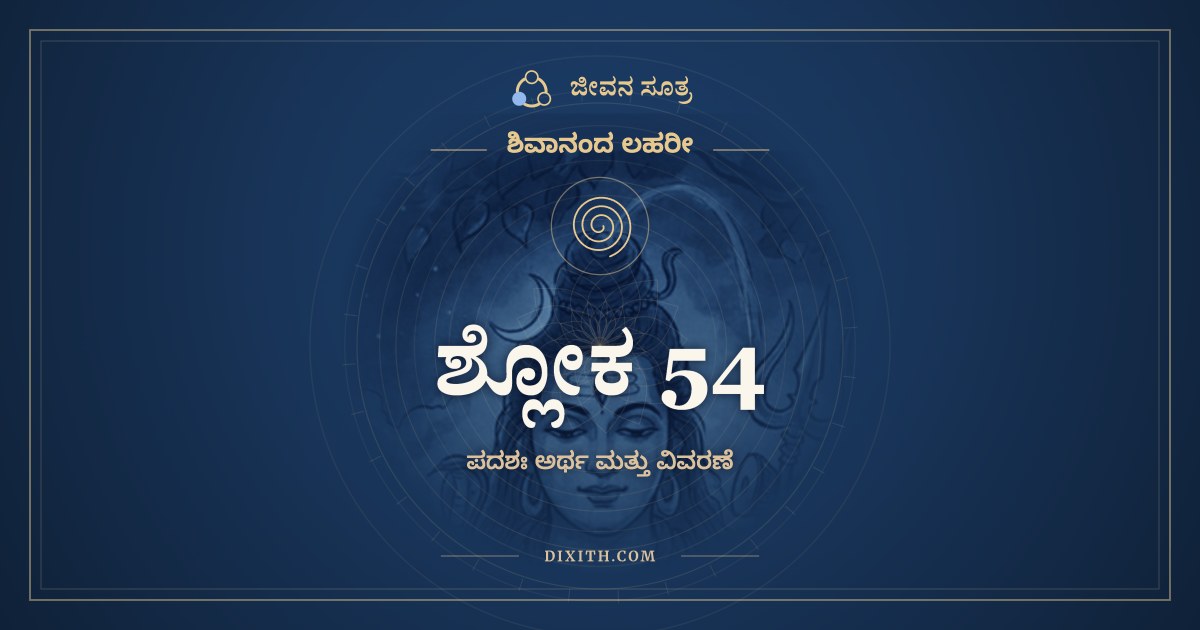
ಶ್ಲೋಕ 54ರ ವಿವರಣೆContext and commentary on verse 54
ಹಿಂದಿನ ಶ್ಲೋಕ ಶಿವನನ್ನು ನವಿಲಾಗಿ ಕಂಡಿತು. ಈ ಶ್ಲೋಕ ಅದೇ ನವಿಲು ಕುಣಿಯುವ ಹೊತ್ತನ್ನೂ ಸುತ್ತಲಿನ ಹಿನ್ನೆಲೆಯನ್ನೂ ಕಟ್ಟುತ್ತದೆ. ನವಿಲು ಕುಣಿಯುವುದು ಬೇಸಿಗೆ ಕಳೆದು ಮಳೆ ಬರುವ ಹೊತ್ತಿನಲ್ಲಿ, ಮೋಡ ಕಟ್ಟಿ ಗುಡುಗಿ ಮಿಂಚಿ ಮಳೆ ಬೀಳುವಾಗ. ಶಿವನ ತಾಂಡವ ನಡೆಯುವುದು ಸಂಧ್ಯೆಯಲ್ಲಿ ಎಂದು ಶೈವ ಪರಂಪರೆ ಹೇಳುತ್ತದೆ. ಆ ಎರಡು ಚಿತ್ರಗಳನ್ನು ಶ್ಲೋಕ ಒಂದರ ಮೇಲೊಂದು ಇಟ್ಟಿದೆ, ಮತ್ತು ಸಂಧ್ಯೆಯೇ ಬಿಸಿಲಿನ ದಿನದ ಕೊನೆ ಎಂಬ ಮೊದಲ ಮಾತಿನಲ್ಲಿ ಆ ಜೋಡಣೆ ಶುರುವಾಗುತ್ತದೆ.
The previous verse saw Shiva as a peacock. This one builds the hour of that peacock’s dance and the setting around it. A peacock dances when the heat has passed and the rains come, when the clouds gather, the thunder sounds, the lightning flashes and the rain falls. Shaiva tradition holds that Shiva’s tandava takes place at dusk. The verse lays the two pictures one upon the other, and the joining begins with the first phrase, that the dusk is the ending of the hot day.
ಮುಂದೆ ಬರುವುದೆಲ್ಲ ಸಮೀಕರಣ. ಶಿವನ ನರ್ತನಕ್ಕೆ ವಿಷ್ಣು ಮದ್ದಳೆ ಬಾರಿಸುತ್ತಾನೆ ಎಂದು ಪರಂಪರೆ ಹೇಳುತ್ತದೆ, ಆ ಡೊಳ್ಳಿನ ಮೊಳಗು ಇಲ್ಲಿ ಮೋಡದ ಗುಡುಗಾಗುತ್ತದೆ. ಆನಕ ಎಂಬುದು ಒಂದು ಬಗೆಯ ದೊಡ್ಡ ಚರ್ಮವಾದ್ಯ. ನೋಡುತ್ತಿರುವ ದೇವತೆಗಳ ಕಣ್ಣುಗಳ ಹೊಳಪು ಮಿಂಚು, ಏಕೆಂದರೆ ಎರಡೂ ಕ್ಷಣದಲ್ಲಿ ಮಿಣುಕಿ ಮಾಯವಾಗುತ್ತವೆ. ‘ಚಂಚಲಾ’ ಎಂಬುದು ಮಿಂಚಿಗೆ ಇರುವ ಹೆಸರೇ, ಆದ್ದರಿಂದ ಆ ಮಾತಿನಲ್ಲಿ ಹೊಳಪು ಮತ್ತು ಚಂಚಲತೆ ಎರಡೂ ಸೇರಿವೆ.
What follows is a series of equations. Tradition holds that Vishnu plays the drum for Shiva’s dance, and here the boom of that drum becomes the thunder of the cloud. Anaka is a kind of large skin drum. The gleam in the eyes of the watching gods is the lightning, since both flicker for a moment and are gone. ‘Chanchala’ is itself a name for lightning, so the word holds both brightness and unsteadiness together.
ಅತ್ಯಂತ ಸೊಗಸಾದ ಸಮೀಕರಣ ಮೂರನೆಯ ಸಾಲಿನದು. ಭಕ್ತರ ಸಂತೋಷದ ಕಣ್ಣೀರು ಮಳೆ. ಕಣ್ಣೀರನ್ನು ಮಳೆ ಎಂದದ್ದರಲ್ಲಿ ಒಂದು ತಿರುವಿದೆ. ಹಿಂದಿನ ಶ್ಲೋಕದಲ್ಲಿ ಮಳೆ ಮೇಲಿನಿಂದ ಬಂದು ಭಕ್ತನನ್ನು ತಣಿಸುವ ಅನುಗ್ರಹವಾಗಿತ್ತು, ಇಲ್ಲಿ ಮಳೆ ಭಕ್ತನಿಂದಲೇ ಹುಟ್ಟುತ್ತದೆ. ಅನುಗ್ರಹ ಮತ್ತು ಕೃತಜ್ಞತೆ ಒಂದೇ ನೀರಿನ ಎರಡು ಹೊತ್ತು ಎಂಬಂತಾಯಿತು.
The finest of these equations is in the third line, where the devotees’ tears of joy are the rain. There is a turn in calling tears rain. In the previous verse the rain was grace coming down from above to cool the devotee, and here the rain rises from the devotee himself. Grace and gratitude become two moments of the same water.
‘ಮಯೂರೀ ಶಿವಾ’ ಎಂಬ ಎರಡು ಮಾತುಗಳು ಚಿತ್ರವನ್ನು ಮುಗಿಸುತ್ತವೆ. ಮಳೆಗಾಲದಲ್ಲಿ ನವಿಲು ಹೆಣ್ಣುನವಿಲಿನ ಎದುರು ಪಿಂಛ ಬಿಚ್ಚಿ ಕುಣಿಯುತ್ತದೆ. ಇಲ್ಲಿ ಶಿವಾ ಎಂಬ ಹೆಸರಿನವಳು, ಅಂದರೆ ಶಿವನ ಸ್ತ್ರೀರೂಪದ ಹೆಸರನ್ನೇ ಹೊತ್ತ ಪಾರ್ವತಿ, ಆ ಹೆಣ್ಣುನವಿಲು. ಆದ್ದರಿಂದ ಈ ತಾಂಡವ ಜಗತ್ತಿಗೆ ತೋರಿಸುವ ಪ್ರದರ್ಶನವಲ್ಲ, ಅವಳ ಎದುರಿನ ಕುಣಿತ. ತಾಂಡವ ಎಂದರೆ ರಭಸದ ನರ್ತನ, ಲಾಸ್ಯ ಎಂದರೆ ಮೆಲುವಾದದ್ದು ಎಂದು ನಾಟ್ಯದ ಪರಂಪರೆ ಹೇಳುತ್ತದೆ. ‘ಉಜ್ಜ್ವಲತಾಂಡವಂ ವಿಜಯತೇ’ ಎಂಬಲ್ಲಿ ವಿಜಯತೇ ಎಂಬ ಮಾತು ಆ ಕುಣಿತ ಮೆರೆಯುತ್ತದೆ, ಎಲ್ಲವನ್ನೂ ಮೀರಿ ನಿಲ್ಲುತ್ತದೆ ಎಂಬ ಅರ್ಥ ಕೊಡುತ್ತದೆ.
The two words ‘mayuri shiva’ complete the picture. In the rains the peacock spreads its tail and dances before the peahen. Here the peahen is she whose name is Shivā, Parvati bearing the feminine of Shiva’s own name. This tandava is therefore not a display for the world to watch but a dance before her. The tradition of dance holds that tandava is the vigorous form and lasya the gentle one. In ‘ujjvalatandavam vijayate’, the word vijayate gives the sense that the dance prevails and stands above everything else.
ರಚನೆಯ ಕಡೆಯಿಂದ ನೋಡಿದರೆ ಶ್ಲೋಕದ ಮೊದಲ ಮೂರೂ ಸಾಲುಗಳಲ್ಲಿ ಪ್ರಥಮಾ ವಿಭಕ್ತಿಯ ಜೋಡಿಗಳು ಸಾಲಾಗಿ ನಿಂತಿವೆ, ಸಂಧ್ಯೆ ಮತ್ತು ದಿನದ ಕೊನೆ, ಮದ್ದಳೆಯ ಸದ್ದು ಮತ್ತು ಗುಡುಗು, ನೋಟ ಮತ್ತು ಮಿಂಚು, ಕಣ್ಣೀರು ಮತ್ತು ಮಳೆ, ಶಿವೆ ಮತ್ತು ಹೆಣ್ಣುನವಿಲು. ಕ್ರಿಯಾಪದ ಬರುವುದು ಕೊನೆಯಲ್ಲಿ, ‘ಯಸ್ಮಿನ್ ವಿಜಯತೇ’ ಮತ್ತು ‘ಭಜೇ’ ಎಂದು. ಈ ಜೋಡಿ ಶ್ಲೋಕಗಳು ಒಂದೇ ಸಾಲಿನಲ್ಲಿ ಮುಗಿಯುವುದು ಗಮನಾರ್ಹ. ಛಂದಸ್ಸು ಶಾರ್ದೂಲವಿಕ್ರೀಡಿತ, ಪಾದಕ್ಕೆ ಹತ್ತೊಂಬತ್ತು ಅಕ್ಷರ, ಹನ್ನೆರಡನೆಯ ಅಕ್ಷರದ ನಂತರ ಯತಿ.
Seen from the side of construction, the first three lines set out pairs in the nominative one after another: the dusk and the day’s ending, the drum’s sound and the thunder, the glance and the lightning, the tears and the rain, Shivā and the peahen. The verbs arrive only at the end, in ‘yasmin vijayate’ and ‘bhaje’. That this pair of verses closes on the same line is worth noting. The metre is shardulavikridita, nineteen syllables to a quarter with a pause after the twelfth.
ಆಧಾರ: ಹಲವು ಮೂಲಗಳು. ವ್ಯಾಖ್ಯಾನಕಾರರ ಅಭಿಪ್ರಾಯ ಭಿನ್ನವಾಗಿರುವಲ್ಲಿ ಎರಡೂ ಅರ್ಥಗಳನ್ನು ಇಲ್ಲಿ ಕೊಟ್ಟಿದ್ದೇವೆ.
Sources: several. Where commentators differ, both readings are given here.
ಇಂದಿನ ಬದುಕಿಗೆFor life today
ಮುದ್ರಣಾಲಯದ ಒಳಗೆ ಮೊದಲ ಬಾರಿ ಹೋದವರಿಗೆ ಅದು ಕಿವಿ ಮುಚ್ಚಿಕೊಳ್ಳುವಷ್ಟು ಗದ್ದಲ. ಅಲ್ಲಿ ವರ್ಷಗಳಿಂದ ಕೆಲಸ ಮಾಡುವವರಿಗೆ ಅದೇ ಸದ್ದು ಒಂದು ಲಯ. ಯಂತ್ರ ಒಂದು ಕ್ಷಣ ತಡವರಿಸಿದರೆ ಅವರು ತಿರುಗಿ ನೋಡದೆಯೇ ತಿಳಿಯುತ್ತಾರೆ.
To someone entering a printing press for the first time the noise is enough to make him cover his ears. To those who have worked there for years the same noise is a rhythm. If a machine falters for a moment they know it without turning to look.
ಈ ಶ್ಲೋಕ ಗುಡುಗು, ಮಿಂಚು, ಮಳೆ, ಕಣ್ಣೀರು ಎಲ್ಲವನ್ನೂ ಒಂದೇ ನರ್ತನದ ಭಾಗಗಳಾಗಿ ಕೇಳುತ್ತದೆ. ನಮ್ಮ ದಿನದ ಗದ್ದಲದಲ್ಲಿ ಒಂದು ಲಯ ಕಾಣಿಸಿದರೆ ಅದೇ ಗದ್ದಲ ಕಡಿಮೆ ದಣಿಸುತ್ತದೆ. ಸದ್ದು ಕಡಿಮೆಯಾಗುವುದಿಲ್ಲ, ಅದರ ಜೊತೆಗಿನ ನಮ್ಮ ಸಂಬಂಧ ಬದಲಾಗುತ್ತದೆ.
This verse hears the thunder, the lightning, the rain and the tears as parts of one dance. When a rhythm shows itself in the noise of our day, that same noise tires us less. The noise does not grow quieter, but our relation to it changes.
ಪಾಠದಲ್ಲಿ ತಪ್ಪೋ ಬೇರೆ ಪಾಠಾಂತರವೋ ಕಂಡಿತೇ? ನಮಗೆ ತಿಳಿಸಿ.
Noticed a mistake or a different reading? Tell us.
ಪ್ರತಿಕ್ರಿಯೆ ಬರೆಯಿರಿ