
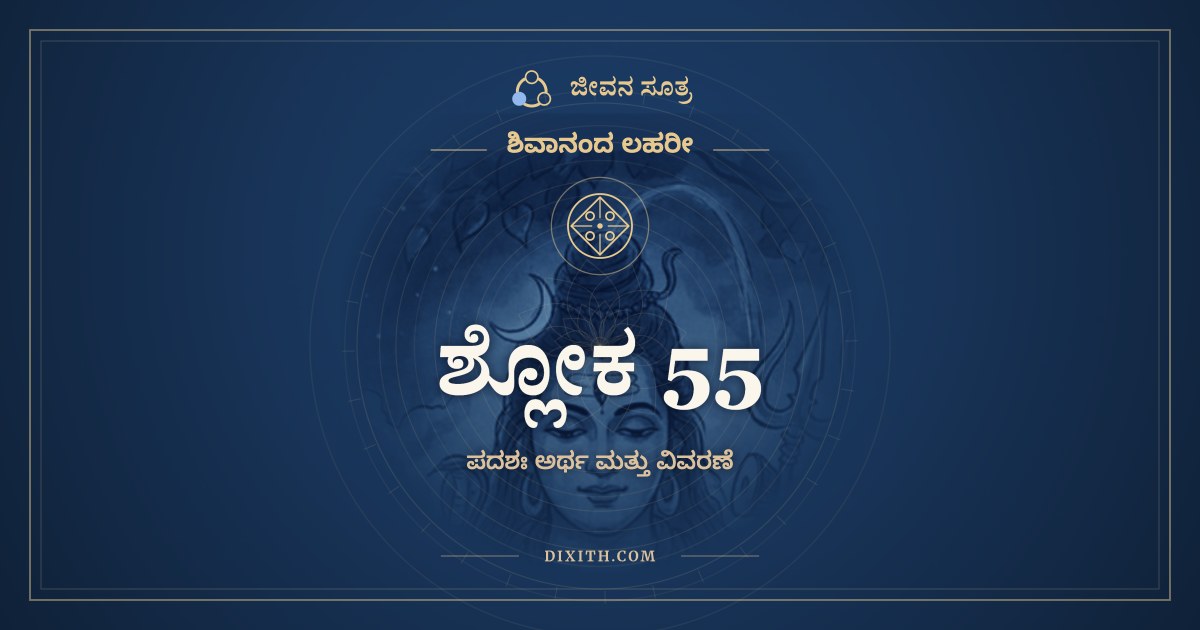
ಶ್ಲೋಕ (ಕನ್ನಡ)
ಆದ್ಯಾಯಾಮಿತತೇಜಸೇ ಶ್ರುತಿಪದೈರ್ವೇದ್ಯಾಯ ಸಾಧ್ಯಾಯ ತೇ
ವಿದ್ಯಾನಂದಮಯಾತ್ಮನೇ ತ್ರಿಜಗತಃ ಸಂರಕ್ಷಣೋದ್ಯೋಗಿನೇ ।
ಧ್ಯೇಯಾಯಾಖಿಲಯೋಗಿಭಿಃ ಸುರಗಣೈರ್ಗೇಯಾಯ ಮಾಯಾವಿನೇ
ಸಮ್ಯಕ್ತಾಂಡವಸಂಭ್ರಮಾಯ ಜಟಿನೇ ಸೇಯಂ ನತಿಃ ಶಂಭವೇ ॥ 55 ॥
ಶ್ಲೋಕ (ದೇವನಾಗರಿ)
आद्यायामिततेजसे श्रुतिपदैर्वेद्याय साध्याय ते
विद्यानन्दमयात्मने त्रिजगतः संरक्षणोद्योगिने ।
ध्येयायाखिलयोगिभिः सुरगणैर्गेयाय मायाविने
सम्यक्ताण्डवसम्भ्रमाय जटिने सेयं नतिः शम्भवे ॥ 55 ॥
ಶ್ಲೋಕ (English IAST)
ādyāyāmitatejase śrutipadairvedyāya sādhyāya te
vidyānandamayātmane trijagataḥ saṃrakṣaṇodyogine |
dhyeyāyākhilayogibhiḥ suragaṇairgeyāya māyāvine
samyaktāṇḍavasambhramāya jaṭine seyaṃ natiḥ śambhave || 55 ||
ಪದಶಃ ಅರ್ಥ
- ಆದ್ಯಾಯಾಮಿತತೇಜಸೇ (आद्यायामिततेजसे, ādyāyāmitatejase) = ಮೊದಲಿಗನಾದವನಿಗೆ, ಅಳತೆಗೆ ಸಿಗದ ತೇಜಸ್ಸುಳ್ಳವನಿಗೆ (ಆದ್ಯಾಯ ಅಮಿತತೇಜಸೇ ಎಂಬ ಸಂಧಿ, ಅಮಿತ: ಅಳತೆಯಿಲ್ಲದ) (to the first one, to him of measureless light (in sandhi: adyaya amitatejase, amita: unmeasured))
- ಶ್ರುತಿಪದೈರ್ವೇದ್ಯಾಯ (श्रुतिपदैर्वेद्याय, śrutipadairvedyāya) = ವೇದದ ಮಾತುಗಳಿಂದ ತಿಳಿಯಬೇಕಾದವನಿಗೆ (ಶ್ರುತಿ: ವೇದ, ಪದ: ಮಾತು, ವೇದ್ಯ: ತಿಳಿಯಬೇಕಾದದ್ದು) (to him who is to be known by the words of the Vedas (shruti: the Veda, pada: a word, vedya: to be known))
- ಸಾಧ್ಯಾಯ (साध्याय, sādhyāya) = ಸಾಧನೆಯಿಂದ ಪಡೆಯಬೇಕಾದವನಿಗೆ (to him who is to be attained)
- ತೇ (ते, te) = ನಿನಗೆ (to you)
- ವಿದ್ಯಾನಂದಮಯಾತ್ಮನೇ (विद्यानन्दमयात्मने, vidyānandamayātmane) = ಜ್ಞಾನ ಮತ್ತು ಆನಂದವೇ ಆದ ಸ್ವರೂಪವುಳ್ಳವನಿಗೆ (ಮಯ: ಅದೇ ಆದದ್ದು, ಆತ್ಮನ್: ಸ್ವರೂಪ) (to him whose very nature is made of knowledge and bliss (maya: made of, atman: the self, the nature))
- ತ್ರಿಜಗತಃ (त्रिजगतः, trijagataḥ) = ಮೂರು ಲೋಕಗಳ (of the three worlds)
- ಸಂರಕ್ಷಣೋದ್ಯೋಗಿನೇ (संरक्षणोद्योगिने, saṃrakṣaṇodyogine) = ಕಾಪಾಡುವ ಉದ್ಯೋಗದಲ್ಲಿ ತೊಡಗಿದವನಿಗೆ (ಸಂರಕ್ಷಣ: ಕಾವಲು, ಉದ್ಯೋಗಿನ್: ಕೆಲಸದಲ್ಲಿ ತೊಡಗಿದವನು) (to him who is at work protecting them (samrakshana: guarding, udyogin: one engaged in a task))
- ಧ್ಯೇಯಾಯಾಖಿಲಯೋಗಿಭಿಃ (ध्येयायाखिलयोगिभिः, dhyeyāyākhilayogibhiḥ) = ಎಲ್ಲ ಯೋಗಿಗಳಿಂದ ಧ್ಯಾನಿಸಬೇಕಾದವನಿಗೆ (ಧ್ಯೇಯಾಯ ಅಖಿಲಯೋಗಿಭಿಃ ಎಂಬ ಸಂಧಿ, ಅಖಿಲ: ಎಲ್ಲ) (to him who is to be meditated on by all yogis (in sandhi: dhyeyaya akhilayogibhih, akhila: all))
- ಸುರಗಣೈರ್ಗೇಯಾಯ (सुरगणैर्गेयाय, suragaṇairgeyāya) = ದೇವತೆಗಳ ಗುಂಪುಗಳಿಂದ ಹಾಡಬೇಕಾದವನಿಗೆ (ಸುರಗಣ: ದೇವತೆಗಳ ಸಮೂಹ, ಗೇಯ: ಹಾಡಬೇಕಾದದ್ದು) (to him who is to be sung by the hosts of gods (suragana: the throng of gods, geya: to be sung))
- ಮಾಯಾವಿನೇ (मायाविने, māyāvine) = ಮಾಯೆಯನ್ನು ನಡೆಸುವವನಿಗೆ (ಮಾಯಾವಿನ್: ಮಾಯೆಯನ್ನು ತನ್ನ ಶಕ್ತಿಯಾಗಿ ಹೊಂದಿದವನು) (to the wielder of maya (mayavin: one who has maya as his own power))
- ಸಮ್ಯಕ್ತಾಂಡವಸಂಭ್ರಮಾಯ (सम्यक्ताण्डवसम्भ्रमाय, samyaktāṇḍavasambhramāya) = ಚೆನ್ನಾಗಿ ಕೂಡಿದ ತಾಂಡವದ ಸಂಭ್ರಮವುಳ್ಳವನಿಗೆ (ಸಮ್ಯಕ್: ಸರಿಯಾಗಿ, ಪೂರ್ಣವಾಗಿ, ಸಂಭ್ರಮ: ಸಡಗರ, ಗಡಿಬಿಡಿ) (to him who is all bustle with his tandava in full (samyak: rightly, fully, sambhrama: flurry, eager haste))
- ಜಟಿನೇ (जटिने, jaṭine) = ಜಟೆಯುಳ್ಳವನಿಗೆ (to the one with matted hair)
- ಸೇಯಂ ನತಿಃ (सेयं नतिः, seyaṃ natiḥ) = ಇದೋ ಈ ನಮಸ್ಕಾರ (ಸಾ ಇಯಂ ಎಂಬ ಸಂಧಿ, ನತಿ: ಬಾಗುವಿಕೆ, ನಮಸ್ಕಾರ) (this, here, is the salutation (in sandhi: sa iyam, nati: a bowing))
- ಶಂಭವೇ (शम्भवे, śambhave) = ಶಂಭುವಿಗೆ (to Shambhu)
ಸಂಪೂರ್ಣ ಅರ್ಥ (ಕನ್ನಡ)
ಮೊದಲಿಗನಾದ, ಅಳತೆಗೆ ಸಿಗದ ತೇಜಸ್ಸುಳ್ಳ, ವೇದದ ಮಾತುಗಳಿಂದ ತಿಳಿಯಬೇಕಾದ, ಸಾಧನೆಯಿಂದ ಪಡೆಯಬೇಕಾದ, ಜ್ಞಾನ ಮತ್ತು ಆನಂದವೇ ಸ್ವರೂಪವಾಗಿರುವ, ಮೂರು ಲೋಕಗಳನ್ನು ಕಾಪಾಡುವ ಕೆಲಸದಲ್ಲಿ ತೊಡಗಿರುವ, ಎಲ್ಲ ಯೋಗಿಗಳಿಂದ ಧ್ಯಾನಿಸಬೇಕಾದ, ದೇವತೆಗಳ ಗುಂಪುಗಳಿಂದ ಹಾಡಬೇಕಾದ, ಮಾಯೆಯನ್ನು ನಡೆಸುವ, ತುಂಬಿದ ತಾಂಡವದ ಸಂಭ್ರಮವುಳ್ಳ, ಜಟೆಯುಳ್ಳ ಶಂಭುವಾದ ನಿನಗೆ ಇದೋ ಈ ನಮಸ್ಕಾರ.
ಸಂಪೂರ್ಣ ಅರ್ಥ (ಇಂಗ್ಲಿಷ್)
To the first one, of measureless light, to be known by the words of the Vedas, to be attained by effort, whose very nature is made of knowledge and bliss, who is at work protecting the three worlds, who is to be meditated on by all yogis and sung by the hosts of gods, the wielder of maya, all bustle with his tandava in full, the one with matted hair: to you, Shambhu, this is my salutation.
ಶ್ಲೋಕ 55ರ ವಿವರಣೆContext and commentary on verse 55
ದುಂಬಿ, ಚಾತಕ, ನವಿಲು ಎಂಬ ನಾಲ್ಕು ಶ್ಲೋಕಗಳ ಚಿತ್ರಗಳ ನಂತರ ಈ ಶ್ಲೋಕ ಸರಳವಾದ ನಮಸ್ಕಾರವಾಗಿ ನಿಲ್ಲುತ್ತದೆ. ಇದರಲ್ಲಿ ಉಪಮೆ ಇಲ್ಲ, ಶ್ಲೇಷ ಇಲ್ಲ. ಇಡೀ ಶ್ಲೋಕ ಚತುರ್ಥೀ ವಿಭಕ್ತಿಯ ಹೆಸರುಗಳ ಸಾಲು, ಮತ್ತು ಕೊನೆಯಲ್ಲಿ ‘ಸೇಯಂ ನತಿಃ ಶಂಭವೇ’ ಎಂಬ ಮೂರು ಮಾತುಗಳು ಬಂದು ಆ ಸಾಲನ್ನು ಮುಗಿಸುತ್ತವೆ. ಇಂಥ ರಚನೆ ಸ್ತೋತ್ರ ಸಾಹಿತ್ಯದಲ್ಲಿ ನಮಸ್ಕಾರದ ಶ್ಲೋಕಗಳಿಗೆ ಸಾಮಾನ್ಯ.
After the images of four verses, the bee, the chataka and the peacock, this one stands as a plain salutation. There is no simile in it and no double meaning. The whole verse is a file of names in the dative, and at the end three words, ‘seyam natih shambhave’, come to close that file. Such a construction is common in hymn literature for verses of salutation.
ಹೆಸರುಗಳನ್ನು ಎರಡು ಗುಂಪಾಗಿ ನೋಡಬಹುದು. ಒಂದು ಗುಂಪು ಅವನು ತಾನಾಗಿ ಏನು ಎಂಬುದನ್ನು ಹೇಳುತ್ತದೆ, ಆದ್ಯ, ಅಮಿತತೇಜಸ್, ವಿದ್ಯಾನಂದಮಯಾತ್ಮ. ಇನ್ನೊಂದು ಗುಂಪು ಅವನು ಏನು ಮಾಡುತ್ತಾನೆ ಎಂಬುದನ್ನು ಹೇಳುತ್ತದೆ, ಮೂರು ಲೋಕಗಳ ಕಾವಲು, ಮಾಯೆಯ ನಡೆಸುವಿಕೆ, ತಾಂಡವ. ಆದ್ಯ ಎಂದರೆ ಮೊದಲಿನವನು, ಯಾವುದರಿಂದಲೂ ಹುಟ್ಟದವನು. ವಿದ್ಯಾನಂದಮಯಾತ್ಮ ಎಂಬ ಮಾತು ಅದ್ವೈತದ ಸಚ್ಚಿದಾನಂದ ಎಂಬ ಮಾತಿಗೆ ಹತ್ತಿರವಾಗಿದೆ, ಅಂದರೆ ಅರಿವೂ ಆನಂದವೂ ಅವನ ಗುಣಗಳಲ್ಲ, ಅವನ ಸ್ವರೂಪವೇ ಅವು.
The names fall into two groups. One says what he is in himself: adya, amitatejas, vidyanandamayatma. The other says what he does: the guarding of the three worlds, the wielding of maya, the tandava. Adya is the first, the one who arises from nothing else. The phrase vidyanandamayatma stands close to the Advaita word sachchidananda, meaning that knowledge and bliss are not his attributes but his very nature.
‘ಶ್ರುತಿಪದೈರ್ವೇದ್ಯಾಯ ಸಾಧ್ಯಾಯ’ ಎಂಬ ಎರಡು ಮಾತುಗಳು ಒಟ್ಟಿಗೆ ಬಂದಿರುವುದನ್ನು ಗಮನಿಸಬೇಕು. ಮೊದಲನೆಯದು ಅವನನ್ನು ವೇದದ ಮಾತುಗಳಿಂದ ತಿಳಿಯಬಹುದು ಎನ್ನುತ್ತದೆ, ಎರಡನೆಯದು ಅವನನ್ನು ಸಾಧನೆಯಿಂದ ಪಡೆಯಬೇಕು ಎನ್ನುತ್ತದೆ. ತಿಳಿಯುವುದು ಒಂದು, ತಲುಪುವುದು ಇನ್ನೊಂದು, ಮತ್ತು ಶ್ಲೋಕ ಎರಡನ್ನೂ ಬೇರೆಬೇರೆಯಾಗಿ ಹೇಳುತ್ತದೆ. ಅದೇ ಸಾಲಿನಲ್ಲಿ ‘ತೇ’ ಎಂಬ ಮಾತು ಬರುತ್ತದೆ, ಅಂದರೆ ನಿನಗೆ. ಉಳಿದೆಲ್ಲ ಹೆಸರುಗಳು ಮೂರನೆಯ ವ್ಯಕ್ತಿಯಲ್ಲಿದ್ದರೂ ಆ ಒಂದು ಮಾತು ಎದುರಿಗೇ ನಿಂತು ಮಾತಾಡುವ ಧಾಟಿಗೆ ತಿರುಗುತ್ತದೆ.
It is worth noticing that the two phrases ‘shrutipadairvedyaya sadhyaya’ come together. The first says he can be known by the words of the Veda, the second that he must be attained by effort. Knowing is one thing and reaching is another, and the verse states both separately. In the same line comes the word ‘te’, to you. Though all the other names stand in the third person, that one word turns the verse into speech addressed to someone standing in front of the speaker.
‘ಮಾಯಾವಿನ್’ ಎಂಬ ಮಾತನ್ನು ಜಾಗರೂಕತೆಯಿಂದ ಅರ್ಥಮಾಡಿಕೊಳ್ಳಬೇಕು. ಕನ್ನಡದ ಸಾಮಾನ್ಯ ಬಳಕೆಯಲ್ಲಿ ಮಾಯಾವಿ ಎಂದರೆ ವಂಚಕ ಎಂಬ ಛಾಯೆ ಬಂದುಬಿಡುತ್ತದೆ. ಇಲ್ಲಿ ಅದರ ಅರ್ಥ ಮಾಯೆಯನ್ನು ತನ್ನ ಶಕ್ತಿಯಾಗಿ ಹೊಂದಿದವನು, ಈ ಜಗತ್ತಿನ ತೋರಿಕೆಯನ್ನು ನಡೆಸುವವನು. ಅದ್ವೈತದಲ್ಲಿ ಮಾಯೆ ಸುಳ್ಳಲ್ಲ, ಆದರೆ ಅದು ಕೊನೆಯ ಸತ್ಯವೂ ಅಲ್ಲ, ಮತ್ತು ಅದರ ಒಡೆಯನಿಗೆ ಅದರಿಂದ ಯಾವ ಬಾಧೆಯೂ ಇಲ್ಲ. ‘ಸಂಭ್ರಮ’ ಎಂಬ ಮಾತೂ ಕುತೂಹಲಕರ, ಅದು ಸಡಗರ, ಗಡಿಬಿಡಿ ಎಂಬ ಅರ್ಥ ಕೊಡುತ್ತದೆ. ಎಲ್ಲವನ್ನೂ ಮೀರಿದವನೆಂದು ಹೇಳಿದ ಮೇಲೆ ಅವನನ್ನು ಕುಣಿತದ ಗಡಿಬಿಡಿಯಲ್ಲಿರುವವನು ಎಂದು ಹೇಳುವುದು ಈ ಕೃತಿಯ ಒಂದು ಸ್ವಭಾವ.
The word ‘mayavin’ needs care. In ordinary Kannada usage mayavi carries a shade of the deceiver. Here it means one who has maya as his own power, who runs the appearance of this world. In Advaita maya is not a falsehood, though neither is it the final reality, and its master suffers nothing from it. The word ‘sambhrama’ is also worth a look, for it means flurry and eager haste. Having called him the one beyond everything, to then call him caught up in the bustle of a dance is characteristic of this work.
‘ಸೇಯಂ ನತಿಃ’ ಎಂಬ ಜೋಡಿಯ ಬಗ್ಗೆ ಒಂದು ಮಾತು. ಸಾ ಇಯಂ ಎಂಬ ಎರಡು ಮಾತುಗಳು ಸಂಧಿಯಾಗಿ ಸೇಯಂ ಆಗಿವೆ, ಮತ್ತು ಸಂಸ್ಕೃತದಲ್ಲಿ ಈ ಜೋಡಿಗೆ ಗೊತ್ತಿರುವ ಆ ಸಂಗತಿಯೇ ಇದೋ ಇಲ್ಲಿದೆ ಎಂಬ ಧ್ವನಿಯಿದೆ. ಆದ್ದರಿಂದ ಇದು ಎಷ್ಟೋ ಶ್ಲೋಕಗಳಿಂದ ಸಿದ್ಧವಾಗುತ್ತಿದ್ದ ಆ ನಮಸ್ಕಾರ ಈಗ ಒಪ್ಪಿಸಲಾಗಿದೆ ಎಂಬ ಅರ್ಥ ಕೊಡುತ್ತದೆ. ಅದಲ್ಲದೆ ಇಷ್ಟು ದೊಡ್ಡ ಹೆಸರುಗಳ ಸಾಲಿನ ಕೊನೆಯಲ್ಲಿ ಉಳಿಯುವುದು ಬಾಗುವಿಕೆ ಒಂದೇ. ಛಂದಸ್ಸು ಶಾರ್ದೂಲವಿಕ್ರೀಡಿತ, ಪಾದಕ್ಕೆ ಹತ್ತೊಂಬತ್ತು ಅಕ್ಷರ, ಹನ್ನೆರಡನೆಯ ಅಕ್ಷರದ ನಂತರ ಯತಿ.
A word about the pair ‘seyam natih’. The two words sa iyam have joined in sandhi to give seyam, and in Sanskrit this pair carries the suggestion of that well known thing being here before us. So it gives the sense that the salutation which many verses have been preparing is now being made. And at the end of so long a file of names, what remains is only the bowing. The metre is shardulavikridita, nineteen syllables to a quarter with a pause after the twelfth.
ಆಧಾರ: ಹಲವು ಮೂಲಗಳು. ವ್ಯಾಖ್ಯಾನಕಾರರ ಅಭಿಪ್ರಾಯ ಭಿನ್ನವಾಗಿರುವಲ್ಲಿ ಎರಡೂ ಅರ್ಥಗಳನ್ನು ಇಲ್ಲಿ ಕೊಟ್ಟಿದ್ದೇವೆ.
Sources: several. Where commentators differ, both readings are given here.
ಇಂದಿನ ಬದುಕಿಗೆFor life today
ನದಿ ದಾಟುವ ದೋಣಿಯ ಜಾಗದಲ್ಲಿ ದಿನವೂ ಹೋಗುವವರಿಗೆ ಎಲ್ಲವೂ ಗೊತ್ತು: ಹೊತ್ತು, ದರ, ನೀರಿನ ಆಳ, ಅಂಬಿಗನ ಹೆಸರು. ಆದರೂ ದೋಣಿ ಹತ್ತುವಾಗ ಕೈ ತಾನಾಗಿ ಹಿಡಿಕೆಯನ್ನು ಹಿಡಿಯುತ್ತದೆ.
Those who use a river ferry every day know all of it: the timings, the fare, the depth of the water, the boatman’s name. Even so, as they step aboard, the hand takes hold of the rail by itself.
ತಿಳಿಯುವುದು ಒಂದು, ಒಪ್ಪಿಕೊಳ್ಳುವುದು ಇನ್ನೊಂದು. ಈ ಶ್ಲೋಕ ಶಿವನ ಬಗ್ಗೆ ಹೇಳಬಹುದಾದ ಹನ್ನೆರಡು ಮಾತುಗಳನ್ನು ಹೇಳಿ ಕೊನೆಯಲ್ಲಿ ಬಾಗುತ್ತದೆ. ನಮ್ಮ ಅರಿವು ಮುಗಿಯುವ ಜಾಗದಲ್ಲಿ ನಮಸ್ಕಾರ ಶುರುವಾಗುತ್ತದೆ.
Knowing is one thing and accepting another. This verse says twelve things that can be said about Shiva and then, at the end, bows. Where our knowledge ends, the salutation begins.
ಪಾಠದಲ್ಲಿ ತಪ್ಪೋ ಬೇರೆ ಪಾಠಾಂತರವೋ ಕಂಡಿತೇ? ನಮಗೆ ತಿಳಿಸಿ.
Noticed a mistake or a different reading? Tell us.
ಪ್ರತಿಕ್ರಿಯೆ ಬರೆಯಿರಿ