ಮೂಲಾಧಾರದಲ್ಲಿ ಭೂಮಿ. ಮಣಿಪೂರದಲ್ಲಿ ನೀರು. ಸ್ವಾಧಿಷ್ಠಾನದಲ್ಲಿ ಬೆಂಕಿ. ಎದೆಯಲ್ಲಿ ಗಾಳಿ, ಅದರ ಮೇಲೆ ಆಕಾಶ. ಹುಬ್ಬುಗಳ ನಡುವೆ ಮನಸ್ಸು. ಇವೆಲ್ಲದರ ಮೇಲೆ, ಸಾವಿರ ದಳಗಳ ಕಮಲದಲ್ಲಿ, ಜಗನ್ಮಾತೆ ತನ್ನ ಪತಿಯೊಂದಿಗೆ ಏಕಾಂತದಲ್ಲಿ ನೆಲೆಸಿದ್ದಾಳೆ.
ಇದು ಸೌಂದರ್ಯ ಲಹರಿಯ ಒಂಬತ್ತನೇ ಶ್ಲೋಕ. ಯೋಗಿಗಳು ಕಂಡ ದೇಹದ ಸಂಪೂರ್ಣ ಚಿತ್ರಣವನ್ನು ಆದಿ ಶಂಕರಾಚಾರ್ಯರು ನಾಲ್ಕೇ ಸಾಲುಗಳಲ್ಲಿ ಬಿಡಿಸಿಡುತ್ತಾರೆ. ಅವರು ಮತ್ತೆ ಮತ್ತೆ ಇದೇ ನಕ್ಷೆಗೆ ಮರಳುತ್ತಾರೆ. ಹತ್ತನೇ ಮತ್ತು ಹದಿನಾಲ್ಕನೇ ಶ್ಲೋಕದಲ್ಲಿ, ಹಾಗೆಯೇ ಮೂವತ್ತಾರರಿಂದ ನಲವತ್ತೊಂದರವರೆಗಿನ ಸತತ ಆರು ಶ್ಲೋಕಗಳಲ್ಲಿ ಈ ವಿವರ ಮತ್ತೆ ಬರುತ್ತದೆ.
ಆ ಶ್ಲೋಕಗಳನ್ನು ಅರ್ಥಮಾಡಿಕೊಳ್ಳಲು ನಮಗೆ ಈ ನಕ್ಷೆ ಬೇಕು. ಇಲ್ಲಿನ ಪುಟಗಳು ಒಂದೊಂದೇ ಚಕ್ರವನ್ನು ವಿವರಿಸುತ್ತಾ ಆ ನಕ್ಷೆಯನ್ನು ಬರೆಯುತ್ತವೆ.
ಈ ಪುಟದಲ್ಲಿಚಕ್ರ ಎಂದರೇನು? · ಏಳು ಚಕ್ರಗಳು: ಒಂದು ನೋಟ · ಮೂರು ಗ್ರಂಥಗಳು ಎಲ್ಲಿ ಒಪ್ಪುತ್ತವೆ, ಎಲ್ಲಿ ಬೇರೆಯಾಗುತ್ತವೆ · ಬಣ್ಣಗಳ ಬಗ್ಗೆ ಒಂದಿಷ್ಟು · ಆಧುನಿಕ ವೈದ್ಯವಿಜ್ಞಾನ ಏನು ಹೇಳುತ್ತದೆ? · ಏಳು ಪುಟಗಳು · ಆಕರ ಗ್ರಂಥಗಳು
ಚಕ್ರ ಎಂದರೇನು?
ಚಕ್ರ ಎಂದರೆ ಗಾಲಿ. ಗ್ರಂಥಗಳು ಪ್ರತಿಯೊಂದು ಕೇಂದ್ರವನ್ನೂ ‘ಪದ್ಮ’ ಅಥವಾ ಕಮಲ ಎಂದೂ ಕರೆಯುತ್ತವೆ; ಅವುಗಳನ್ನು ಚಿತ್ರಿಸುವುದು ಯಾವಾಗಲೂ ಹಾಗೆಯೇ. ಪ್ರತಿಯೊಂದೂ ನಿರ್ದಿಷ್ಟ ಸಂಖ್ಯೆಯ ದಳಗಳಿರುವ ಕಮಲ, ಪ್ರತಿಯೊಂದು ದಳದ ಮೇಲೂ ಒಂದೊಂದು ಅಕ್ಷರವಿದೆ. ಅದರ ನಡುವೆ ಆಕಾರಗಳು, ಬಣ್ಣಗಳು ಮತ್ತು ದೇವತೆಗಳ ಒಂದು ಪುಟ್ಟ ಪ್ರಪಂಚವೇ ಇದೆ.
ಬೆನ್ನುಹುರಿಯ ಒಳಗಿದೆ ಎಂದು ಗ್ರಂಥಗಳು ಹೇಳುವ ‘ಸುಷುಮ್ನಾ’ ನಾಡಿಯ ಉದ್ದಕ್ಕೂ ಈ ಕಮಲಗಳು ಒಂದರ ಮೇಲೊಂದು ನೆಲೆಸಿವೆ. ಇದರ ಪಕ್ಕದಲ್ಲೇ ಇನ್ನೂ ಎರಡು ನಾಡಿಗಳು ಸಾಗುತ್ತವೆ: ಎಡಭಾಗದಲ್ಲಿ ಚಂದ್ರನಂತೆ ಬೆಳ್ಳಗಿರುವ ಇಡಾ ನಾಡಿ, ಬಲಭಾಗದಲ್ಲಿ ಸೂರ್ಯನಂತೆ ಕೆಂಪಗಿರುವ ಪಿಂಗಳಾ ನಾಡಿ. ಇವು ಸುಷುಮ್ನೆಯನ್ನು ಸುತ್ತುತ್ತಾ, ಪ್ರತಿಯೊಂದು ಕೇಂದ್ರದಲ್ಲೂ ಒಂದನ್ನೊಂದು ದಾಟಿಕೊಂಡು ಹೋಗುತ್ತವೆ.
ತೀರ ಕೆಳಭಾಗದ ಮೂಲಾಧಾರದಲ್ಲಿ, ಮೂರೂವರೆ ಸುತ್ತು ಸುತ್ತಿಕೊಂಡು ಒಂದು ಶಕ್ತಿ ನಿದ್ರಿಸುತ್ತಿರುತ್ತದೆ. ಆಕೆಯೇ ಕುಂಡಲಿನಿ. ಸಾಧನೆಯಲ್ಲಿ ಯೋಗಿಯು ಆಕೆಯನ್ನು ಎಬ್ಬಿಸುತ್ತಾನೆ. ಆಕೆ ಸುಷುಮ್ನಾ ನಾಡಿಯ ಮೂಲಕ ಮೇಲೆದ್ದು, ಒಂದೊಂದೇ ಕಮಲವನ್ನು ದಾಟುತ್ತಾ, ನೆತ್ತಿಯ ಮೇಲಿರುವ ಸಹಸ್ರಾರ ಕಮಲವನ್ನು ತಲುಪಿ ಅಲ್ಲಿ ಶಿವನನ್ನು ಸೇರುತ್ತಾಳೆ. ನಂತರ ಮತ್ತೆ ಕೆಳಗೆ ಇಳಿದು ಬಂದು ನಿದ್ರಿಸುತ್ತಾಳೆ. ಕುಂಡಲಿನಿ ಮೇಲೆದ್ದು ಹೋಗುವುದೇ ಸೌಂದರ್ಯ ಲಹರಿಯ ಒಂಬತ್ತನೇ ಶ್ಲೋಕ; ಆಕೆ ಮರಳಿ ಬರುವುದೇ ಹತ್ತನೇ ಶ್ಲೋಕ.
ಮೇಲೆ ಸಾಗುವ ದಾರಿಯಲ್ಲಿ ಆಕೆ ‘ಗ್ರಂಥಿ’ಗಳೆಂಬ ಮೂರು ಗಂಟುಗಳನ್ನು ಭೇದಿಸಬೇಕು. ಲಲಿತಾ ಸಹಸ್ರನಾಮವು ಇವುಗಳನ್ನು ಕ್ರಮವಾಗಿ ಹೆಸರಿಸುತ್ತದೆ: ಬ್ರಹ್ಮಗ್ರಂಥಿ, ವಿಷ್ಣುಗ್ರಂಥಿ ಮತ್ತು ರುದ್ರಗ್ರಂಥಿ (ನಾಮ 100, 102 ಮತ್ತು 104). ಒಂದು ಶತಮಾನದ ಹಿಂದೆ ಈ ಗ್ರಂಥಗಳನ್ನು ಇಂಗ್ಲಿಷ್ ಓದುಗರಿಗೆ ಪರಿಚಯಿಸಿದ ಸರ್ ಜಾನ್ ವುಡ್ರಫ್, ಮೂರು ಲಿಂಗಗಳಿರುವ ಮೂಲಾಧಾರ, ಅನಾಹತ ಮತ್ತು ಆಜ್ಞಾ ಚಕ್ರಗಳಲ್ಲೇ ಈ ಮೂರು ಗಂಟುಗಳಿವೆ ಎಂದು ಗುರುತಿಸುತ್ತಾರೆ.
ಚಕ್ರವೆಂದರೆ ದೇಹದ ಒಂದು ಅಂಗವಲ್ಲ. ದೇಹವನ್ನು ಕೊಯ್ದು ನೋಡಿದರೂ ಅದು ಸಿಗುವುದಿಲ್ಲ. ವುಡ್ರಫ್ ಈ ಬಗ್ಗೆ ಸ್ಪಷ್ಟವಾಗಿ ಹೇಳಿದ್ದಾರೆ: ಚಕ್ರಗಳು ಪ್ರಜ್ಞೆಯ ಕೇಂದ್ರಗಳು. ದೇಹದ ಅದೇ ಮಟ್ಟದಲ್ಲಿ ನರಗಳ ಗೊಂಚಲುಗಳು ಇರುವುದು ನಿಜ. ಅವರ ಮಾತಿನಲ್ಲೇ ಹೇಳುವುದಾದರೆ, ಕೆಲವರು ಈ ಜಾಗಗಳನ್ನೇ ಚಕ್ರಗಳೆಂದು ‘ಸಡಿಲವಾಗಿ, ತಪ್ಪಾಗಿ’ ಗುರುತಿಸುತ್ತಾರೆ.
ಏಳು ಚಕ್ರಗಳು: ಒಂದು ನೋಟ
ಸುಷುಮ್ನಾ ನಾಡಿಯ ಮೇಲಿರುವ ಆರು ಕಮಲಗಳನ್ನು ಕೆಳಗಿನಿಂದ ಮೇಲಕ್ಕೆ ಎಣಿಸುತ್ತಾರೆ. ಏಳನೆಯದಾದ ಸಹಸ್ರಾರವನ್ನು ಇವುಗಳ ಜೊತೆ ಸೇರಿಸುವುದಿಲ್ಲ; ಅದು ಈ ಆರರ ಮೇಲಿದೆ.
| ಚಕ್ರ | ಎಲ್ಲಿದೆ | ದಳಗಳು | ತತ್ತ್ವ | ಬೀಜ | ಸೌಂದರ್ಯ ಲಹರೀ |
|---|---|---|---|---|---|
| ಮೂಲಾಧಾರ | ಬೆನ್ನುಹುರಿಯ ಬುಡ, ಗುದ ಮತ್ತು ಜನನಾಂಗಗಳ ನಡುವೆ | 4 | ಪೃಥ್ವಿ | ಲಂ | ಶ್ಲೋಕ 41 |
| ಸ್ವಾಧಿಷ್ಠಾನ | ಜನನಾಂಗದ ಬುಡ | 6 | ಜಲ | ವಂ | ಶ್ಲೋಕ 39 |
| ಮಣಿಪೂರ | ಹೊಕ್ಕುಳು | 10 | ಅಗ್ನಿ | ರಂ | ಶ್ಲೋಕ 40 |
| ಅನಾಹತ | ಹೃದಯ | 12 | ವಾಯು | ಯಂ | ಶ್ಲೋಕ 38 |
| ವಿಶುದ್ಧಿ | ಕಂಠದ ಬುಡ | 16 | ಆಕಾಶ | ಹಂ | ಶ್ಲೋಕ 37 |
| ಆಜ್ಞಾ | ಹುಬ್ಬುಗಳ ನಡುವೆ | 2 | ಮನಸ್ಸು | ಓಂ | ಶ್ಲೋಕ 36 |
| ಸಹಸ್ರಾರ | ನೆತ್ತಿಯ ಮೇಲೆ | 1000 | ಶುದ್ಧ ಚೈತನ್ಯ | ಶ್ಲೋಕ 9 |
ಪ್ರತಿಯೊಂದು ದಳದ ಮೇಲಿನ ಅಕ್ಷರಗಳು, ಆಕಾರಗಳು ಮತ್ತು ದೇವತೆಗಳ ವಿವರಗಳನ್ನು ಆಯಾ ಕೇಂದ್ರದ ಪ್ರತ್ಯೇಕ ಪುಟದಲ್ಲಿ ನೋಡಬಹುದು.
ಮೂರು ಗ್ರಂಥಗಳು ಎಲ್ಲಿ ಒಪ್ಪುತ್ತವೆ, ಎಲ್ಲಿ ಬೇರೆಯಾಗುತ್ತವೆ
ಇಲ್ಲಿನ ಪುಟಗಳು ಮೂರು ಪ್ರಾಚೀನ ಗ್ರಂಥಗಳನ್ನು ಆಧರಿಸಿವೆ. ಪ್ರತಿಯೊಂದು ಗ್ರಂಥವೂ ತನ್ನದೇ ಆದ ಉದ್ದೇಶದಿಂದ ಚಕ್ರಗಳನ್ನು ನೋಡುತ್ತದೆ.
| ಗ್ರಂಥ | ಅದು ಏನು | ಈ ಪುಟಗಳು ಅದರಿಂದ ತೆಗೆದುಕೊಂಡದ್ದು |
|---|---|---|
| ಸೌಂದರ್ಯ ಲಹರೀ, ಆದಿ ಶಂಕರಾಚಾರ್ಯರದ್ದು, ಲಕ್ಷ್ಮೀಧರರ ವ್ಯಾಖ್ಯಾನದೊಂದಿಗೆ | ತಾಯಿಯ ಸ್ತುತಿಯ ನೂರು ಶ್ಲೋಕಗಳು. 9, 10, 14 ಮತ್ತು 36ರಿಂದ 41ರವರೆಗಿನ ಶ್ಲೋಕಗಳು ಚಕ್ರಗಳ ನಕ್ಷೆಯನ್ನು ಕೊಡುತ್ತವೆ. | ಅವಳ ಉಪಾಸನೆಯಲ್ಲಿ ಪ್ರತಿ ಚಕ್ರದ ಅರ್ಥ |
| ಷಟ್ಚಕ್ರ ನಿರೂಪಣ, ಪೂರ್ಣಾನಂದರದ್ದು (ಬಂಗಾಳ, ಹದಿನಾರನೆಯ ಶತಮಾನ) | ಆರು ಚಕ್ರಗಳ ಮತ್ತು ಸಹಸ್ರಾರದ ಶ್ಲೋಕ ಶ್ಲೋಕವಾದ ವರ್ಣನೆ. ಸರ್ ಜಾನ್ ವುಡ್ರಫ್ ಅವರು ದಿ ಸರ್ಪೆಂಟ್ ಪವರ್ (1919) ಗ್ರಂಥದಲ್ಲಿ ಇಂಗ್ಲಿಷಿಗೆ ತಂದಿದ್ದಾರೆ. | ಚಿತ್ರಗಳು: ದಳಗಳು, ಅಕ್ಷರಗಳು, ಆಕಾರಗಳು, ಬಣ್ಣಗಳು, ದೇವತೆಗಳು |
| ಲಲಿತಾ ಸಹಸ್ರನಾಮ | ತಾಯಿಯ ಸಾವಿರ ನಾಮಗಳು. | ಮೂರು ಗ್ರಂಥಿಗಳು, ಮತ್ತು ಪ್ರತಿ ಚಕ್ರದ ಯೋಗಿನಿ |
ಏಳು ಕೇಂದ್ರಗಳ ಬಗ್ಗೆ, ಅವು ಇರುವ ಜಾಗಗಳ ಬಗ್ಗೆ ಮೂರೂ ಗ್ರಂಥಗಳು ಒಪ್ಪುತ್ತವೆ. ಆದರೆ ಎರಡು ವಿಷಯಗಳಲ್ಲಿ ಅವು ಬೇರೆಯಾಗುತ್ತವೆ.
ಎರಡು ತತ್ವಗಳು ಜಾಗ ಬದಲಾಯಿಸುತ್ತವೆ. ಷಟ್ಚಕ್ರ ನಿರೂಪಣವು ಸ್ವಾಧಿಷ್ಠಾನದಲ್ಲಿ ನೀರನ್ನೂ ಮಣಿಪೂರದಲ್ಲಿ ಬೆಂಕಿಯನ್ನೂ ಇರಿಸುತ್ತದೆ. ಇಂದಿನ ಬಹುತೇಕ ಚಕ್ರಗಳ ಚಿತ್ರಗಳು ಇದನ್ನೇ ಅನುಸರಿಸುತ್ತವೆ, ನಮ್ಮ ಚಿತ್ರಗಳೂ ಹಾಗೆಯೇ ಇವೆ. ಆದರೆ ಸೌಂದರ್ಯ ಲಹರಿಯು ಇದನ್ನು ಅದಲು-ಬದಲು ಮಾಡುತ್ತದೆ: ಸ್ವಾಧಿಷ್ಠಾನದಲ್ಲಿ ಬೆಂಕಿ, ಮಣಿಪೂರದಲ್ಲಿ ನೀರು. ಕಮಲ ಅದೇ ಆದರೂ, ಅದರೊಳಗೆ ಧ್ಯಾನಿಸುವ ಪಂಚಭೂತ ತತ್ವ ಮಾತ್ರ ಬದಲಾಗುತ್ತದೆ. 1937 ರ ಅಡ್ಯಾರ್ ಸೌಂದರ್ಯ ಲಹರಿ ವ್ಯಾಖ್ಯಾನವು ಈ ವ್ಯತ್ಯಾಸವನ್ನು ಸ್ಪಷ್ಟವಾಗಿ ಗುರುತಿಸುತ್ತದೆ. ಭಾಸ್ಕರರಾಯರು ತಮ್ಮ ‘ಸೇತುಬಂಧ’ದಲ್ಲಿ ವಿವರಿಸಿರುವಂತೆ, ಶಂಕರಾಚಾರ್ಯರ ಈ ಕ್ರಮಕ್ಕೆ ವಾಮಕೇಶ್ವರ ತಂತ್ರದ ಬೆಂಬಲವಿದೆ ಎಂದು ಅದು ಹೇಳುತ್ತದೆ. 39 ಮತ್ತು 40 ನೇ ಶ್ಲೋಕಗಳು ಇದೇ ಕ್ರಮವನ್ನು ಪಾಲಿಸುತ್ತವೆ.
ಕೇಂದ್ರಗಳ ಅಧಿದೇವತೆಗಳೂ ಜಾಗ ಬದಲಾಯಿಸುತ್ತಾರೆ. ಪ್ರತಿಯೊಂದು ಕಮಲವನ್ನೂ ಒಬ್ಬ ಶಕ್ತಿ ಆಳುತ್ತಾಳೆ. ಷಟ್ಚಕ್ರ ನಿರೂಪಣವು ಮೂಲಾಧಾರದಲ್ಲಿ ಡಾಕಿನೀ ದೇವಿಯನ್ನೂ ವಿಶುದ್ಧಿಯಲ್ಲಿ ಶಾಕಿನೀ ದೇವಿಯನ್ನೂ ಹೆಸರಿಸುತ್ತದೆ. ಲಲಿತಾ ಸಹಸ್ರನಾಮದಲ್ಲಿ ಇದು ಹೆಚ್ಚು ಕಡಿಮೆ ಉಲ್ಟಾ: ಮೂಲಾಧಾರದಲ್ಲಿ ಸಾಕಿನೀ, ವಿಶುದ್ಧಿಯಲ್ಲಿ ಡಾಕಿನೀ. ಹಾಗೆಯೇ ಸ್ವಾಧಿಷ್ಠಾನ ಮತ್ತು ಅನಾಹತಗಳ ನಡುವೆ ಕಾಕಿನೀ ಮತ್ತು ರಾಕಿಣೀ ದೇವಿಯರೂ ಪರಸ್ಪರ ಅದಲು-ಬದಲಾಗುತ್ತಾರೆ. ಆದರೆ ಮಣಿಪೂರದಲ್ಲಿ ಲಾಕಿನೀ ಮತ್ತು ಆಜ್ಞಾ ಚಕ್ರದಲ್ಲಿ ಹಾಕಿನೀ ಎರಡೂ ಗ್ರಂಥಗಳಲ್ಲಿ ಒಂದೇ. ಕನಿಷ್ಠ ಇನ್ನೊಂದು ಗ್ರಂಥ, ಶಾಕ್ತಾನಂದ ತರಂಗಿಣೀ, ಇವರನ್ನು ಇನ್ನೂ ಬೇರೆ ಕ್ರಮದಲ್ಲಿ ಹೆಸರಿಸುತ್ತದೆ ಎಂದು ವುಡ್ರಫ್ ಗಮನಿಸಿದ್ದಾರೆ.
| ಚಕ್ರ | ತತ್ತ್ವ: ಷಟ್ಚಕ್ರ ನಿರೂಪಣ | ತತ್ತ್ವ: ಸೌಂದರ್ಯ ಲಹರೀ | ದೇವಿ: ಷಟ್ಚಕ್ರ ನಿರೂಪಣ | ಯೋಗಿನಿ: ಲಲಿತಾ ಸಹಸ್ರನಾಮ |
|---|---|---|---|---|
| ಮೂಲಾಧಾರ | ಪೃಥ್ವಿ | ಪೃಥ್ವಿ | ಡಾಕಿನೀ | ಸಾಕಿನೀ (514ರಿಂದ 520) |
| ಸ್ವಾಧಿಷ್ಠಾನ | ಜಲ | ಅಗ್ನಿ | ರಾಕಿಣೀ | ಕಾಕಿನೀ (504ರಿಂದ 513) |
| ಮಣಿಪೂರ | ಅಗ್ನಿ | ಜಲ | ಲಾಕಿನೀ | ಲಾಕಿನೀ (495ರಿಂದ 503) |
| ಅನಾಹತ | ವಾಯು | ವಾಯು | ಕಾಕಿನೀ | ರಾಕಿಣೀ (485ರಿಂದ 494) |
| ವಿಶುದ್ಧಿ | ಆಕಾಶ | ಆಕಾಶ | ಶಾಕಿನೀ | ಡಾಕಿನೀ (475ರಿಂದ 484) |
| ಆಜ್ಞಾ | ಮನಸ್ಸು | ಮನಸ್ಸು | ಹಾಕಿನೀ | ಹಾಕಿನೀ (521ರಿಂದ 527) |
| ಸಹಸ್ರಾರ | ಯಾಕಿನೀ (528ರಿಂದ 534) |
ಇಲ್ಲಿ ಯಾವ ಗ್ರಂಥವೂ ತಪ್ಪಲ್ಲ. ಪ್ರತಿಯೊಂದೂ ತನ್ನದೇ ಆದ ಸಾಧನಾ ಪರಂಪರೆಗೆ ಸೇರಿದ್ದು. ನಮ್ಮ ಪುಟಗಳು ಇವೆರಡನ್ನೂ ತೋರಿಸುತ್ತವೆ, ಮತ್ತು ಯಾವುದು ಎಲ್ಲಿಯದು ಎಂದು ಹೇಳುತ್ತವೆ.
ಬಣ್ಣಗಳ ಬಗ್ಗೆ ಒಂದಿಷ್ಟು
ಚಕ್ರಗಳನ್ನು ಕಾಮನಬಿಲ್ಲಿನ ಬಣ್ಣಗಳಲ್ಲಿ ಚಿತ್ರಿಸಿರುವುದನ್ನು ನೀವು ನೋಡಿರಬಹುದು. ಕೆಳಗೆ ಕೆಂಪು, ಆಮೇಲೆ ಕಿತ್ತಳೆ, ಹಳದಿ, ಹಸಿರು, ನೀಲಿ, ಕಡುನೀಲಿ ಮತ್ತು ನೆತ್ತಿಯ ಮೇಲೆ ನೇರಳೆ. ಈ ಬಣ್ಣಗಳ ಕಲ್ಪನೆ ಆಧುನಿಕವಾದದ್ದು. ಇಪ್ಪತ್ತನೇ ಶತಮಾನದಲ್ಲಿ ಪಾಶ್ಚಿಮಾತ್ಯ ದೇಶಗಳಲ್ಲಿ ಹುಟ್ಟಿಕೊಂಡ ಈ ಪದ್ಧತಿಯನ್ನು, 1977 ರ ಜನಪ್ರಿಯ ಪುಸ್ತಕವೊಂದು ಹಾರ್ಮೋನ್ ಸ್ರವಿಸುವ ಗ್ರಂಥಿಗಳ ಜೊತೆ ಜೋಡಿಸಿತು. ಆದರೆ ಪ್ರಾಚೀನ ಗ್ರಂಥಗಳು ಹೇಳುವ ಬಣ್ಣಗಳೇ ಬೇರೆ. ಮೂಲಾಧಾರದ ದಳಗಳು ಕೆಂದಾವರೆಯ ಕೆಂಪು. ಮಣಿಪೂರದ ದಳಗಳು ಮಳೆ ಮೋಡದ ಬಣ್ಣ. ಅನಾಹತದ ದಳಗಳು ಬಂಧೂಕ ಹೂವಿನ ಕೆಂಪು. ನಮ್ಮ ಚಿತ್ರಗಳು ಪ್ರಾಚೀನ ಗ್ರಂಥಗಳಲ್ಲಿ ಹೇಳಿದ ಬಣ್ಣಗಳನ್ನೇ ಬಳಸುತ್ತವೆ.
ಆಧುನಿಕ ವೈದ್ಯವಿಜ್ಞಾನ ಏನು ಹೇಳುತ್ತದೆ?
ನಾನು ವೈದ್ಯ. ಹಾಗಾಗಿ ಇಲ್ಲಿ ಓದುಗರಿಗೆ ಪ್ರಾಮಾಣಿಕವಾದ ಉತ್ತರ ಕೊಡುವುದು ನನ್ನ ಕರ್ತವ್ಯ.
ಯಾವುದೇ ಸ್ಕ್ಯಾನ್ ಆಗಲಿ, ಶವಪರೀಕ್ಷೆಯಾಗಲಿ ಚಕ್ರವನ್ನು ತೋರಿಸಿಕೊಡುವುದಿಲ್ಲ. ಗ್ರಂಥಗಳೂ ಹಾಗೆ ಸಿಗುತ್ತದೆ ಎಂದು ಎಲ್ಲೂ ಹೇಳಿಲ್ಲ. ಅವು ಧ್ಯಾನದಲ್ಲಿ ಮಾತ್ರ ಕಾಣಬಲ್ಲ ಸೂಕ್ಷ್ಮ ಕೇಂದ್ರಗಳನ್ನು ವಿವರಿಸುತ್ತವೆ.
ಚಕ್ರಗಳನ್ನು ನರಗಳು ಮತ್ತು ಗ್ರಂಥಿಗಳಿಗೆ ಜೋಡಿಸುವ ಮಾತುಗಳು ಬಂದದ್ದು ಇತ್ತೀಚೆಗೆ. 1880 ರ ದಶಕದಲ್ಲಿ ಲೇಖಕರು ಚಕ್ರಗಳನ್ನು ನರಜಾಲಗಳಿಗೆ ಹೋಲಿಸಲು ಶುರು ಮಾಡಿದರು. 1927 ರಲ್ಲಿ ಮುಂಬೈನ ವೈದ್ಯರಾದ ವಸಂತ ರೇಳೆ, ಪಾಶ್ಚಿಮಾತ್ಯ ಅಂಗರಚನಾಶಾಸ್ತ್ರದ ದೃಷ್ಟಿಯಿಂದ ಕುಂಡಲಿನಿಯನ್ನು ವಿವರಿಸುತ್ತಾ ಒಂದು ಪೂರ್ಣ ಪುಸ್ತಕವನ್ನೇ ಬರೆದರು. ಅಂತಃಸ್ರಾವಕ ಗ್ರಂಥಿಗಳ ಜೊತೆಗಿನ ಹೋಲಿಕೆ ಕಾಣಿಸಿಕೊಂಡಿದ್ದು 1928 ರಲ್ಲಿ. ಈ ಹೋಲಿಕೆಗಳು ಪ್ರತಿಯೊಂದು ಕೇಂದ್ರ ಎಲ್ಲಿ ಬರುತ್ತದೆ ಎಂದು ನೆನಪಿಟ್ಟುಕೊಳ್ಳಲು ಒಳ್ಳೆಯ ಉಪಾಯ. ಪ್ರಾಚೀನ ಗ್ರಂಥಗಳಲ್ಲಿ ಇವುಗಳ ಮಾತೇ ಇಲ್ಲ, ಹಾಗೆಯೇ ಗ್ರಂಥಿಯೂ ಚಕ್ರವೂ ಒಂದೇ ಎಂದು ಯಾವ ಅಧ್ಯಯನವೂ ತೋರಿಸಿಕೊಟ್ಟಿಲ್ಲ.
ಚಕ್ರಗಳು ‘ಮುಚ್ಚಿಕೊಂಡಿವೆ’ ಅಥವಾ ‘ತೆರೆದುಕೊಂಡಿವೆ’ ಎನ್ನುವ ಕಲ್ಪನೆಯೂ ಆಧುನಿಕವೇ. ಚಕ್ರ ಮುಚ್ಚಿಕೊಂಡರೆ ಮನಸ್ಸು ಮತ್ತು ದೇಹಕ್ಕೆ ಏನೆಲ್ಲಾ ಆಗುತ್ತದೆ ಎಂದು ಜನಪ್ರಿಯ ಪಟ್ಟಿಗಳು ಹೇಳುತ್ತವೆ. ಆದರೆ ಈ ಪುಟಗಳು ಆಧರಿಸಿರುವ ಮೂಲ ಗ್ರಂಥಗಳಲ್ಲಿ ಅಂಥದ್ದೇನೂ ಇಲ್ಲ.
ಆದರೆ ಸಾಧನೆಯ ವಿಷಯವೇ ಬೇರೆ. ಕನಿಷ್ಠ ಧ್ಯಾನದ ಬಗ್ಗೆಯಾದರೂ ಎಚ್ಚರಿಕೆಯ ವೈಜ್ಞಾನಿಕ ಅಧ್ಯಯನಗಳು ನಡೆದಿವೆ. 47 ಕ್ಲಿನಿಕಲ್ ಪರೀಕ್ಷೆಗಳನ್ನು ಪರಿಶೀಲಿಸಿದ 2014 ರ ದೊಡ್ಡ ಸಮಗ್ರ ವಿಮರ್ಶೆಯೊಂದು, ಧ್ಯಾನದ ಕ್ರಮಗಳು ಆತಂಕ, ಖಿನ್ನತೆ ಮತ್ತು ನೋವಿನಲ್ಲಿ ಅಲ್ಪ ಪ್ರಮಾಣದಿಂದ ಸಾಧಾರಣ ಮಟ್ಟದವರೆಗೆ ಸಮಾಧಾನ ನೀಡುತ್ತವೆ ಎಂದು ಕಂಡುಕೊಂಡಿದೆ. ಆದರೆ ಔಷಧಗಳು, ವ್ಯಾಯಾಮ ಅಥವಾ ಇತರ ಚಿಕಿತ್ಸೆಗಳಿಗಿಂತ ಧ್ಯಾನವೇ ಹೆಚ್ಚು ಪರಿಣಾಮಕಾರಿ ಎಂಬುದಕ್ಕೆ ಯಾವುದೇ ಪುರಾವೆ ಸಿಕ್ಕಿಲ್ಲ.
ಹಾಗಂತ ಇವು ತೊಂದರೆಗಳಿಂದ ಸಂಪೂರ್ಣ ಮುಕ್ತ ಎಂದೇನಲ್ಲ. ಎಂಟು ವಾರಗಳ ಮೈಂಡ್ಫುಲ್ನೆಸ್ ತರಬೇತಿ ಪಡೆದವರನ್ನು ಸೂಕ್ಷ್ಮವಾಗಿ ಗಮನಿಸಿದ ಒಂದು ಅಧ್ಯಯನದಲ್ಲಿ, ಪ್ರತಿ ನೂರು ಜನರಲ್ಲಿ ಆರರಿಂದ ಹದಿನಾಲ್ಕು ಮಂದಿಗೆ ದೀರ್ಘಕಾಲ ಉಳಿಯುವ ಅನಪೇಕ್ಷಿತ ತೊಂದರೆಗಳು ಕಾಣಿಸಿಕೊಂಡವು. ಕುಂಡಲಿನಿಯನ್ನು ಎಬ್ಬಿಸುವ ತೀವ್ರ ಸಾಧನೆಯನ್ನು ಸಂಪ್ರದಾಯದಲ್ಲಿ ಗುರುಮುಖದಿಂದಲೇ ಕಲಿಯುತ್ತಾರೆ. ಅದಕ್ಕೆ ಸರಿಯಾದ ಕಾರಣವಿದೆ. ಯಾವುದೇ ಮಾನಸಿಕ ಕಾಯಿಲೆ ಇರುವವರು ಮೊದಲು ತಮ್ಮ ವೈದ್ಯರೊಂದಿಗೆ ಮಾತನಾಡಬೇಕು. ಈಗ ಫಲ ಕೊಡುತ್ತಿರುವ ಚಿಕಿತ್ಸೆಯನ್ನು ಯಾವುದೇ ಸಾಧನೆಗಾಗಿ ನಿಲ್ಲಿಸಬಾರದು.
ಪ್ರತಿಯೊಂದು ಪುಟದ ಕೊನೆಯಲ್ಲೂ, ದೇಹದ ಆ ಮಟ್ಟದಲ್ಲಿ ಏನಿದೆ, ಮತ್ತು ಅದರ ಬಗ್ಗೆ ಏನಾದರೂ ತಿಳಿದಿದ್ದರೆ ಅದೇನು ಎಂಬ ಪುಟ್ಟ ವಿವರಣೆ ಇದೆ.
ಏಳು ಪುಟಗಳು
ಆಕರ ಗ್ರಂಥಗಳು
- ಜಗದ್ಗುರು ಶ್ರೀ ಆದಿ ಶಂಕರಾಚಾರ್ಯ ಭಗವತ್ಪಾದ ಅವರ ಸೌಂದರ್ಯ ಲಹರೀ; ಎಸ್. ಸುಬ್ರಹ್ಮಣ್ಯ ಶಾಸ್ತ್ರಿ ಮತ್ತು ಟಿ. ಆರ್. ಶ್ರೀನಿವಾಸ ಅಯ್ಯಂಗಾರ್ ಅವರ ಲಿಪ್ಯಂತರ, ಇಂಗ್ಲಿಷ್ ಅನುವಾದ ಮತ್ತು ವ್ಯಾಖ್ಯಾನ (ಲಕ್ಷ್ಮೀಧರರೂ ಸೇರಿದಂತೆ ಹಲವು ವ್ಯಾಖ್ಯಾನಕಾರರನ್ನು ಆಧರಿಸಿದ್ದು). ಥಿಯಾಸಫಿಕಲ್ ಪಬ್ಲಿಷಿಂಗ್ ಹೌಸ್, ಅಡಯಾರ್, ಮದ್ರಾಸ್, 1937. ಶ್ಲೋಕ 9, ಪುಟ 51ರಿಂದ 59; ಶ್ಲೋಕ 41, ಪುಟ 157ರಿಂದ 161.
- ಆರ್ಥರ್ ಅವಲಾನ್ (ಸರ್ ಜಾನ್ ವುಡ್ರಫ್), ದಿ ಸರ್ಪೆಂಟ್ ಪವರ್: ಷಟ್ಚಕ್ರ ನಿರೂಪಣ ಮತ್ತು ಪಾದುಕಾ ಪಂಚಕ. ಮೊದಲ ಮುದ್ರಣ 1919; ಗಣೇಶ್ ಅಂಡ್ ಕೋ, ಮದ್ರಾಸ್ ಆವೃತ್ತಿ, ಇಂಟರ್ನೆಟ್ ಆರ್ಕೈವ್ ಪ್ರತಿ. ಐದನೆಯ ಅಧ್ಯಾಯ, ಮತ್ತು ಷಟ್ಚಕ್ರ ನಿರೂಪಣದ ಅನುವಾದ.
- ಲಲಿತಾ ಸಹಸ್ರನಾಮ. ನಾಮ ಸಂಖ್ಯೆಗಳು ಸಂಸ್ಕೃತ ಡಾಕ್ಯುಮೆಂಟ್ಸ್, lalita1000 ಪ್ರಕಾರ.
- ಕರ್ಟ್ ಲೆಲ್ಯಾಂಡ್, “ದಿ ರೇನ್ಬೋ ಬಾಡಿ“, ಕ್ವೆಸ್ಟ್ 105.2, 2017. ಕಾಮನಬಿಲ್ಲಿನ ಬಣ್ಣಗಳು, ನರಜಾಲಗಳು ಮತ್ತು ಗ್ರಂಥಿಗಳ ಜೋಡಣೆಯ ಇತಿಹಾಸ.
- ವಸಂತ ಜಿ. ರೇಳೆ, ದಿ ಮಿಸ್ಟೀರಿಯಸ್ ಕುಂಡಲಿನಿ. ಡಿ. ಬಿ. ತಾರಾಪೋರ್ವಾಲಾ ಸನ್ಸ್, ಬಾಂಬೆ, 1927.
- ಗೋಯಲ್ ಮತ್ತು ಸಹಲೇಖಕರು, ಜಾಮಾ ಇಂಟರ್ನಲ್ ಮೆಡಿಸಿನ್, 2014: ಧ್ಯಾನ ಕಾರ್ಯಕ್ರಮಗಳ ಕುರಿತ 47 ಅಧ್ಯಯನಗಳ ವಿಮರ್ಶೆ. doi:10.1001/jamainternmed.2013.13018
- ಬ್ರಿಟನ್ ಮತ್ತು ಸಹಲೇಖಕರು, ಕ್ಲಿನಿಕಲ್ ಸೈಕಲಾಜಿಕಲ್ ಸೈನ್ಸ್, 2021: ಧ್ಯಾನದ ಅನಪೇಕ್ಷಿತ ಪರಿಣಾಮಗಳ ಅಧ್ಯಯನ. doi:10.1177/2167702621996340
Earth in the Muladhara. Water in the Manipura. Fire in the Svadhishthana. Air in the heart, and space above it. The mind between the eyebrows. And above them all, in the thousand-petalled lotus, the Mother sits with her Lord, in secret.
That is the ninth verse of the Soundarya Lahari. In four lines, Adi Shankaracharya draws a whole map of the body as the yogis saw it. He comes back to that map again and again. It returns in the tenth verse and the fourteenth, and in six verses in a row, from the thirty-sixth to the forty-first.
To follow those verses, we need the map. These pages draw it, one centre at a time.
On this pageWhat a chakra is · The seven at a glance · Where the three texts agree, and where they differ · A word about colours · What modern medicine can say · The seven pages · Sources
What a chakra is
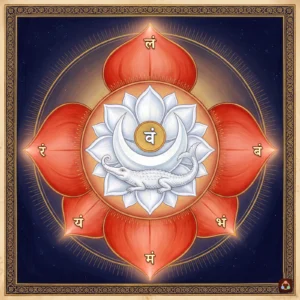
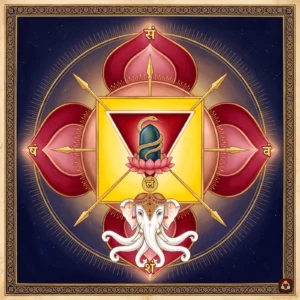
Chakra means a wheel. The texts also call each centre a padma, a lotus, and that is how they are always drawn. Each is a lotus with a fixed number of petals and a letter on each petal. In the middle lies a small world of shapes, colours and deities.
The lotuses sit one above the other along the sushumna, a channel the texts place inside the spine. Two more channels run beside it: ida on the left, pale like the moon, and pingala on the right, red like the sun. They wind round the sushumna and cross at each centre.
At the bottom, in the Muladhara, a power lies asleep, coiled three and a half times. She is Kundalini. In practice, the yogi wakes her. She rises along the sushumna, passes through each lotus in turn, and reaches the thousand-petalled lotus at the crown, where she meets Shiva. Then she comes back down and sleeps again. The ninth verse of the Soundarya Lahari is her rising; the tenth is her return.
On the way up she must break three knots, the granthis. The Lalita Sahasranama names them in order: the knot of Brahma, the knot of Vishnu, the knot of Rudra (names 100, 102 and 104). Sir John Woodroffe, who brought these texts to English readers a century ago, places the three knots where the three lingas stand: in the Muladhara, the Anahata and the Ajna.
A chakra is not an organ. You will not find one in a dissection. Woodroffe was clear about this: the chakras are centres of consciousness. Nerve bundles do lie at the same levels of the body. In his words, these are regions “with which loosely and inaccurately” the chakras “are sometimes identified”.
The seven at a glance
The six lotuses on the sushumna are counted from the bottom. The seventh, the Sahasrara, is not counted among them; it sits above all six.
| Centre | Where | Petals | Element | Bija | Soundarya Lahari |
|---|---|---|---|---|---|
| Muladhara | Base of the spine, between the anus and the genitals | 4 | Earth | लं | Verse 41 |
| Svadhishthana | Root of the genitals | 6 | Water | वं | Verse 39 |
| Manipura | Navel | 10 | Fire | रं | Verse 40 |
| Anahata | Heart | 12 | Air | यं | Verse 38 |
| Vishuddha | Base of the throat | 16 | Space (ether) | हं | Verse 37 |
| Ajna | Between the eyebrows | 2 | Mind | ॐ | Verse 36 |
| Sahasrara | Above the crown of the head | 1000 | Pure consciousness | Verse 9 |
The letters on each petal, the shapes and the deities are described on each centre’s own page.
Where the three texts agree, and where they differ
These pages follow three old texts. Each looks at the chakras for its own purpose.
| Text | What it is | What these pages take from it |
|---|---|---|
| Soundarya Lahari, by Adi Shankaracharya, with Lakshmidhara’s commentary | A hundred verses in praise of the Mother. Verses 9, 10, 14 and 36 to 41 map the centres. | What each centre means in her worship |
| Shat-chakra-nirupana, by Purnananda (Bengal, sixteenth century) | A description of the six centres and the Sahasrara, verse by verse. Translated by Sir John Woodroffe in The Serpent Power (1919). | The drawings: petals, letters, shapes, colours, deities |
| Lalita Sahasranama | The thousand names of the Mother. | The three knots, and the yogini of each centre |
They agree on the seven centres and on where they lie. They differ in two places.
Two elements change places. The Shat-chakra-nirupana puts water in the Svadhishthana and fire in the Manipura. Most chakra pictures today follow it, and so do our drawings. The Soundarya Lahari puts them the other way round: fire in the Svadhishthana, water in the Manipura. The lotus is the same. What changes is the element meditated on inside it. The 1937 Adyar commentary on the Soundarya Lahari notes the difference plainly. It says Shankaracharya’s order has the support of the Vamakeshvara Tantra, as Bhaskararaya explains in his Setubandha. Verses 39 and 40 keep that order.
The goddesses of the centres change places. Each lotus has a ruling Shakti. The Shat-chakra-nirupana names Dakini at the Muladhara and Shakini at the Vishuddha. The Lalita Sahasranama has it almost the other way round: Sakini at the Muladhara and Dakini at the Vishuddha. Kakini and Rakini also change places between the Svadhishthana and the Anahata. Lakini at the Manipura and Hakini at the Ajna are the same in both. Woodroffe noted that at least one other text, the Shaktananda-tarangini, orders them differently again.
| Centre | Element: Shat-chakra-nirupana | Element: Soundarya Lahari | Goddess: Shat-chakra-nirupana | Yogini: Lalita Sahasranama |
|---|---|---|---|---|
| Muladhara | Earth | Earth | Dakini | Sakini (514 to 520) |
| Svadhishthana | Water | Fire | Rakini | Kakini (504 to 513) |
| Manipura | Fire | Water | Lakini | Lakini (495 to 503) |
| Anahata | Air | Air | Kakini | Rakini (485 to 494) |
| Vishuddha | Space | Space | Shakini | Dakini (475 to 484) |
| Ajna | Mind | Mind | Hakini | Hakini (521 to 527) |
| Sahasrara | Yakini (528 to 534) |
Neither text is wrong. Each belongs to its own line of practice. The pages show both, and say which is which.
A word about colours
You have probably seen the chakras drawn in the colours of a rainbow. Red sits at the base, then orange, yellow, green, blue and indigo, and violet at the crown. That scheme is modern. It grew in the West in the twentieth century, and it was set alongside the endocrine glands in a popular book in 1977. The old texts give quite different colours. The Muladhara’s petals are crimson. The Manipura’s are the colour of a rain cloud. The Anahata’s are the red of the bandhuka flower. Our drawings use the colours of the texts.
What modern medicine can say
I am a physician, and I owe the reader an honest answer here.
No scan or dissection shows a chakra. The texts never said one would. They describe subtle centres, to be seen in meditation.
The links to nerves and glands are recent. Writers began matching the chakras to nerve plexuses in the 1880s. In 1927, a Bombay doctor, Vasant Rele, wrote a whole book reading Kundalini in terms of Western anatomy. The match with the endocrine glands appeared in 1928. These links are a good way to remember where each centre sits. They are not in the old texts, and no study has shown that a gland and a chakra are one and the same.
“Blocked” and “open” chakras are also modern. Popular charts list what a blocked chakra does to the mind and body. The texts these pages follow say nothing of the kind.
The practices are a different matter. Meditation, at least, has been studied with care. A large review in 2014, of 47 trials, found that meditation programmes bring small to moderate relief in anxiety, depression and pain. It found no evidence that they work better than other active treatments, such as medicines, exercise or other therapies.
And they are not free of risk. One careful study followed people through an eight-week mindfulness course. Between six and fourteen in every hundred had unwanted effects that lasted. Intense practice to awaken Kundalini is traditionally learnt only from a teacher, and for good reason. Anyone with a mental illness should speak to their doctor first. No practice is a reason to stop a treatment that is working.
Each page ends with a short section on what lies at that level of the body, and what, if anything, is known.
The seven pages
Sources
- Adi Shankaracharya, Saundarya-Lahari, with transliteration, English translation and commentary by S. Subrahmanya Sastri and T. R. Srinivasa Ayyangar, drawing on Lakshmidhara and other commentators. Theosophical Publishing House, Adyar, Madras, 1937. Verse 9, pp. 51 to 59; verse 41, pp. 157 to 161.
- Arthur Avalon (Sir John Woodroffe), The Serpent Power: being the Shat-chakra-nirupana and Paduka-panchaka. First published 1919; Ganesh and Co, Madras edition, read in the Internet Archive copy. Chapter V, “The Centres or Lotuses”, and the translation of the Shat-chakra-nirupana.
- Lalita Sahasranama. Name numbers as in Sanskrit Documents, lalita1000.
- Kurt Leland, “The Rainbow Body: How the Western Chakra System Came to Be“, Quest 105.2, Spring 2017. On the history of the rainbow colours, the nerve plexuses and the glands.
- Vasant G. Rele, The Mysterious Kundalini. D. B. Taraporevala Sons, Bombay, 1927.
- Goyal M and others. Meditation programs for psychological stress and well-being: a systematic review and meta-analysis. JAMA Internal Medicine 2014; 174: 357 to 368. doi:10.1001/jamainternmed.2013.13018
- Britton WB and others. Defining and measuring meditation-related adverse effects in mindfulness-based programs. Clinical Psychological Science 2021; 9: 1185 to 1204. doi:10.1177/2167702621996340
ಪಾಠದಲ್ಲಿ ತಪ್ಪೋ ಬೇರೆ ಪಾಠಾಂತರವೋ ಕಂಡಿತೇ? ನಮಗೆ ತಿಳಿಸಿ.
Noticed a mistake or a different reading? Tell us.