
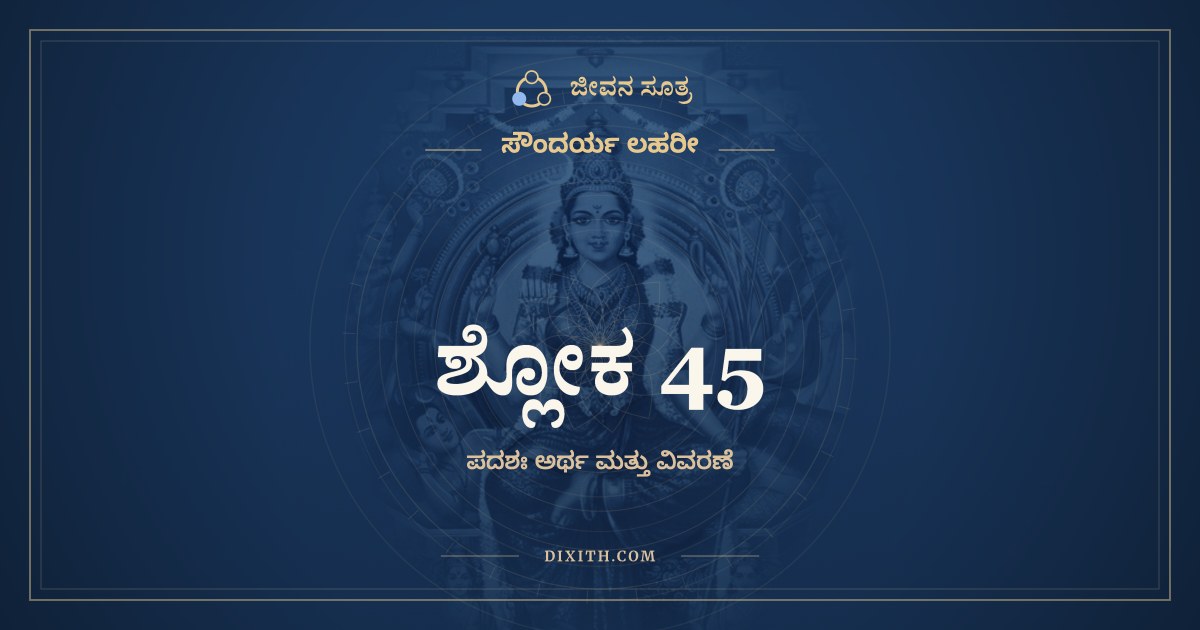
ಶ್ಲೋಕ (ಕನ್ನಡ)
ಅರಾಲೈಃ ಸ್ವಾಭಾವ್ಯಾ-ದಲಿಕಲಭಸಶ್ರೀಭಿರಲಕೈಃ
ಪರೀತಂ ತೇ ವಕ್ತ್ರಂ ಪರಿಹಸತಿ ಪಂಕೇರುಹರುಚಿಮ್ ।
ದರಸ್ಮೇರೇ ಯಸ್ಮಿನ್ ದಶನರುಚಿಕಿಂಜಲ್ಕರುಚಿರೇ
ಸುಗಂಧೌ ಮಾದ್ಯಂತಿ ಸ್ಮರದಹನಚಕ್ಷುರ್ಮಧುಲಿಹಃ ॥ 45 ॥
ಶ್ಲೋಕ (ದೇವನಾಗರಿ)
अरालैः स्वाभाव्यादलिकलभसश्रीभिरलकैः
परीतं ते वक्त्रं परिहसति पङ्केरुहरुचिम् ।
दरस्मेरे यस्मिन् दशनरुचिकिञ्जल्करुचिरे
सुगन्धौ माद्यन्ति स्मरदहनचक्षुर्मधुलिहः ॥ 45 ॥
ಶ್ಲೋಕ (English IAST)
arālaiḥ svābhāvyādalikalabhasaśrībhiralakaiḥ
parītaṃ te vaktraṃ parihasati paṅkeruharucim |
darasmere yasmin daśanarucikiñjalkarucire
sugandhau mādyanti smaradahanacakṣurmadhulihaḥ || 45 ||
ಪದಶಃ ಅರ್ಥ
- ಅರಾಲೈಃ (अरालैः, arālaiḥ) = ಗುಂಗುರಾದ (curling)
- ಸ್ವಾಭಾವ್ಯಾತ್ (स्वाभाव्यात्, svābhāvyāt) = ಸಹಜವಾಗಿಯೇ (by their very nature)
- ಅಲಿಕಲಭಸಶ್ರೀಭಿಃ (अलिकलभसश्रीभिः, alikalabhasaśrībhiḥ) = ಎಳೆಯ ದುಂಬಿಗಳಂತೆ ಶೋಭಿಸುವ (lovely as young bees)
- ಅಲಕೈಃ (अलकैः, alakaiḥ) = ಮುಂಗುರುಳುಗಳಿಂದ (by the forelocks)
- ಪರೀತಮ್ (परीतम्, parītam) = ಸುತ್ತುವರಿದ (encircled)
- ತೇ (ते, te) = ನಿನ್ನ (your)
- ವಕ್ತ್ರಮ್ (वक्त्रम्, vaktram) = ಮುಖ (face)
- ಪರಿಹಸತಿ (परिहसति, parihasati) = ಅಣಕಿಸುತ್ತದೆ (laughs at)
- ಪಂಕೇರುಹರುಚಿಮ್ (पङ्केरुहरुचिम्, paṅkeruharucim) = ಕಮಲದ ಚೆಲುವನ್ನು (the beauty of the lotus)
- ದರಸ್ಮೇರೇ (दरस्मेरे, darasmere) = ಮಂದಹಾಸದಿಂದ ಕೂಡಿದ (faintly smiling)
- ಯಸ್ಮಿನ್ (यस्मिन्, yasmin) = ಯಾವುದರಲ್ಲಿ (in which)
- ದಶನರುಚಿ (दशनरुचि, daśanaruci) = ಹಲ್ಲುಗಳ ಕಾಂತಿ (the gleam of the teeth)
- ಕಿಂಜಲ್ಕರುಚಿರೇ (किञ्जल्करुचिरे, kiñjalkarucire) = ಹೂವಿನ ಕೇಸರಗಳಂತೆ ಸುಂದರವಾದ (lovely as the filaments of a flower)
- ಸುಗಂಧೌ (सुगन्धौ, sugandhau) = ಸುಗಂಧಭರಿತವಾದ (fragrant)
- ಮಾದ್ಯಂತಿ (माद्यन्ति, mādyanti) = ಮತ್ತೇರುತ್ತವೆ (grow intoxicated)
- ಸ್ಮರದಹನ (स्मरदहन, smaradahana) = ಮನ್ಮಥನನ್ನು ಸುಟ್ಟ ಶಿವನ (of Shiva, who burnt Kama)
- ಚಕ್ಷುರ್ಮಧುಲಿಹಃ (चक्षुर्मधुलिहः, cakṣurmadhulihaḥ) = ಕಣ್ಣುಗಳೆಂಬ ದುಂಬಿಗಳು (the eyes, which are honey-bees)
ಸಂಪೂರ್ಣ ಅರ್ಥ (ಕನ್ನಡ)
ಮುಂಗುರುಳುಗಳು ತಾವಾಗಿಯೇ ಗುಂಗುರಾಗಿ ಎಳೆ ದುಂಬಿಗಳಂತೆ ಹೊಳೆಯುತ್ತಿರಲು, ನಿನ್ನ ಮುಖವು ಕಮಲದ ಸೌಂದರ್ಯವನ್ನೇ ನೋಡಿ ನಗುತ್ತದೆ. ಮೃದುವಾದ ಮುಗುಳ್ನಗೆ, ಹೂವಿನ ಕೇಸರಗಳಂತೆ ಹೊಳೆಯುವ ಹಲ್ಲುಗಳು, ಮತ್ತು ಸ್ವಾಭಾವಿಕ ಪರಿಮಳ. ನಿನ್ನ ಮುಖವೆಂಬ ಕಮಲದಲ್ಲಿ, ಮನ್ಮಥನನ್ನೇ ಸುಟ್ಟ ಶಿವನ ಕಣ್ಣುಗಳು ಜೇನು ಸವಿಯುವ ದುಂಬಿಗಳಂತೆ ಅಮಲೇರಿವೆ. ಕಾಮನನ್ನು ಗೆದ್ದವನೂ ನಿನ್ನ ಸೌಂದರ್ಯಕ್ಕೆ ಸೋತಿದ್ದಾನೆ.
ಸಂಪೂರ್ಣ ಅರ್ಥ (ಇಂಗ್ಲಿಷ್)
Ringed by forelocks that curl by their own nature and shine like young bees, your face laughs at the beauty of the lotus. It smiles faintly, the gleam of your teeth is lovely like the filaments at the heart of a flower, and it is naturally fragrant. In this lotus of your face the eyes of Shiva, who burnt Kama, the god of love, grow drunk like bees on honey. Even the conqueror of desire is captivated by you.
ಶ್ಲೋಕ 45ರ ಸಾಂಪ್ರದಾಯಿಕ ವಿಧಿವಿಧಾನಗಳ ವಿವರಗಳುTraditional ritual details for shloka 45
- ಫಲ (ಸಿದ್ಧಿ)Result
- ಒಳನೋಟ ಮತ್ತು ಮುಂದಾಗುವುದನ್ನು ಅರಿಯುವ ಶಕ್ತಿIntuition and foresight
- ಬೀಜ ಮಂತ್ರBeeja mantra
- ಸಂsaṃ
- ಯಂತ್ರYantra
- ಚಿನ್ನದ ತಗಡಿನ ಮೇಲೆ ಬರೆದ ಯಂತ್ರDrawn on a gold plate
ಪಾರಂಪರಿಕ ಚಿತ್ರದ ಆಧಾರದ ಮೇಲೆ ಪುನರ್ರಚಿತ ಯಂತ್ರದ ಚಿತ್ರ.
- ದಿಕ್ಕುDirection
- ಪೂರ್ವಾಭಿಮುಖವಾಗಿ ಕುಳಿತುSitting facing east
- ಜಪJapa count
- ದಿನಕ್ಕೆ 1000 ಬಾರಿ1000 times a day
- ಅವಧಿDuration
- 45 ದಿನ45 days
- ನೈವೇದ್ಯNaivedya / offering
- ತ್ರಿಮಧುರ ಮತ್ತು ಜೇನುತುಪ್ಪTrimadhura and honey
ಈ ವಿವರಗಳು ಮೂಲ ‘ಸೌಂದರ್ಯ ಲಹರಿ’ಯಲ್ಲಿ ಇಲ್ಲ ಎಂಬುದನ್ನು ಮೊದಲೇ ಸ್ಪಷ್ಟಪಡಿಸುತ್ತೇವೆ. ಪ್ರತಿ ಶ್ಲೋಕಕ್ಕೂ ಒಂದು ವಿಶಿಷ್ಟ ಯಂತ್ರ, ಬೀಜಮಂತ್ರ, ನಿಗದಿತ ಜಪಸಂಖ್ಯೆ ಮತ್ತು ನಿರ್ದಿಷ್ಟ ಫಲವನ್ನು ಜೋಡಿಸುವ ಪದ್ಧತಿಯು ನಂತರದ ಶತಮಾನಗಳ ಸಂಪ್ರದಾಯದಿಂದ ರೂಪುಗೊಂಡಿದ್ದಾಗಿದೆ. ಅಲ್ಲದೆ, ಈ ತಾಂತ್ರಿಕ ವಿವರಗಳು ಒಂದು ಹಸ್ತಪ್ರತಿಯಿಂದ ಮತ್ತೊಂದಕ್ಕೆ ಸ್ವಲ್ಪ ಮಟ್ಟಿಗೆ ಭಿನ್ನವಾಗಿರುತ್ತವೆ. ಇದೊಂದು ಪ್ರಾಚೀನ ಸಂಪ್ರದಾಯದ ದಾಖಲೆಯಷ್ಟೇ ಹೊರತು ಯಾವುದೇ ರೀತಿಯ ವೈದ್ಯಕೀಯ ಚಿಕಿತ್ಸಾ ಸಲಹೆಯಲ್ಲ.These details are not part of the original Saundarya Lahari, as we wish to state clearly at the outset. Associating each verse with a specific yantra, a seed syllable (bija mantra), a required chanting count (japa count), and a resulting benefit is a practice that evolved in later centuries. Furthermore, these technical details vary slightly from one text to another. This compilation represents a record of a traditional practice rather than any form of medical advice.
ಆಧಾರ ಗ್ರಂಥಗಳನ್ನು ಸೌಂದರ್ಯ ಲಹರೀ ಸೂಚಿ ಪುಟದಲ್ಲಿ ನೋಡಿ.For the sources, see the Soundarya Lahari index page.
ಪಾಠದಲ್ಲಿ ತಪ್ಪೋ ಬೇರೆ ಪಾಠಾಂತರವೋ ಕಂಡಿತೇ? ನಮಗೆ ತಿಳಿಸಿ.
Noticed a mistake or a different reading? Tell us.
ಪ್ರತಿಕ್ರಿಯೆ ಬರೆಯಿರಿ